What Is the Google Map Pack? (And How to Get In It)
The Google Map Pack shows 3 local businesses at the top of search results. Here’s how it works, why it matters for local leads, and what to fix first.

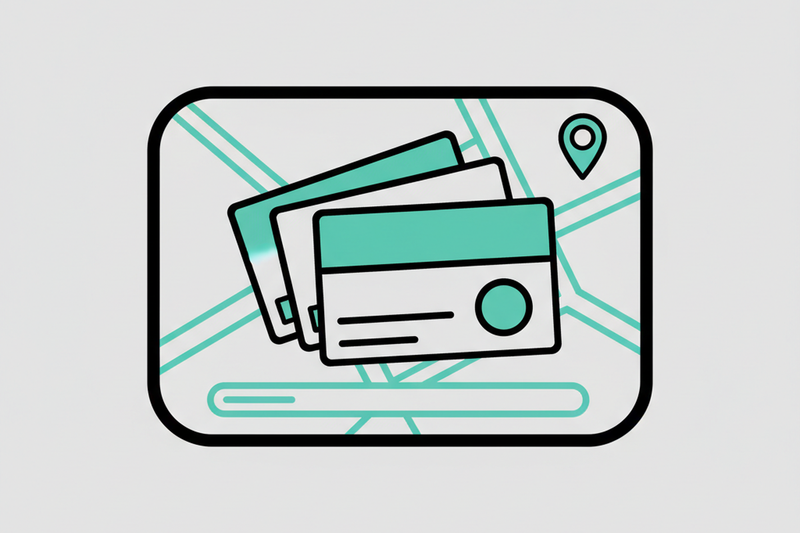
You’ve probably seen it: you search “plumber near me” or “med spa in [city],” and before you even get to the normal website results, Google puts three local businesses front and center with a map.
That box is the Google Map Pack, and it’s where the highest-intent customers make fast decisions. They’re not looking to “research.” They’re looking to pick someone, call someone, and book.
If your business depends on local leads, understanding how the map pack works (and what to fix first) can be the difference between “we’re busy” and “we’re invisible.”
What the Google Map Pack is (and when it shows up)
The Google Map Pack (also called the local pack or “3-Pack”) is the set of three local business listings that appears near the top of Google search results when Google detects local intent. Think searches like “dentist near me,” “roof repair,” “best pizza,” or “IV therapy [city].”
You can read a general definition in Semrush’s breakdown of what the Google 3-Pack is, and you’ll notice a consistent theme: Google is trying to help the searcher choose quickly, without extra steps.
A key detail: the map pack is driven mostly by your Google Business Profile (GBP), not your homepage, not your latest blog post, not your Instagram. Your website still matters, but your GBP is the engine that feeds the pack.
If you’re used to traditional SEO, this can feel backwards. You might rank well in the “blue links” and still get outperformed by a competitor in the map pack. That’s because local buying behavior is different. The map pack is the decision screen, and the blue links are the “I have time to read” screen.
When the map pack appears, it usually pushes organic results further down. On a phone, that can mean your carefully written service page is several swipes away. Meanwhile, the three businesses in the pack are one tap from a call, directions, or a booking.
For the full breakdown, see our GBP optimization checklist.
What shows up in the Map Pack (and why it converts so well)
The map pack wins because it answers the buyer’s questions fast. It’s like Google is saying, “Here are three decent options, pick one.”
In most categories, each listing includes:
- Business name and primary category
- Star rating and review count (often with snippets that highlight themes)
- Hours (and “busy” indicators)
- Address (or service area cues, depending on your setup)
- Quick actions like Website and Directions, plus other buttons that can vary by device and industry (calls, booking, ordering)
When you tap into a listing, you’re in the full Google Business Profile view: photos, services, Q&A, updates, and a lot of reviews. In 2026, you’ll also see more “summary-style” review highlights on many results, where Google surfaces common praise or complaints so the searcher can decide faster. That makes your review quality, not just your star rating, do real work.
This is why the map pack often produces more calls than blue links for service businesses. A blue link asks someone to click, wait for your site, find your number, then decide. The map pack skips most of that friction.
You’ll also notice the map pack is built for mobile behavior. Someone in a parking lot, on a lunch break, or between jobs wants speed. They read three options, check ratings, look at a couple photos, then act.
One more reality: rankings don’t pay bills. Actions do. So the most useful way to judge map pack performance is not “Are we number one?” It’s Are calls, direction requests, and form fills going up? That’s the scoreboard.
Not sure where to start? Our strategies for getting more Google reviews walks you through it step by step.
How Google picks the three businesses (and what you should fix first)
Google has been consistent about the big three factors behind local results: relevance, distance (proximity), and prominence. You can’t “hack” that. You can, however, stop making it hard for Google to trust and recommend you.
Here’s what move the needle first for a small service business that wants to break into the google map pack, or defend a spot you already have.
Start with your Google Business Profile basics
If that sounds familiar, check out how local citations work for service businesses.
Your GBP needs to read like a complete, current mini-website. Fix the boring stuff first because it’s the stuff Google relies on.
Focus on:
- The right primary and secondary categories (close counts, vague doesn’t)
- Accurate services, hours, and attributes
- A clean service area setup if you travel to customers
- A real business description that matches what you actually sell
This is also where the “more blog posts” advice usually wastes your time. If your categories are off and your services are thin, another 1,500-word article won’t save you.
Build a review flywheel, not a one-time push
Reviews are not just social proof. They influence clicks, calls, and map pack placement over time. What matters is volume, velocity, and language that matches what buyers search.
A simple system beats reminders scribbled on a sticky note:
- Ask right after the win (job done, patient happy, product delivered).
- Use a short link and a short message.
- Follow up once, politely.
- Reply to reviews so the profile stays active and trustworthy.
What happens when you treat reviews like an operating system instead of a once-a-quarter scramble? You get compounding results. In one home services account, a steady GBP and reviews cadence helped move a business from map pack #9 to #3 in about 60 days, and calls rose 38%. In a med spa, the average rating increased by about 1.1 stars in 90 days, review velocity doubled, and bookings followed.
Keep your “local signals” consistent
If your name, address, or phone number (NAP) is inconsistent across the web, you’re feeding Google conflicting data. Clean it up, then build a base layer of real listings. Many businesses can get durable coverage from a set of high-value manual citations and ongoing hygiene, without paying forever for a tool subscription they don’t understand.
Add fresh photos and posts so you don’t look stale
A profile with old photos and no recent activity feels abandoned, even if you’re booked out for weeks. New photos, quick updates, and answered Q&A help you look active and help customers choose you.
If you want an industry-specific angle (law firms, but the mechanics are similar), Hona’s guide on how the Google Map Pack works is a good example of how much of the decision is made before someone ever reaches a website.
The calm way to approach it
If you’re trying to get into the map pack, don’t treat it like a one-day project. Treat it like weekly maintenance on a work truck. Small, repeatable actions stack up.
Plan on a real lift taking 30 to 90 days in most markets. faster, rarely overnight. The good news is you can usually make meaningful progress without gambling on ads or adding “weekly status calls” to your calendar.
Start for $500/mo — your Local SEO OS.