
Local Citations for Service Businesses: What Actually Works in 2026
Not all citations move the needle. Learn which directories matter for service businesses, how to build them right, and what to skip.

You know that sinking feeling when the phone’s quiet, but you’re pretty sure people are still searching for your service.
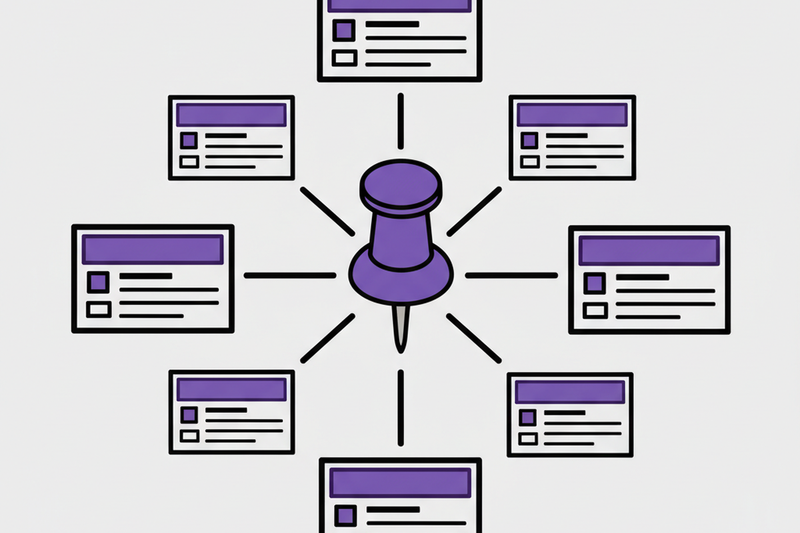
A lot of the time, it’s not your work. It’s your business info scattered across the internet like a junk drawer: an old phone number on one site, “Suite 2” missing on another, a duplicate listing you didn’t even know existed. That mess is exactly what local citations are supposed to prevent.
What local citations are (plain English)
A local citation is any place online that lists your business identity: typically your name, address (or service-area signals), phone number, and website. People call this “NAP” (name, address, phone), and Google uses it like a consistency check. If your info matches across trusted sites, you look real. If it doesn’t, you look sloppy: or worse, fake.
If you want the clean definition, Ahrefs has a solid glossary entry on what a local citation is and how it’s typically used in local search: https://ahrefs.com/seo/glossary/local-citation
Full vs. partial citations
Not every citation shows all your info. A full citation includes name, address, and phone (usually a website too). A partial citation might be name and phone only, or name and address.
For service businesses, full citations matter most. They reduce ambiguity, and ambiguity is the enemy of Maps rankings.
You might also want to look at how Google Maps rankings work for the bigger picture.
Why citations matter for service businesses (and why you feel it in Maps)
If you’re a plumber, roofer, med spa, or mobile detailer, most of your best leads come from the Map Pack. That’s the decision screen where people compare a few options, read reviews, and call whoever looks safest.
Citations help you show up there because they support two things Google cares about:
Trust: You exist, you’re reachable, you serve the area you claim.
Consistency: Your business details don’t change depending on where someone finds you.
Think of it like a paper trail. When the trail matches, you’re easy to place. When it’s mixed, Google hesitates: and you slide down.
One reality check: citations aren’t magic. They’re a medium-impact foundation. If your Google Business Profile is thin and your reviews are stale, citations won’t save you. But if your basics are strong, citations can be the difference between barely visible and in the mix.
Which local citations actually matter in 2026
You don’t need 300 directory listings. You need the right clusters of citations, built cleanly, then kept consistent.
The big three: Google, Apple, and Bing
These are non-negotiable, even if you think nobody uses them.
Google Business Profile is the home base. If your GBP is wrong, your citations don’t matter.
Apple Maps catches a huge chunk of homeowners who search through Siri without thinking about it. Easy to overlook; costly to miss.
Bing Places isn’t flashy, but it’s another trusted map ecosystem: and it powers results across Microsoft products.
These three also act as source-of-truth nodes. Other apps scrape from them, and errors spread fast if the source is wrong.
Shopify’s overview of local citations is a decent, beginner-friendly explainer if you want another perspective: https://www.shopify.com/ca/blog/local-citations
Major review and trust platforms
For most service businesses, these are the next tier. They do two jobs: validate your info and influence buyers.
Yelp: Even if you don’t love it, it’s widely trusted, and its data shows up in other places.
Better Business Bureau (BBB): For home services and professional services, BBB is still a trust signal people recognize.
Facebook: Your page often becomes a citation whether you meant it or not. It’s also where customers look for hours, phone numbers, and reviews.
Data connectors (small effort, wide ripple)
Some platforms matter because other apps pull data from them. Foursquare is a good example: you won't care about the traffic it sends, but it functions as a behind-the-scenes data source across multiple products.
Then there are data aggregators: companies that distribute business info to many directories at once. These can be useful, but only in the right situations: more on that below.
Industry and local community directories
Relevance beats volume here. Google wants to see you belong to your category and your geography. That means your local Chamber of Commerce, a well-known city or regional business directory, and one major industry directory customers actually use (a home services marketplace, a professional association, a niche listing site).
A niche citation won’t always send traffic. But it can strengthen relevance signals, especially when it matches your services and your geography.
Speaking of which — our our GBP optimization checklist post has the full playbook.
A citation cleanup checklist you can do in one sitting
If you only have an hour, here’s where to spend it. These six steps address the most common “why aren’t we showing up?” problems.
- Pick your official business format: the exact name, phone number, website URL, and how you write your address. Write it down. This becomes your standard.
- Search your business name and phone on Google. Note duplicates and old addresses.
- Fix the core four first: Google Business Profile, Apple Maps, Bing Places, Facebook.
- Update your top trust sites next: Yelp, BBB, and your strongest niche directory.
- Remove or merge duplicates. Duplicates split trust and create verification headaches later.
- Keep your phone number consistent. If you use call tracking, do it carefully: a tracking number can create a second “identity” online if you’re not careful.
If you changed your name, moved, or switched phone numbers in the last few years, expect this to take longer. Old data sticks around.
How many citations does a service business actually need?
Most businesses do well working in two phases.
Phase 1 (foundation): 10 to 15 high-trust profiles, accurate and complete. This is where you stop the bleeding.
Phase 2 (build and strengthen): Add more high-value listings, plus one to three niche or local directories that fit your industry and area.
A lot of founders get sold the wrong story here: that you need to pay for a listings subscription forever. In reality, many citations can be built once and maintained. Around 35 high-value manual citations is a solid target for most service businesses; after that, the focus shifts to upkeep and cleanup when something changes. Aggregators can still make sense: usually for multi-location businesses, messy histories, or when you need broad distribution fast. But they’re not the default answer.
Common citation mistakes that waste money
Paying forever for basics. Recurring fees can make sense for hard cases, but they’re often overkill for a stable one-to-three-location business.
Inconsistent formatting. “St.” vs. “Street” won’t kill you. Mixing phone numbers, URLs, and business names across listings absolutely can.
Duplicate listings. They split authority, confuse customers, and create weird verification issues down the road. Fix it once and the correction propagates.
Directory sprawl. Submitting to every random directory feels productive. Low-quality listings rarely help, and they create more cleanup work than they were worth.
What to expect after your citations are clean
Fixing citations removes friction. That usually shows up as steadier visibility, fewer ranking swings, and a cleaner map presence, not overnight, but within 30 to 90 days as Google crawls and reprocesses what changed.
In one home services case, a business moved from Map Pack position nine to three in about 60 days, and call volume rose 38 percent. That wasn’t citations alone. It was citations plus GBP cleanup, review momentum, and weekly maintenance. That combination is what work.
The work is boring. That’s why it works.
The bottom line
Local citations won’t replace reviews or a strong Google Business Profile. But they do one job extremely well: they make your business consistent across the web, which means you show up with less volatility. Focus on the core map platforms, add a handful of trust and niche sites, and skip the directory spam.
If you’d rather have this handled without the busywork: or the vendor lock-in. see how Curve’s $500/month plan works.