Dog boarding SEO: Fill the runs before owners book their flights
Owners pick a kennel weeks before they travel, and they pick it on a phone. How boarding facilities get found, get trusted, and get the dates booked.

Kennels don't fill up the week of Thanksgiving. They fill up weeks earlier, when an owner books the flight, then opens Google Maps to find somewhere the dog can stay.
This is dog boarding SEO for overnight stays: the multi-night bookings, the holiday rush, and the owner who has to trust you with a dog they won't see for a week. If you also groom, bath-day appointments run on a different calendar, and our pet grooming local SEO guide covers them. Clinics that board patients should start with veterinary local SEO, since the medical searches come first there.
Key takeaways
- Boarding gets booked weeks ahead, so your Google listing and boarding page have to answer questions before the owner ever calls.
- Hours, rates, vaccine rules, and holiday deadlines are what owners compare. Put them where they can find them.
- Photos of the actual sleeping space and yard do more work than any paragraph about "loving care."
- Count confirmed stays and booked nights, not rankings.
Get the profile right for a boarding business
Owners searching nearby compare kennels on Google Maps before they visit anyone's website. Google says local results come down to relevance, distance, and prominence, so the listing has to say clearly what you do and where you do it. Our Google Business Profile checklist walks through every field. A few of them work differently for a dog boarding business.
- Hours. Overnight care is not the same as open all night. List drop-off and pickup hours, the times an owner can actually walk in, and set holiday hours early, because those are the days owners check most.
- Category. Pick the most accurate boarding or kennel category Google offers. Add daycare or grooming as secondary categories only if you sell them.
- Address. A facility that receives dogs shows its street address, with the pin on the right entrance. A sitter who boards at home and doesn't want walk-ins should read Google's rules for representing your business before deciding what to show.
- Access. If a former manager or web person still controls the listing, request ownership instead of starting a second one.
Build a boarding page that answers the night-before questions
Overnight boarding needs its own page. A paragraph tucked under grooming, daycare, and walking makes an anxious owner dig, and most won't bother.
Put "dog boarding" and your town near the front of the page title. Then answer what owners ask on the phone:
- Nightly rate, what it includes, and what costs extra
- Minimum stays, deposits, and holiday surcharges
- Vaccine and health requirements, stated plainly
- Feeding, medication handling, and what to pack
- How dogs sleep, play, and get separated by size or temperament
- Drop-off and pickup windows
Give the page one main action, like "Request boarding dates." A newsletter signup, a download, and four other buttons only compete with it.
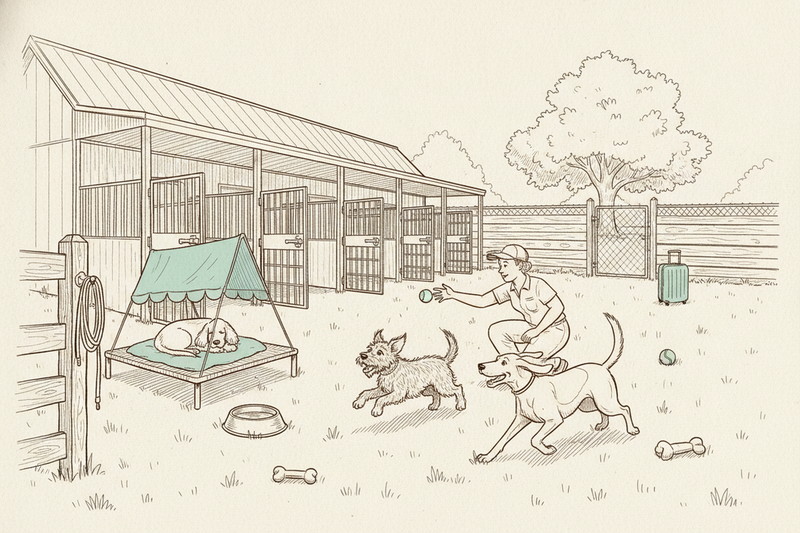
Owners worry that boarding means a dog sitting in a crate all day. Describe the sleeping space, the yard, how often dogs get outside, and who's on site overnight. If someone stays overnight, say so. If no one does, do not imply it.
One facility needs one strong location page, not twenty copied town pages. Our breakdown of location pages vs. service pages covers when a second page earns its spot. Never suggest you've got a kennel in a town where you don't.
Show the stay owners are paying for
Upload real photos of the sleeping areas, yards, play groups, and staff. A stock golden retriever in a meadow won't convince anyone.
Pick calm moments. Skip shots where a dog looks stressed, cornered, or restrained, and keep bath-tub photos off the boarding page. Get the owner's permission before you post their dog.
Name files for what they show (dog-boarding-play-yard.jpg beats IMG_4471.jpg) and write alt text that describes the scene, not a list of town names.
Post holiday booking deadlines, tour openings, and facility updates to your profile when they happen. That keeps the listing current for owners. Google doesn't promise a ranking bump for posting on a schedule.
Ask for the review at pickup
Reviews let owners judge care they'll never see. The best moment to ask is right after a good pickup, when the dog's tail is going and the owner is relieved. Send your direct Google review link that evening, while the stay is still fresh. Our guide to getting more Google reviews covers the ask itself.
Two rules matter more for boarding than for most businesses. Ask everyone, not just the owners you know are happy, because Google treats review gating as a policy violation. And when you reply to a complaint, keep medication records, incident details, and payment disputes out of the public thread. Take those to a phone call.
Test the booking path on your phone
Most owners will find you on a phone, and Google indexes the mobile version of your site. So pull up your dog boarding website on your own phone and try it: find the nightly rate, pick dates, enter the dog's details, and submit a request.
Then check what happens next. Does a confirmation arrive? Does someone on staff get notified? A request form that disappears into silence costs you the booking and the review that would've followed it.
Compress oversized photos and make sure the boarding page isn't blocked from Google. A fast page still needs a visible rate and a working button.
Get listed where pet owners look
Claim your listings on Google, Bing Places, Apple Business Connect, and Yelp, and keep the name, address, and phone identical across all of them. Our local citations guide covers the rest. Hundreds of paid directory listings will not fix a weak boarding page.
The mentions that send boarding customers are local. A nearby vet, trainer, or rescue that already refers people may add you to a resource page. Earn it by being worth recommending, and don't buy links or swap reviews.
Publish for the travel calendar
Skip the endless blog schedule. A few pages timed to when owners plan trips will do more:
- Before spring break: what to pack for a dog's first boarding stay, with food, medication, and arrival requirements
- Before summer travel: how a day in boarding works at your facility, from drop-off to lights-out
- Before the holidays: drop-off and pickup hours, minimum stays, and the booking deadline
Update each page when dates or policies change. Then send it to past customers by email or text, with their consent and an easy way to opt out. Repeat boarders are your easiest holiday bookings, and they don't need to find you on Google twice.
Measure booked nights, not rankings
Track calls, boarding requests, confirmed stays, and booked nights. Keep new customers separate from returning ones, and keep daycare inquiries out of the boarding count.
Add UTM tags to your profile's website link so you can see which visits came from Google Maps. Record the source of each confirmed reservation in your booking software.
Compare holiday periods with the same stretch last year. A December rush happens either way, so don't credit it to whatever you changed in November.
Rankings also shift with where the searcher is standing. One search from your front desk tells you very little about what an owner across town sees.
Questions kennel owners ask
Should daycare and boarding get separate Google Business Profiles?
Not if they run out of the same building under the same name. One location gets one profile. List boarding, daycare, and grooming as services, and use secondary categories for the extras. A second listing at the same address for a different service is likely to be treated as a duplicate.
Can a home-based boarder show up on Google Maps?
Yes, if you meet Google's guidelines for a business that serves customers in person. Check your local rules first. Many states, counties, and cities require a license, kennel permit, or zoning approval to board dogs at home, and the rules vary widely. A Google listing does not settle whether you're allowed to operate.
Which vaccines should the boarding page list?
Whatever your facility requires, worded the same way your intake form words it. Rabies vaccination is required by law in most states, and many facilities also ask for distemper/parvo and Bordetella. Requirements vary by state and by facility, so confirm your list with your veterinarian and local rules, and say how far ahead of the stay each vaccine has to be given.
Fill the runs, then keep them full
Boarding SEO comes down to three things: owners can find you, understand the stay, and request dates without a phone call. Get those right before the holidays, then check them every week.
If you'd rather hand off the weekly upkeep, that's what we do at Curve.