Using a DBA on Your Google Business Profile: When It's Allowed
A DBA can be a legitimate name for your Google Business Profile — or a fast track to suspension. Here's the rule, plain.

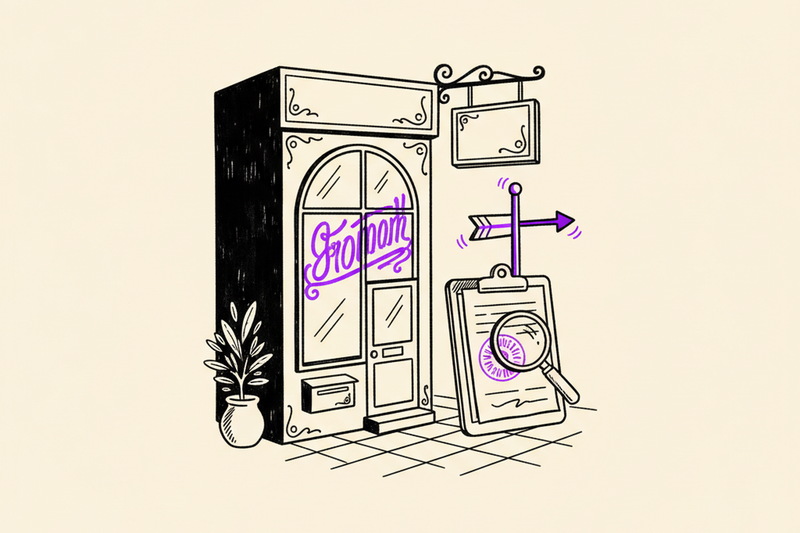
A roofer files a DBA, decides to put "Smith Roofing & Storm Damage Repair Dallas" on his Google Business Profile, and a week later the profile gets flagged. The DBA was real. The filing was real. The name on the profile still wasn't allowed.
That's the part most people miss. A DBA — "doing business as" — is a legal nickname your business uses in public. Google's rule for profile names isn't about whether you filed paperwork. It's about whether the name on the profile is the name your customers actually see in the real world.
Here's exactly when a DBA belongs on your Google Business Profile, and when it gets you in trouble.
The short version: real-world use, not paperwork
A DBA stands for doing business as — the public-facing name your business uses instead of, or alongside, the legal entity name.
You can use that name on your Google Business Profile if it's the name your local customers recognize. Google's rule isn't complicated: the profile name should match your real-world business name as it appears on your storefront, website, invoices, and customer communications.
If the DBA exists only in a filing cabinet and nowhere a customer can see it, you're on thin ice. Google's looking for the name people see, not the name people file.
And if the DBA's there to squeeze in service keywords or city names, don't. That's name-stuffing, and it's the fastest way to get an edit reversed or the profile suspended.
What Google actually means by "real-world name"
Google spells this out in its representation guidelines: your business name should reflect how your business is consistently represented and recognized in the real world.
For a storefront, that usually means the name on your permanent signage and on your website. For a service-area business, the storefront address may be hidden, but the name still has to match what customers see on your site, your invoices, your trucks, and your booking confirmations.
A quick way to test it:
If the DBA's filed, used on your website, and shown on your signage — usually fine. If the DBA's filed but customers never see it — risky. If the DBA adds service words or city names to rank better — not allowed. If you spin up a second profile for another DBA at the same physical location — almost always a duplicate problem. If you've already been caught in a name-stuffing reversal, our guide on fixing a rejected name change is the right next step.
When using a DBA actually makes sense
A DBA makes sense when your legal entity and your public brand are genuinely different.
Plenty of businesses do this for normal reasons. Your LLC might be "North Shore Holdings LLC" but the public knows you as "North Shore Roofing." The brand name is the one customers search, remember, and recommend. That's exactly what a DBA is built for.
Before you change the profile name, line up four pieces of evidence:
- Your state or local DBA filing on paper.
- Your website header, contact page, and About page using the DBA.
- Your signage, vehicle wraps, uniforms, and marketing materials using the DBA.
- Your invoices, receipts, and customer emails using the DBA.
If those four pieces don't line up yet, fix them first. The profile is the last edit, not the first.
If customers call you by the DBA, leave reviews under that name, and see it across your physical and digital footprint, you're in a much safer position. If the DBA's just an SEO costume, skip it.
When a DBA gets you in trouble
The biggest mistake is using a DBA to chase higher rankings instead of doing the actual work. It feels easier than fixing categories or building review flow, which is why it's so tempting.
You might be tempted to change "Acme Home Services" to "Acme Plumbing Houston" because a competitor's name has the city in it. Don't. Even with a DBA filing in hand, that name change usually gets reversed, the profile gets flagged, and sometimes the listing gets suspended outright.
A second trap is creating a second profile for a second DBA at the same address. "Acme Plumbing" and "Acme Drain Cleaning" with the same phone and address is a duplicate listing in Google's eyes, even if the paperwork says otherwise.
And a DBA won't save you from a trust mismatch. If your profile says one name, your website says another, and your directories say a third, Google's confidence drops fast. The profile starts looking less like a real business and more like a moving target.
If a bad name edit already caused trouble, the fix is cleanup, not more edits on top. You may need to revert the name, align everything across your site and citations, and sit through re-verification before visibility returns.
What to do instead if you want to rank higher
If your real goal is more calls and better Map Pack placement, a DBA isn't the lever. Google's looking at relevance, proximity, and trust — categories, services, reviews, photos, citations, page strength. The boring stuff. Our Google Business Profile optimization checklist walks through what actually moves the needle.
Start with primary category. The single most undervalued lever on the profile. Get the closest match wrong and nothing else compensates.
Then fill out services, keep hours accurate, write a clean description, and add fresh photos every week or two. Real photos. Trucks, team, finished work, before-and-afters. Not stock junk.
Then run a steady review flow. Ask after the job's done. Reply to every new review within a couple of days. A consistent rhythm beats a one-time review push every time — our guide on getting more Google reviews covers the system.
Last, if you offer named services, use the services and products features inside the profile instead of cramming everything into the name field. That's what they're built for.
The bottom line
You can use a DBA on your Google Business Profile when it's the real brand customers know and the name you use in public. You can't use it as a back door for keywords or duplicate listings.
Open your profile, your website, and your public business materials side by side. If the names don't match, fix that first. The boring cleanup is the protection.