Chimney Sweep SEO: Get Found Before the First Cold Night
Chimney calls arrive all at once when the weather turns. Here's what a sweep needs in place by late summer, and how to fill the slow months too.

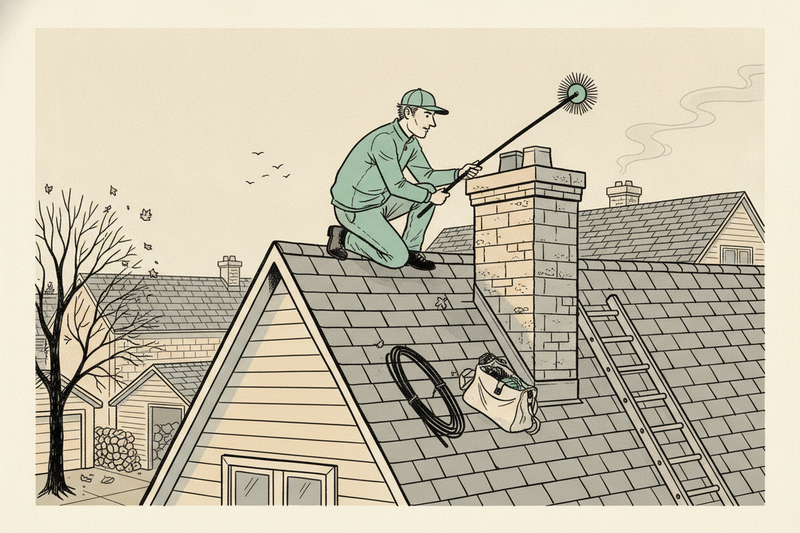
First frost on the windshield. A cord of split oak stacked against the garage. And nobody in the house can remember the last time anyone looked up the chimney. Calls come in a wave that week, and they go to whichever sweep on the map looks close, credible, and able to come out before the weekend.
This guide is for chimney sweeps and chimney service companies: cleaning, inspections, caps, liners, and masonry repair, booked in one sharp autumn rush. If you clean dryer vents as a separate service, our dryer vent cleaning SEO guide covers that job. Roofing crews who only touch the flashing have their own playbook in local SEO for roofers.
Key Takeaways
- The first cold night is the deadline. Pages and profile fixes need to be in place by late summer, not the week the phone should already be ringing.
- Give inspections their own page. "Chimney inspection" is a different search, and often a different buyer, than "chimney sweep."
- Explain the visit, the credentials, and what costs extra before anyone books. Mess and surprise bills are what homeowners worry about.
- Use the slow months to sell next year's appointment, and judge every channel by booked jobs.
The first cold night is a deadline
Chimney work doesn't trickle in. It sits quiet through summer, then lands all at once when the furnace kicks on and someone lights the first fire of the year. By then it is too late to build anything. All that's left is answering the phone.
Treat mid-July as your deadline for publishing or refreshing a fall inspection page. Google needs time to find a new page, and homeowners who plan ahead start looking in late summer. That is a planning target, not a promise about indexing. If fall's already here, fix your profile and your existing pages this week, then build the rest for next year.
Start with the towns where a booked job makes money. Google ranks local results on relevance, distance, and prominence, according to its own local ranking guidance. You can control the first and build the third. You cannot move your shop. Our breakdown of what actually moves Google Maps rankings goes deeper.
Ranking across half the state won't help if every call means a two-hour drive with a ladder on the roof rack.
Get the Google profile right, then move on
Your Google Business Profile is where most of these calls start, and the setup isn't unique to chimneys. Pick "Chimney sweep" as your primary category if it's your main work, list every service you actually sell, and use your real business name. Our Google Business Profile checklist walks through the rest.
Most sweeps go to the customer, so run as a service-area business, hide the home address, and keep the area to towns you really cover. Google explains how to set a service area, and our guide to getting found without a storefront fills in the details.
Give inspections their own page
"Chimney sweep near me" and "chimney inspection near me" sound like the same search. They are not. The first is someone who wants a clean flue before the holidays. The second might be a buyer whose home inspector flagged the fireplace, an insurance question, or a family that just moved in and has no idea what's up there.
One "Our services" page can't serve both. Build separate pages for the work that books on its own:
- Chimney cleaning and sweeping
- Chimney inspections
- Repair and masonry, including crowns and tuckpointing
- Caps, dampers, and liners
Put the service and your main city in the title and main heading, like "Chimney Inspection in Columbus, OH," but only when that's where you really work. You don't need "near me" in every heading. Google already knows where the searcher is, which is why near-me searches don't need keyword stuffing.
Check Google Search Console for the queries that already bring impressions, then compare them to what customers ask for on the phone. That list beats any keyword tool for deciding which page to build next.
City pages need something local to say. Think jobs you've done there, the housing stock (old brick masonry in one town, prefab fireplaces in the newer subdivisions of another), and how scheduling works for that area. If you've got nothing real to add, leave the town in your service area list and skip the page.
Answer the questions people ask before they call
Most chimney customers book once a year at best. They don't know the vocabulary, and they're a little nervous about letting a stranger with a brush into the living room. Answer their questions on the page, in plain words, before the phone call.
Cleaning or inspection?
Explain that they aren't the same job. An inspection tells the homeowner what's going on up there. Whether it needs cleaning depends on what the inspection finds. NFPA 211, the fire code standard that covers chimneys, describes three levels of inspection. A short, plain explanation of which level fits which situation answers a question your office fields every fall.
How often?
The National Fire Protection Association and the Chimney Safety Institute of America both recommend an annual inspection, and the CSIA suggests getting it done before the burning season. Say that, and name the source. Do not invent fire statistics or scare people with photos of burned houses. A homeowner who feels manipulated calls someone else.
What will it cost, and what's extra?
If your cleaning has a standard price, show it. If not, explain what changes the quote: roof pitch, the number of flues, how long since the last sweep, whether a cap is missing. Separate what's included from repair work you might recommend afterward. No surprise add-ons at the door is a selling point on its own.
Who's coming, and what about the mess?
Name the credential and who holds it. If your techs are CSIA-certified, say so on the homepage, the about page, and the inspection page. Then describe the visit: arrival window, drop cloths, how long the cleaning takes, the photos you'll show of the flue, and how long a repair quote stays good. Publish your own terms that plainly and you've answered half the phone calls before they happen.
Make booking work on a phone
Most of these searches happen on a phone, standing in a cold living room. Put the call button and "Book an inspection" near the top of every service page. Keep the form to name, phone, address, and the service they want.
Then tell people how far out you're booking. "Next open slot: about three weeks" turns away fewer customers than silence does, because it lets them decide instead of guess. If calls go unanswered while the crew is up on a roof, put a plan for missed calls in place before October.
Reviews, listings, and markup: the short version
Ask every customer for a review after the job with your direct link, and don't offer discounts or ask only the happy ones. Our guide to getting more Google reviews covers the process, and there's no magic review count you need to hit.
Clean up duplicate listings and old phone numbers with our citation guide for service businesses, and have your developer add local business structured data that matches what's on the page. Neither will carry you on its own. Both stop small problems from costing you calls.
Run ads for openings, not for the rush
Chimney companies have an advantage most trades don't. For about six weeks every fall, the calendar fills itself. Running ads into a full schedule just buys calls you'll have to turn down.
Use Google Ads in the shoulder months instead: late summer, early spring, and any week the schedule shows holes. Target searches that name the service you sell, send clicks to the matching page, and pause the campaign when you're booked out.
Judge ads and SEO the same way, by cost per booked job. A tap on the call button is not a booking.
Fill next summer while you're standing at the hearth
The best time to sell next year's visit is at the end of this one. Before you pack up, offer to put next year's inspection on the calendar, ideally between May and August when your crew needs the work. Send the invoice and any inspection photos the same day, then a reminder two weeks before the next appointment.
Spring and summer customers also have time to approve repairs a November customer can't wait for. Crowns, caps, and tuckpointing are warm-weather jobs anyway. Our piece on keeping calls coming after the rush covers the slow months in more detail.
A weekly routine that survives October
Busy season is when routines die. Keep this one to a single short block each week:
- Return missed calls and check that your hours and holiday closures are right.
- Reply to new reviews and add a few photos from real jobs.
- Mark which calls and forms became booked jobs, then compare with the same weeks last year, not last month.
Add campaign tags to the website link on your profile so your analytics can tell that traffic apart from everything else.
Frequently Asked Questions
Is it worth building relationships with home inspectors and real estate agents?
Yes, if you can turn reports around quickly. NFPA 211 recommends a more thorough inspection when a home is sold, and the people who flag it are home inspectors and agents. A short page for real estate inspections, with turnaround times and what your report includes, gives them somewhere to send buyers. It speaks to a different customer than your fall cleaning page.
What should I do with my Google profile when I'm booked out for weeks?
Keep it open and accurate. Don't mark the business temporarily closed to slow the phone down, because customers read that as gone. Post a short update with your current lead time instead, and put the same note on your booking page. People who can wait will book, and the rest won't feel ignored.
Should wood stoves, pellet stoves, and gas fireplaces get their own pages?
Only if they bring in steady work on their own. List them as services on your profile either way so stove owners know you handle them. If stove and insert work is a real share of your calendar, a dedicated page will answer those owners' questions better than a line on the chimney cleaning page.
Can I post photos of creosote buildup and damaged flues?
Yes, and they're some of the most useful photos you have. Use your own job photos, get the homeowner's OK, and keep house numbers and street signs out of frame. Pair each one with a sentence on what you found and what you did, without suggesting every chimney looks like that.
Be ready before the weather turns
The first cold night creates the urgency. Your job is to be easy to find and easy to trust before it arrives: an accurate profile, an inspection page that answers real questions, and a booking path that works on a phone.
Count booked jobs, not ranking reports. If you'd rather hand off the weekly upkeep, Curve does that for local service businesses.