
Auto Glass SEO: Insurance Calls and Cash Calls Aren't the Same
One caller has a claim number. The other has a credit card and a deadline. Treat them like the same lead and you lose both. Here is how to build for each.

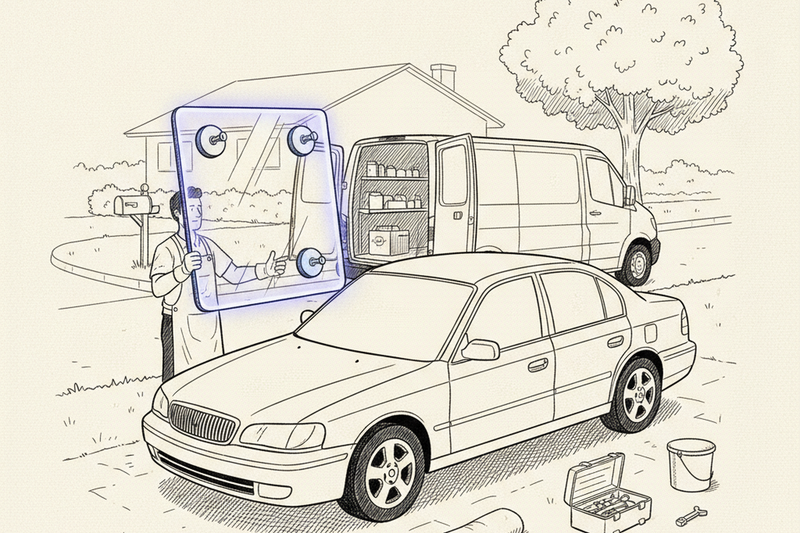
A cracked windshield isn't a research project. Nobody reads five blog posts about laminated glass. They tap the first shop that looks open, close, and capable of dealing with their insurer.
Two very different people make that tap. One has a claim number and wants to know whether you'll handle the paperwork. The other is paying out of pocket and wants a price and a date. Treat them like the same lead and you'll lose both.
Start where they actually land: Google Maps.
What matters most
- Your Google Business Profile is the first screen a driver sees. Fix it before you write anything.
- Insurance jobs and cash jobs need separate pages with separate next steps.
- Mobile service and recalibration are the two things drivers ask about and shops explain worst.
- Fix your existing listings before you build new ones.
- Count booked jobs by source. A ranking screenshot doesn't pay for glass.
Auto glass SEO starts in the Map Pack
Most shop owners start by publishing articles stuffed with city names. Backwards. Someone searching "windshield repair near me" sees the Map Pack, the reviews, the hours, the photos, and the call button long before an article shows up.
Your Google Business Profile is the decision screen. It sets the floor for everything else, especially when a driver is comparing three shops and needs the glass done this week.
Build a profile that matches the shop you run
Pick a primary category that describes the work paying your bills. "Auto glass shop" fits a windshield specialist better than a vague auto repair category.
Keep your name, phone number, hours, website, and services accurate. Add windshield repair, side and rear glass, and recalibration only if you truly do them.
Google's rules on representing your business are plain about this. Your profile should reflect the real shop, not an imaginary version with 14 city names bolted onto the name field.
Google says local results come down to relevance, distance, and prominence. No category tweak makes you the closest shop to a driver 40 miles away.
Set service areas without playing games
If drivers visit your bay and you also dispatch techs, you're a hybrid. Show the address and list the places you cover. If you only travel to customers, set up as a service-area business and hide the address.
Google lets you add up to 20 real service areas. Follow its service-area setup instructions, then delete the towns your van won't actually reach.
Profile upkeep isn't secret work. It's accurate details, current photos, sensible categories, and reviews that look alive. This 30-minute profile check catches the things that quietly cost calls: bad hours, missing services, an old phone number.
Build separate pages for insurance and cash jobs
A claim searcher isn't shopping the way a cash buyer is. One wants to know whether you can handle the claim. The other wants to know how fast you can do it and what moves the price.
A single "services" page forces both into the same conversation. Split them, and make each page point at one action:
- Insurance windshield replacement. The page should cover the claim process, what documents the driver needs, and how scheduling works. Next step: call, or start a claim-assisted appointment.
- Windshield replacement near me. Availability, whether mobile is an option, and what vehicle details you need to quote. Next step: request a quote.
- Rock chip repair. Whether the chip can be repaired at all and how you assess it. Next step: send a photo of the damage.
- Recalibration after replacement. What happens after the glass goes in and who does the calibration. Next step: schedule the inspection.
Each of those is a different question. Answer one per page and give it one obvious button.
Insurance pages need straight answers
Don't write "we work with all insurance" and stop there. Explain how you actually handle a claim: what you document, whether the driver needs a claim number first, whether you bill the carrier directly, and who collects the deductible.
Only promise what your front desk can deliver. Don't imply you're affiliated with an insurer when you aren't. A clear explanation earns more trust than a wall of carrier logos with no context.
Put the phone number near the top. Add a short form for drivers who can't call. List your service area and current availability only if somebody will keep it current.
Cash buyers need an easy quote path
Cash customers don't want a lecture. They want a number and a date.
Ask for the year, make, model, VIN when you need it, the damage type, and a photo. Then explain what changes the price: glass options, rain sensors, cameras, trim.
Some damage can be repaired instead of replaced. Say which jobs qualify and give one clear action.
Build pages for windshield repair, windshield replacement, side and rear glass, mobile work, and calibration. Make-and-model pages help when they carry real fit, sensor, and trim details. Fifty thin pages about F-150 glass won't beat one page that answers a real question.
Give mobile work and recalibration their own proof
Mobile service is more than a line in your footer. It's the reason a stranded driver picks you over a national brand or the shop across town.
Show how it works before they call. Nobody wants to discover a limitation halfway through the conversation.
Make mobile availability impossible to miss
State where your techs travel, when they travel, and which jobs still require a bay visit. Keep mobile hours separate from shop hours if they differ.
Use real photos of your van, your tech's setup, and finished work. Stock photos fill space. They don't prove you're the crew showing up in somebody's driveway.
Don't claim statewide coverage when your furthest dispatch is 25 miles. That wastes call time and buys you bad reviews.
Don't bury calibration in the fine print
A replacement on a newer vehicle can involve forward-facing cameras and driver-assistance systems. Some cars need recalibration afterward. Don't claim every car does. Explain your actual process.
Say whether your team calibrates in-house, uses a partner, or sends the vehicle to a dealer. Say when the driver finds out, what documentation they get, and how it works when insurance is paying.
That page does two jobs. It answers the question, and it shows you understand modern vehicles. A national chain has a bigger ad budget. You can still be the shop that gives a straight answer.
Make Google reviews earn the next call
Reviews aren't a trophy shelf. They're proof for a driver comparing three shops on a phone.
Fresh ones tell people whether you answer the phone, arrive when you said, handle the paperwork, and leave the car clean. The target isn't a magic total. It's a steady flow that looks like a working business.
Ask after the job, not three weeks later
Send a short text or email once the work is done. Thank them, include the review link, ask for an honest note. Ask every customer the same way, then send one polite follow-up and stop.
Don't offer discounts or prizes. Don't screen people before sending the link. And never hand them a script. It makes real customers sound like hostages.
A two-sentence review that names the job and the town answers a buyer's question before they ever reach your site. To see where you stand, compare your listing with the top three shops for your money searches, then use these review benchmarks as a reality check.
Reply like somebody who did the work
Thank happy customers by name when it fits. Mention the job. Keep it short.
For a bad review, reply calmly and invite the person to contact you directly. Never argue about a claim number, a payment, or vehicle damage in public.
Google counts replies, photos, and videos among the things that shape local visibility. More to the point, a thoughtful reply gives the next driver a reason to trust you.
Clean up listings and build real local ties
Your Google listing can be spotless and you can still lose trust everywhere else. Old addresses, dead phone numbers, and duplicate profiles undercut the whole thing.
Local citations are just mentions of your name, address, and phone number across map apps, directories, and local sites. They aren't glamorous. Neither is replacing a windshield in February. Both get done.
Fix wrong listings before adding new ones
Search your company name, your old phone number, and any past addresses. Check Apple Maps, Bing Places, Facebook, and Yelp first, then navigation apps and trade directories. Fix what's wrong before you build anything new on top of it.
A practical first pass is 30 to 35 high-value listings over 60 to 90 days. You don't need 500 junk directories or a subscription that runs forever.
For a dispatch-heavy shop, these service-area business tactics keep your details straight without pretending you have storefronts across town. And if you also handle collision glass, the auto body side of local search covers the estimator and insurer relationships that feed those jobs.
Earn links through actual relationships
Ask the collision centers, body shops, tow operators, dealerships, tint shops, and fleet managers you already work with to list you on their partner or resources page. That's a real referral, and it puts you in front of nearby drivers.
Sponsor a local team if the sponsorship fits. Join the chamber if you'll show up. Write a useful safety guide for a fleet company whose vehicles you know.
Skip paid link bundles and mystery directories. Tag referral links so you can see which relationships actually send calls.
Track booked jobs, not ranking screenshots
A number-one screenshot doesn't pay for glass, labor, or fuel. Track calls, quote requests, direction requests, and booked work you can trace back to search.
An inbound call that becomes a $650 replacement is worth more than 200 visits to a blog post.
Give every lead a source
Add UTM tags to the website link on your profile so you can separate that traffic from everything else. Use call tracking on your site if it won't create conflicting numbers across your listings. Use Search Console to see which queries and pages bring those visitors in.
Train whoever answers the phone to tag each call: insurance, cash, dealer, fleet, referral, wrong number. A spreadsheet beats guessing.
Your monthly view should show:
- Calls and forms from Maps and from organic search
- Direction requests, if you have a customer-facing bay
- Insurance leads versus cash leads
- Booked jobs and average job value by source
That tells you what to fix next.
Remove the booking friction
Open your own service pages on a phone. Can somebody call with one tap? Request a quote without filling out 13 fields? Find your service area, hours, and insurance details in under a minute?
Keep your phone number and address current, and update hours before a holiday weekend catches you asleep at the wheel. Google's steps for editing a verified profile take about four minutes.
Add local business schema that matches what's visible on the page. Treat it as a label for search engines, not a ranking button. Then answer the phone. None of that is glamorous. It books jobs.
Common questions
What is auto glass SEO?
It's the work of making an auto glass shop easy to find, trust, and contact through search: an accurate Google Business Profile, service pages that answer real questions, reviews, clean listings, and tracking that ties calls back to booked work.
Should a shop create separate insurance and cash pages?
Yes. Insurance customers need to know how claims, documentation, deductibles, and scheduling work. Cash customers want a quote and an available date. One page can't do both well.
How much does the Google Business Profile matter for an auto glass shop?
It's usually the first place a driver compares shops. Accurate categories, services, hours, photos, service areas, and recent reviews are what earn the tap.
What should the site say about recalibration?
Whether it's needed for a given vehicle, whether your team does it in-house or sends the car elsewhere, when the customer will know, and how it affects scheduling and the claim.
How should a shop measure results?
Calls, forms, direction requests, lead type, booked jobs, and average job value by source. Rankings are context. Closed work is the score.
Own the searches closest to the damage
The shops that win here focus on nearby demand: accurate details, buying intent, fresh proof, real local relationships, and honest measurement instead of chasing every keyword in the country.
Keep that work moving weekly for 30 to 90 days, not once on a slow Friday. If it keeps getting pushed behind installs and callbacks, that's the ongoing work Curve handles.