
Local SEO for Service Area Businesses: Show Up Where You Work
How service area businesses rank in Google Maps without a storefront — covering GBP verification, service area setup, and local ranking signals.

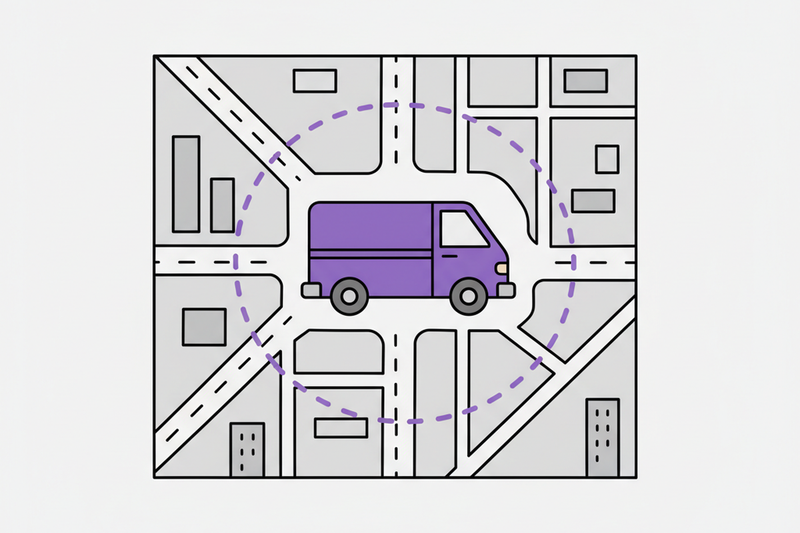
You send crews across half the city, but your calls mostly come from the streets right around your office. Sound familiar?
If you run a home service, medical, or mobile team without a walk-in storefront, you live and die by how you show up in Maps. The problem is, most advice you find when you search for local seo service area businesses is written for classic brick-and-mortar shops, not for you.
This guide walks you through a practical system to rank in more of your true service area, not just your headquarters. You’ll see what to fix in your Google Business Profile, how to build service area pages that actually convert, and how to track real leads instead of vanity graphs.
What Counts as a Service Area Business (and Why It Matters)
Google treats you differently if customers do not visit your location.
If you go to customers’ homes or offices (plumber, roofer, landscaper, mobile PT, cleaning crew), you are a service area business. Your office is just where the trucks sleep, not where revenue happens.
Key differences from storefronts:
- You can hide your address and set service areas instead.
- Your “proximity” in Maps is based on where the searcher is and how strong your local signals are, not just distance to your office.
- Thin city pages and spammy tactics hurt more now than they used to.
Keep this simple rule in mind: Google wants proof that you actually work in the places you list, not just wishful targeting.
Make Your Google Business Profile Your Home Base
For service area businesses, your Google Business Profile (GBP) is where most new customers first meet you. Blog posts will not save you if your GBP is a mess.
Start by cleaning up the basics:
- Pick the right primary category, then add supporting ones that match your real services.
- Use a local phone number.
- Set realistic hours and keep them updated.
- Add clear service areas, but focus on your real core radius first, not every town in the state.
Then move into assets that prove experience:
- Photos from actual jobs in different neighborhoods
- Short videos of your team on-site
- Q&A that answers real customer questions in plain English
Recent Google updates reward helpful, experience-rich content over generic fluff. That applies to your GBP too. This guide on local SEO for service area businesses from Search Engine Journal shows how service area targeting inside GBP ties directly to visibility.
Treat your GBP like a living profile. A slow, steady cadence of posts, photos, and Q&A beats a big one-time “optimization” every time.
Build Real Service Area Pages, Not Copy-Paste City Clones
After GBP, your service area pages are your strongest weapon.
Most businesses either:
- Skip them completely, or
- Create 20 copy-paste “City + Service” pages that say nothing useful
Both approaches waste money.
You get better results when each key city or region page:
- Talks like a local (neighborhood names, common job types, local landmarks)
- Shows 1 or 2 short case stories from that area
- Uses photos from nearby jobs
- Lists the exact services you actually offer there
- Answers simple questions about timing, pricing structure, and warranties
Think of each page as a focused landing page, not a blog post. If you want a deeper breakdown of structure, this guide on service area pages for local SEO offers a useful blueprint.
A simple structure that works:
- Short intro that calls out the city and main service
- Proof that you already work there (jobs, review snippets, years in the area)
- Services list with quick blurbs
- Before/after or mini case
- FAQ with short, honest answers
- Clear call button and simple contact form
You can layer in schema markup later to help Google read the page, but content quality and clarity come first.
Reviews, Local Links, and Citations: Your Trust Trio
Map rankings do not move on keywords alone. Google needs to trust that real people in your service area know you and like your work.
You can think of three main trust signals:
- Reviews
Reviews affect both rank and conversion. Volume, recency, and the words customers use all matter. Build a simple review flow you use after every job: send a short request, follow up once, and reply to every review with thoughtful, unique comments that mention services and locations when it feels natural. - Local links
You do not need thousands of links. A handful from real local sources can help a lot: neighborhood associations, local sponsorships, trade partners, and niche directories. Real community ties are what “near me” visibility tends to track. - Citations
Aim for a solid base of consistent listings on the major directories and map providers. You do not need a pricey subscription forever. A focused push of 30 or so high-quality citations, plus fixes for any old or wrong listings, is enough for most 1–3 location businesses.
When you coordinate reviews, links, and citations around the same priority cities, you start to see your heatmaps fill out beyond your office neighborhood.
We cover what local SEO actually is and how it works in more detail in a separate post.
Keyword Targeting Without Obsessing Over Huge Lists
For a deeper look at getting more Google reviews without begging, we break it all down in a separate guide.
You do not need a spreadsheet with 500 phrases to win local SEO as a service area business. You need a tight set of “money terms” and a clear plan.
Here is a simple way to handle keyword research:
- Start with “service + city” terms that match your best jobs.
- Add problem-based phrases real customers say on the phone.
- Check Google’s “People also ask” and related searches for 3–5 extra ideas.
Then map those terms:
- Home page and core service pages cover the general phrases.
- Service area pages cover “service + city” terms and local variants.
- Blog posts and FAQs pick up the long-tail questions and objections.
The goal is not to rank for everything. The goal is to own the intent that leads directly to calls and booked visits.
Track What Actually Moves the Needle
Rankings are useful, but you do not pay bills with position reports.
For service area businesses, better KPIs are:
- Calls from your GBP
- Direction requests and website clicks
- Form submissions and booked jobs from service area pages
- Review volume and average rating by quarter
Recent core updates from Google also changed how traffic behaves. Many sites saw click-through rates shift even when rankings stayed similar. That is why you should track both position and clicks for your key pages, not one or the other.
Pair your checklist with basic call tracking and GA4 conversion tracking, and you can see which cities and services actually pull their weight.
How Long Does Local SEO Take for Service Area Businesses?
You can usually spot early signals within 30 days if you fix core issues on GBP, reviews, and one or two service area pages.
For meaningful, defendable movement in the Map Pack, plan on a 60–90 day runway:
- Month 1: clean up GBP, start review flow, fix citations, launch or improve key pages
- Month 2: build more local proof (photos, Q&A, case stories, a few local links)
- Month 3: refine based on what is ranking and which pages drive calls
We have seen home service clients move from spot 9 to spot 3 in about two months, with call volume up more than a third, simply by running those basics every week.
You might also want to look at Google Maps ranking factors that move the needle for the bigger picture.
Bringing It All Together
If you only remember one thing, remember this: local SEO for service area businesses is about owning your real neighborhoods, not chasing every keyword on earth.
Dial in your Google Business Profile, build a handful of strong service area pages, create a steady review habit, and track calls instead of vanity charts. That is the system that keeps your crews busy without spending your life in ads dashboards.
If you want help turning this into a calm, week-by-week routine, look at how Curve’s flat-fee Local SEO operating system works and decide if it fits the way you like to run your business.