
Siding Contractor Local SEO: Win Whole-House Jobs
Whole-house siding replacement is a high-trust sale. Here's how a siding contractor shows up on Google Maps looking like the obvious pick — before the homeowner even lands on the website.

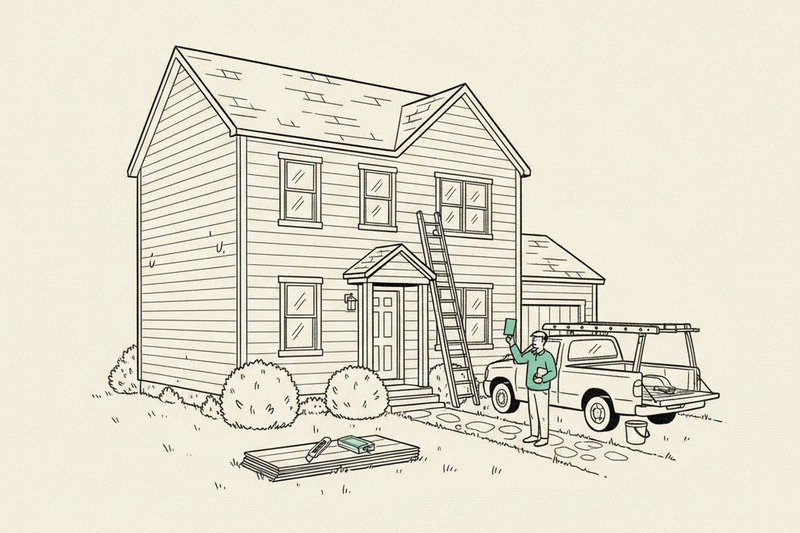
Most siding companies don't lose big replacement jobs because they can't install siding. They lose because a homeowner searches Google Maps, sees three familiar names, and calls someone else first.
A whole-house replacement is a high-trust sale. The homeowner wants proof that you handle big projects, know the materials, show up when promised, and won't disappear after the final invoice.
Siding contractor local SEO puts that proof in front of homeowners already looking for an estimate. Start with the places they see before they ever reach your website.
Key takeaways
- Your Google Business Profile needs to sell full replacement projects, not look like a generic construction listing.
- Photos should show completed homes, materials, crews, and the scale of your work.
- Fresh reviews turn "we need new siding" searches into estimate requests.
- City pages only work when they contain real local proof, not the same paragraph with a city name swapped in.
- Track calls, forms, direction requests, and booked estimates. Rankings alone don't pay for your trucks.
Whole-house jobs start with a different search
A homeowner with one loose vinyl panel may search "siding repair near me." That's a decent lead, but it isn't the same sale as a full replacement. The whole-house buyer searches with more intent: "siding contractor near me," "fiber cement siding," "James Hardie installers," or "best siding company in [city]." They're doing homework, and they're going to pick three companies to quote.
Your siding contractor local SEO shouldn't treat every siding job the same. Your listing, website, and reviews all need to signal:
- You replace complete siding systems, not just patch small damage.
- You work with the materials homeowners are researching.
- You have finished jobs nearby that look like the home they own.
A generic home-improvement contractor profile makes you blend in with deck builders, handymen, and basement remodelers. A vague website does the same thing. You're asking someone to trust you with the outside of their house. The signal has to match the ask.
Whole-house buyers aren't looking for the company with the most blog posts. They're looking for the company that looks ready to do their house.
This is why more traffic isn't the goal. More qualified estimate requests are.
A full-replacement buyer may spend days comparing brands, colors, warranties, and financing. Your job is to show up early and look credible enough to make the short list.
Win the Map Pack before chasing broad rankings
When someone searches for a siding company on a phone, the Map Pack takes over the screen. That's where most calls start, so it deserves the first pass of your work.
Your Google Business Profile is the tool for winning it. If you haven't opened yours in months, pull it up the way a homeowner would — from a phone, in an incognito tab, not from the office wifi that biases Google toward you.
Start with the essentials. Pick Siding Contractor as your primary category if that describes the business. Don't dilute your authority by choosing a broader category just because you also do gutters.
Your Google Business Profile should also include:
- Complete service entries for siding replacement, vinyl siding, fiber cement, engineered wood, and storm damage repair.
- Accurate hours, direct phone number, working website link, and clearly defined service areas.
- Attributes for warranty details, financing options, or manufacturer credentials when they apply.
- A short business description that explains where you work, which materials you install, and why homeowners choose you.
If you run as a service area business from a home office, don't create a fake storefront address. Hide the address and set honest service boundaries. A made-up location might give you a short-term lift before a suspension takes the whole profile down.
For the hands-on fixes, work through our Google Business Profile optimization checklist and clean up whatever's out of date.
Don't stuff city names into every field. That reads poorly and can trigger policy issues. Instead, place city names naturally in your service area list, real project photos, reviews, and page copy.
Make your profile look like a portfolio
A homeowner can't judge flashing, house wrap, or starter strips from a tiny Maps listing. They can judge whether your work looks neat, substantial, and right for a home like theirs.
That's why photos carry so much weight for siding companies.
Upload real work every week. Don't just post your logo, a crew truck in a parking lot, or manufacturer photos every competitor can download in ten seconds. Use the profile like a running portfolio, one project at a time.
Show the complete job. A good set includes a clear before photo, a wide finished exterior shot, closer material details, trim work, gables, and the crew at work. If a project used James Hardie fiber cement, LP SmartSide, or a specific color, name it in the caption. Homeowners searching for those materials scroll past generic "another happy customer" photos.
Take photos in daylight. Stand across the street for the full-house view. Keep the image straight and remove customer house numbers when needed. A phone camera is fine if the work looks clean and the framing is honest.
Add useful captions when the platform gives you room. "Full vinyl replacement in Westerville" tells a homeowner much more than "another happy customer." Mention the material, job type, and city naturally.
Your website should carry the same proof. Build separate pages for the services that make you the most money. A fiber cement siding page shouldn't be a two-paragraph rewrite of your homepage. Show real projects, real materials, and real customers from your area.
This is local SEO in its most practical form. You're making it easier for Google to understand your expertise and easier for a homeowner to pick you.
Reviews do more than raise your star rating
A 4.9 rating with recent, detailed reviews feels different than a 4.9 rating built three years ago. Homeowners notice the date. They notice whether the reviewer had a full replacement or a tiny repair.
Reviews help local rankings and they push conversion. A high average earns the click. Specific reviews earn the estimate.
Don't wait until the end of the month to send a batch of requests. Ask after the final walkthrough, while the house is clean and the customer is still excited. Text the review link within a day or two.
Keep the request plain:
"Thanks again for having us replace your siding. If you're happy with the work, would you leave us a quick Google review? It helps other homeowners find us."
That's enough. Don't offer discounts for reviews. Don't write the review for them. Don't pressure someone who had a rough experience. Google has clear rules around fake engagement, and homeowners can spot a review pattern that feels off.
The best reviews include natural detail. A homeowner might mention fiber cement, vinyl, a full exterior replacement, a neighborhood, or a crew member by name. Those details help future searchers picture the same job on their own house.
Reply to every review. Thank happy customers with a real response. For a negative review, stay calm and move the issue offline. A defensive public argument doesn't win you the next estimate.
A steady review flow beats a one-time burst. Same for photos, posts, and listing updates. Small weekly work looks boring on a task list. It looks like a healthy business to someone comparing three contractors.
For a breakdown of how many reviews you actually need to compete in a given market, see our guide on how many Google reviews it takes to rank.
Build location pages that prove you work there
A siding company may cover ten, twenty, or fifty towns. That doesn't mean you need fifty thin pages with the same copy and a different city name.
Those pages don't help homeowners, and they make your website look lazy. Build a location page when you have something real to say about that market — recent projects, an HOA quirk, a common house style, a common material choice.
A page for Naperville might discuss common issues with older wood siding, HOA approval steps, or why fiber cement holds up well in that climate. A page for a storm-prone suburb might explain your process for insurance-claim replacements.
Each page should answer the questions a homeowner has when they search "siding contractor near me":
- Do you serve my neighborhood?
- What siding materials do you install?
- Can I get a full replacement estimate?
- Do you handle removal and cleanup?
- Can I see work nearby?
- How do I get in touch?
Link those location pages from your Google Business Profile posts when the location matches. Add a clear phone number and estimate form at the top and bottom. Don't bury the contact path behind three menus.
Keep your citations tight, too. Your name, phone number, website, and address should match on Google, Apple Maps, Bing, Yelp, your chamber, and any material-supplier directories you appear on.
Run a weekly cadence, not a one-time cleanup
A one-time cleanup is better than nothing. It isn't enough to defend your spot in the Map Pack.
Competitors collect reviews, post new job photos, update categories, and refine service descriptions. You don't need to obsess over the profile every morning. You do need a steady weekly rhythm.
Each week, add a few completed project photos and check for new reviews. Each month, audit your service areas, profile details, and location pages. Post updates that show real value: a finished fiber cement install, a storm-damage inspection walkthrough, a color-selection story from a completed project.
Track what happens after a homeowner finds you. Monitor calls, form fills, and booked estimates. Ask callers how they found you when it's a natural fit. Your Google Business Profile's Performance tab and Google Search Console give you the data. Both are free.
Local rankings are a leading indicator. Booked estimates are the final score.
Frequently asked questions
How long does siding contractor local SEO take?
Some profile fixes yield quick visibility gains. Building a competitive Map Pack presence usually takes about 90 days. Ongoing work — reviews, photos, updates — is what holds the position long-term.
Should I use my home address if I run a service area business?
Hide the home address to avoid policy issues and possible suspension. Set the service area to the cities you actually cover. A hidden address doesn't hurt ranking; a fake storefront does.
Why do project photos matter so much for local SEO?
High-quality project photos are visual proof of your craftsmanship and the scale of work you can handle. Homeowners can't tour your finished jobs in person, so the photos on your profile do the tour for them.
What should I do about a negative review?
Respond calmly and briefly in public. Acknowledge the concern, offer to make it right, and move the details to a private channel. Don't argue in the review reply — future homeowners are reading.
Make the map listing earn the estimate
A homeowner planning a major exterior renovation isn't shopping for the lowest price. They're buying confidence.
Fix the gaps in your online presence that make you look smaller than the jobs you want. Make the phone number easy to find. Make the estimate form easy to fill. Show real houses you've finished nearby.
Own the searches that lead to whole-house siding replacement, and the phone rings with better-fit work.