
RV Repair SEO Before the Camping Season Rush
One warm week and the shop turns into a phone bank. Here is how to be the RV shop those owners find, with a queue you can actually explain to them.

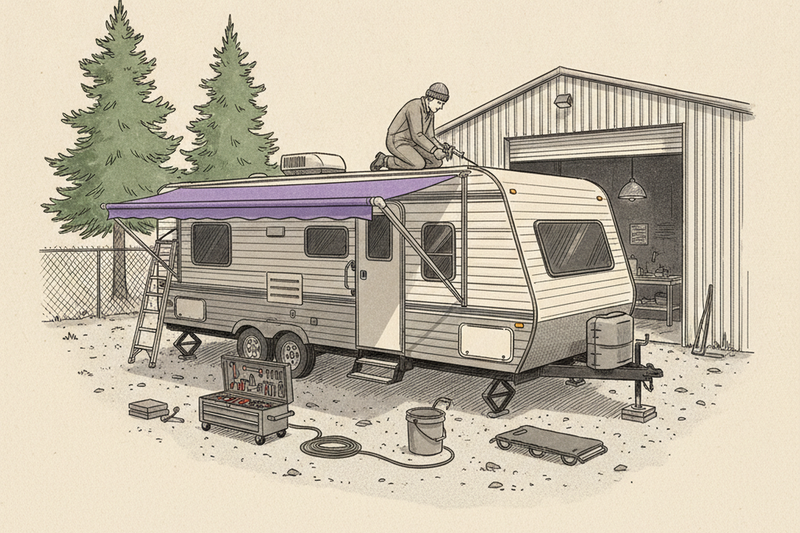
Late spring turns a calm RV shop into a phone bank. Somebody needs a roof resealed before a two-week trip. Somebody else has a slide-out that won't retract and a reservation on Friday. Whether those owners find you or the shop with the louder Google listing gets decided in about six seconds.
Don't answer that with a dozen blog posts. Answer it with the four things an owner actually sees: your profile, the Map Pack, your reviews, and whoever picks up the phone.
Use the weeks before the rush to make those four agree with each other.
What matters most
- Sort out capacity and honest lead times before you turn up the volume on visibility.
- Get the profile right: repairs, service areas, hours, photos, booking.
- Build pages for the repairs you want more of, then ask for reviews as part of finishing every job.
- Keep your listings accurate on the handful of sites owners actually use.
- Track calls, booked diagnostics, approved work, and paid invoices by source.
Start with capacity, not marketing noise
Before you chase more visibility, decide what your shop can absorb during peak season. A full bay and a three-week queue beat a silent phone, but only when callers get a straight answer.
Marketing that fills a schedule you can't touch for a month just generates bad reviews with your own logo on them.
Choose the repairs you want more of
Your own numbers set the order. Roof replacements, water damage repair, slide-out work, electrical diagnostics, brake service, and pre-trip inspections don't take the same labor or bring the same revenue.
Pick two or three you can schedule without wrecking the rest of the week. Then give those the clearest treatment across your profile, your website, and your intake script.
Keep room for trip-stopping problems if that's part of the business. An owner with a failed leveling system isn't shopping for a leisurely Tuesday appointment.
Put the wait time on the phone
Everyone answering calls needs the same short answer: current diagnostic lead time, booking steps, deposit details. Tell callers whether you take drop-offs, offer pickup, or send a mobile tech.
Your profile, your website, and your voicemail should tell the same story. If you have a four-week queue, don't advertise "fast RV repair" and let the service advisor break the news later.
Clear expectations won't reduce demand. They'll reduce frustration.
Make your Google Business Profile worth the call
Your profile is the decision screen most owners see before your website. It answers four plain questions: Can you fix my problem? Are you open? How far do you travel? Can I trust you with my rig?
That's where the work starts.
Set the right business model
A shop that welcomes drop-offs should show its real address and customer hours. A mobile tech who doesn't receive customers at a base should hide the address and use the service-area setup. Do both and you're a hybrid, and your profile should say so.
Google lets service-area businesses name up to 20 cities, postal codes, or regions. It doesn't allow a giant radius circle, and its service-area guidance says coverage should stay within about two hours of your base.
Don't create extra profiles at a storage lot, a friend's garage, or a mailbox. One real business gets one real profile for the area it serves. A fake location looks clever for a week, then becomes a suspension.
Show owners what the work looks like
If "RV repair shop" describes the work that pays your bills, make it your primary category. Add only real supporting categories and services, written in owner language: roof leak repair, slide-out repair, electrical troubleshooting, winterization, trailer brake repair, pre-trip inspection.
Complete services, accurate hours, and real photos help you show up. Add holiday hours before the rush. Post two or three real photos a week: your bays, your techs, finished roof work, a clean mobile setup, the equipment you actually use. Stock photos prove nothing.
Run this 30-minute profile check before the phones get busy. Small errors are cheap to fix in March and expensive in June.
RV repair SEO starts in the Map Pack
Most local marketing advice starts with a content calendar. That's backward. When an owner searches "RV roof repair near me" from a campground or a highway exit, the Map Pack is the short list they tap.
Google says local results depend mainly on relevance, distance, and prominence, per its guidance on how local results work. Your profile clarifies relevance. Distance is the part you can't talk your way around, and repeating a city name in your footer won't move your shop 70 miles closer.
Check your position by town, campground area, or highway corridor, not as one metro-wide average. An average hides the places where you're invisible.
For a closer look at the signals worth working on, see what moves Google Maps rankings. The point isn't to own a whole state. It's to own the places where you can answer the phone and do the work. If your shop also handles the towing side or motorcycle work, the same logic applies with different categories.
Build pages for repairs worth booking
A homepage that says "full-service RV maintenance" tells a worried owner nothing. They aren't looking for a brochure. They're looking for help with the leak over the bed or the slide that won't move.
Your site should meet that search with a direct answer.
Give major services their own page
Build a page for each repair category you want to book. Start with work that fits your staff and your schedule: roof leaks and water damage, slide-out repair, electrical, plumbing, brakes, pre-trip inspection, winterization.
Each page should explain the common symptoms, the kinds of units you service, what the first appointment involves, and where you work. A water damage page should cover leak symptoms, inspection scope, affected materials, and whether the job runs mobile or in the shop. Add photos from real jobs, not a wall of generic copy.
Every page needs a next step: phone number, booking link, hours, and a plain line about current diagnostic availability.
Don't manufacture city pages
An "RV repair in [city]" page only earns its place when you have something real to say. Maybe you cover that city on mobile calls, have repeat customers there, or regularly handle campground work nearby.
Don't copy one page 30 times and swap the town name. Google has seen that trick. So have customers.
Use city pages sparingly, built around genuine coverage, local photos when you have them, honest travel expectations, and the services people in that area actually request.
Google reviews need a real workflow
Reviews aren't a gold star you collect once and forget. They help owners decide who gets the call, and steady recent feedback supports your visibility.
The fix isn't begging for five stars at the counter. It's making the request part of how you finish every job.
Ask after the repair is complete
Send the request when the customer has their keys back, the system works, and the invoice is settled. Google lets you request reviews from your profile with a direct link or a QR code.
Keep it short. Thank them for trusting you with the rig. Ask them to say what you repaired if they're willing. Send one follow-up a few days later, then stop.
Don't offer a discount for a review. Don't ask only the customers you expect will leave five stars. That catches up with businesses.
Reply to every review within two business days. Thank the customer, mention the repair when it reads naturally, and keep private details private.
Treat backlog updates as reputation work
A long queue doesn't have to wreck your rating. Silence does.
Send a booking confirmation with the estimated diagnostic date. Send another note if the date moves. If parts are backordered, say so before the customer has to chase you. Put one person in charge of those updates.
A six-week wait isn't the problem. Letting somebody find out after three unanswered voicemails is.
And don't ask for a review while the rig is still sitting behind the fence. Finish the job, communicate well, then ask.
Clean listings beat more software
Local citations are the listings of your name, address, phone, and website across places like Apple Maps, Bing, Facebook, Yelp, and RV-specific directories.
They aren't glamorous. Neither is correcting a wrong phone number. Both save booked jobs.
Fix the listings people actually use
Start with Google, Apple Maps, Bing Places, Facebook, Yelp, and the RV directories owners really browse. Note what each one currently says before you change anything.
Keep your name, address, phone, hours, and website consistent everywhere. If you're a service-area business, don't publish an address customers can't visit.
A sensible first pass is about 35 high-value listings over 60 to 90 days. You don't need 400 directory links from sites nobody visits, and you shouldn't have to rent your own business information forever.
Recheck after a move, a phone change, new hours, or a rebrand. Old data has a long shelf life online.
Buy less software, use it better
There's a whole market of listing-management and rank-tracking tools, and most of them do roughly the same four things: find duplicate listings, push corrected details to partner sites, alert you to new reviews, and check your position from different locations.
Any of them will work. None of them will do the job for you. Choose by workflow, not by feature list, and answer three questions before you subscribe:
- Who approves the changes? Listing corrections need a human who knows the right answer.
- Who owns review replies? An alert nobody reads is worse than no alert.
- What will you actually act on? Track only the locations and services you can do something about.
If a dashboard finds 80 errors and nobody fixes them, that software is expensive wallpaper. A spreadsheet and a recurring calendar block beat an unused subscription every time.
Track jobs, not pretty charts
A top ranking is nice. A call that turns into a paid roof repair is nicer.
That means matching every lead source to what happened after the first call.
Tie calls to invoices
Create simple lead-source options in your shop software: profile call, organic search, ads, referral, repeat customer, other. Whoever answers the phone picks one.
Count profile calls separately from website leads. Record the source even when a call only becomes an estimate.
Then carry that source through the estimate and the invoice. A customer note or a consistent job tag works fine. At month-end, compare calls, booked diagnostics, approved work, and paid invoices by source.
If you run paid search alongside this, Google Ads can track calls from your website and landing pages. Compare paid calls against organic leads and profile calls before you judge any channel.
A form fill is not revenue. A 45-second phone call isn't either. Measure the work that closed.
Use the next 30 days well
Put this in motion before demand spikes:
- Fix profile categories, hours, services, service areas, photos, and booking links.
- Write or rebuild pages for the repairs you want more of.
- Test every phone number, form, and after-hours message from a customer's point of view.
- Clean up your major listings, then record where you currently rank in the towns that matter.
- Set up review requests and backlog updates before the first busy week.
- Review calls, booked jobs, and paid invoices monthly against those sources.
Give it 30 to 90 days for a clean read. Early signs are more profile activity, more reviews, and better-qualified calls. Rankings move slower than that.
Common questions
What should a shop handle first before the season?
Confirm which repairs you can actually take on and publish honest diagnostic lead times. Then make your profile, website, voicemail, and phone staff say the same thing.
How much does the Google Business Profile matter?
It's where most owners judge your services, hours, coverage, and credibility before they ever reach your website. Complete details, fresh photos, and recent reviews are what earn the call.
Should I create a page for every service city?
Only where you have genuine coverage, real customers, or something useful to say about that area. Copying a page across dozens of towns creates thin pages and costs you credibility.
How should I measure results?
Connect each lead source to calls, booked diagnostics, estimates, and paid invoices. Rankings and form fills are signals. Closed jobs are the score.
Keep the phone promise
Camping season doesn't need another marketing stunt. It needs a shop that shows up clearly, answers honestly, and makes booking the right repair easy.
Get the profile, the service pages, the reviews, and the listings pulling the same direction. That's how you hold the Map Pack without ad-spend roulette. If keeping that running is the thing that never happens in June, it's the work Curve handles.