
Can You Rank in Nearby Cities Without an Address? Mostly Yes, With Limits
Search your business from the next town over. Sometimes you show up. Sometimes you vanish like you never existed. Here's how service-area businesses actually rank in nearby cities — and where the limits are.

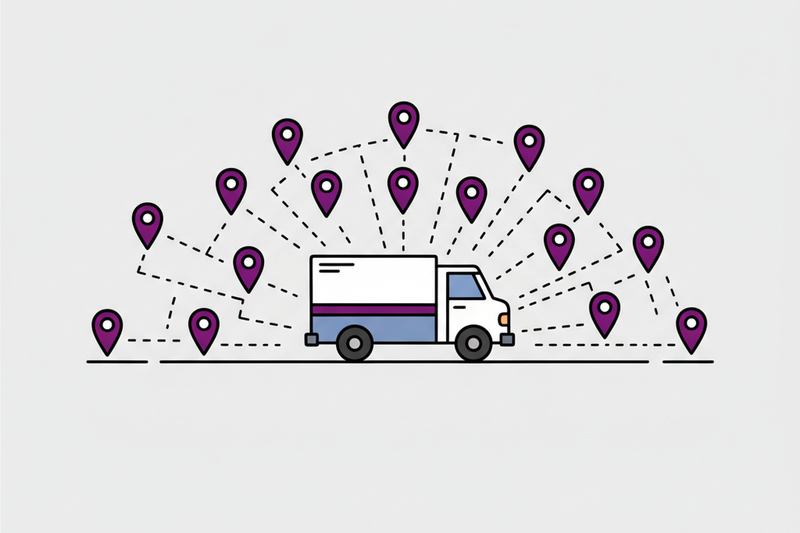
Search your business from the next town over. Sometimes you show up. Sometimes you vanish like you never existed.
That's the frustrating part of running a service business with a hidden address. You can rank in nearby cities, but you can't bully Google into treating every suburb like home base. There's a way to expand your reach, though, and it starts with understanding the rules Google is already using.
The short answer: yes, but there are limits
If you run a service-area business, you can rank in nearby cities without showing a public address. But you won't rank evenly across the whole metro.
Google still ties your profile to a real, verified location behind the scenes. Hide the physical address if customers don't visit you, sure. Google still knows where you're based.
Your strongest visibility sits closest to that base. A few miles out, you may still show well. In the next city over, maybe. Across the region, probably not unless competition is weak or your local signals are much stronger than everyone else's.
Your service area tells customers where you go. It doesn't tell Google you deserve to rank there.
Here's the simple version:
- Near your hidden base — you can compete for Map Pack spots. Strong geographic relevance.
- In an adjacent neighborhood — you may rank if your profile and site are strong.
- In a nearby city with strong storefront competitors — it gets much harder.
- Far across the metro — you usually need a real location there.
Buyers search service + city, then pick from the map results. If you don't have proof in that part of town, you don't get much love there.
Set expectations like an adult, not a late-night infomercial. Fast fixes on your Google Business Profile and review flow can happen in week one. Defensible ranking lift takes 30 to 90 days.
What Google actually uses
A lot of bad advice starts with city lists. Add 20 towns to your Google Business Profile, build 20 pages, call it strategy. That's backwards.
Google works off three plain ideas: relevance, proximity, and prominence. Proximity is the part most owners want to argue with. It still matters, even when your address is hidden.
Google's service-area guidance says you can hide your address, use service-area settings to add up to 20 service areas, and define them by city, postal code, or another real area. Google also says those service areas should stay accurate and within about two hours of your base. That's helpful for setup. It's not a ranking shortcut.
Service areas are descriptive. They aren't magic beans.
So what moves the needle? Your primary category. Your services. Reviews — they matter more than most owners assume. Fresh photos. Consistent business details across the web. A website that clearly connects your services to real places you serve. Calls, clicks, and direction requests that show people trust you.
Map Pack first beats "publish more blog posts" for most local businesses. If you're a plumber, med spa, roofer, or dentist, the buyer searches with location modifiers and sees the map before your 1,800-word article.
If you need to reset the foundation before chasing nearby cities, our guide to what local SEO is for a small business walks through the basics without the fluff.
How to build proof in nearby cities
Want to rank in nearby cities more often? Give Google reasons to believe you belong there.
Start with honest coverage. If you serve Dayton, Kettering, and Beavercreek, say that. If you don't serve Columbus, don't add Columbus because it feels ambitious on a Tuesday.
Next, match your website to reality. Build city-specific landing pages for cities you truly work in, but make them real. Talk about the service you provide there, the jobs you see, the neighborhoods you cover, the response times you can hit, and the proof you have from that area. Connect these pages via internal links. Thin, copy-paste pages are getting hit harder now, and they should.
Cadence beats stunts. One big "SEO project" won't save you. Weekly work does.
The nearby-city playbook usually looks like this:
- Keep your Google Business Profile active every week with real updates, real photos, and fresh review replies.
- Collect testimonials and reviews from customers in the cities you want more traction in.
- Add job photos and short updates tied to those markets.
- Clean up citations and keep your business details consistent.
- Track calls, forms, and direction requests, not vanity charts.
A home-services business that followed this pattern moved from Map Pack #9 to #3 in about 60 days, with calls up 38%. Not because of some trick. Because the basics were finally done every week.
The same thing shows up in reputation work. One med spa lifted its average rating by 1.1 stars in 90 days, doubled review velocity, and saw bookings rise. Reviews aren't just social proof. They influence ranking and conversion.
If review volume in those nearby cities is thin, that's the lever to pull first. Work through how to get more Google reviews before you build another city page.
What stops working fast
A lot of common local SEO mistakes come from trying to fake scale.
If you've wondered why you dropped out of the local Map Pack, the answer is often boring. Stale reviews. Weak photos. Wrong category. Inconsistent listings. Dead profiles. Thin city pages. Or a competitor with a better weekly cadence.
If you're searching how to recover from a local SEO penalty, check for the obvious mess first. Keyword-stuffed business names, spammy city pages, fake reviews, and locations that don't meet Google's rules are the usual suspects. Trying to rank without a physical address means you need much stronger signals everywhere else.
Google has gotten less patient with lazy multi-city content. If every city page says the same thing with the city name swapped out, that isn't local proof. That's a photocopier.
The same goes for profile activity. Think weekly, not quarterly. Two or three real touches a week is better than one big burst every two months.
And if you're chasing photos that get clicks, use real-world ones. Your crew. Your truck. Finished work. Before-and-after shots. Customer-uploaded images help too. Stock photos don't convince anyone, and they don't help you look local.
If you want a closer look at what Google weighs in the local algorithm, our breakdown of Google Maps ranking factors covers it without the jargon.
The same rule applies in every niche
The business model changes — plumber, med spa, accountant, attorney, optometrist. Google's local logic doesn't.
Whether you travel to the customer or serve a region from one base, you still need proof tied to the places you want to win. Competitive verticals feel this even more. Storefront competitors often have a distance edge, stronger citation authority from brand searches, and more patient reviews. Generic advice on "near me" rankings rarely lands unless it deals with proximity head-on.
Adjacent topics matter too. Service-area-vs-storefront rules differ. Seasonal demand swings affect how often you should update the profile. Apple Maps, Bing, and the major directories should match your Google data.
Newer questions don't change the core playbook. Voice search. ChatGPT for local search. Google AI Overviews. All of it comes back to the same basics: clear services, clear geography, direct answers, fresh reviews, and up-to-date business info.
The channel changes. The need for local proof doesn't.
FAQs
Can I rank in nearby cities without showing my address?
Yes, if you're a service-area business with a verified hidden address, you can appear in nearby searches. Google ties you to your real base, so rankings fade beyond a few miles unless your signals beat weak competition. Set service areas accurately within two hours of your base for honest coverage.
Do service areas guarantee rankings in those cities?
No. Service areas tell customers where you go but don't override Google's relevance, proximity, and prominence factors. They're descriptive, not magic. Strengthen with local reviews, photos, and site proof instead.
How do I improve rankings in nearby cities?
Keep your profile active weekly with updates, job photos, and review replies from those areas. Build real city landing pages with neighborhood details, response times, and internal links. Clean citations for consistency. Track calls and directions, not just rankings. Results compound in 30 to 90 days.
Why did I drop out of the local Map Pack?
Usually stale profiles, weak reviews, inconsistent listings, thin pages, or better competitors with weekly cadence. Check for spammy tactics like keyword-stuffed names or fake locations first. Fix basics — category, photos, activity — before chasing penalties.
How often should I update my Google Business Profile?
Weekly, with two to three real touches like photos, updates, or review replies. Beats quarterly bursts. Fresh content shows activity and builds trust signals. Tie updates to target cities for better nearby proof.
The bottom line
A hidden address doesn't block you from ranking in nearby cities. Weak local proof does.
If you want to rank in nearby cities, stop chasing vanity city lists. Build real evidence in the markets you already serve, keep your GBP active every week, and make your site match the truth on the ground.
Want a clean next step? Run through the Google Business Profile basics first and fix the gaps before you add another city page.