
Pressure Washing SEO: Fill Your Route With Better Jobs
A driveway job at 10 a.m., a siding wash two blocks over at 1 p.m., no windshield time in between. That's the kind of day pressure washing SEO is supposed to build. Here's the playbook that actually gets you there.

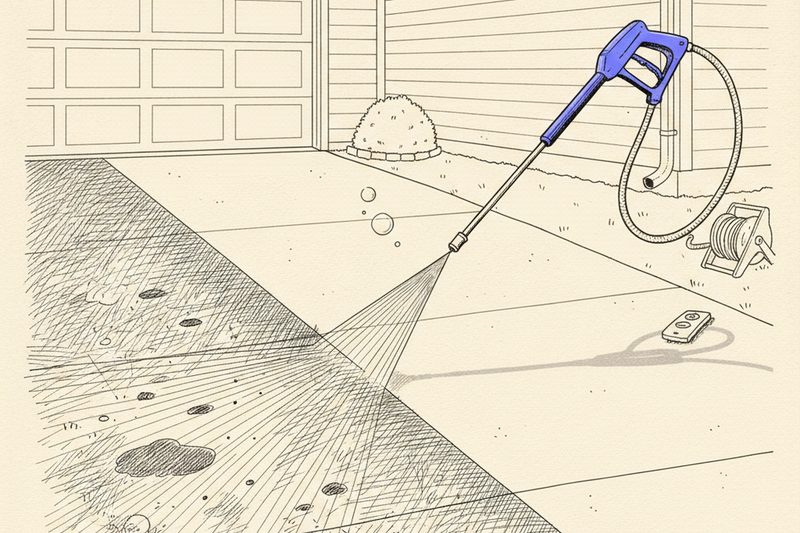
A driveway job at 10 a.m., a siding wash two blocks over at 1 p.m., no windshield time in between. That's the kind of day pressure washing SEO is supposed to build for you.
The point isn't a prettier ranking report. The point is homeowners with stained concrete or algae-green siding finding you before they call the first name that shows up. Whether they search for house washing or power washing, you want to be the obvious local choice.
The goal isn't just a pretty ranking report. It's a fuller calendar, better fit calls, and jobs grouped close enough to make the day pay.
Key Takeaways
- Focus on homeowner searches with buying intent, such as "driveway cleaning near me" and "house washing in [city]."
- Build individual service pages for driveway cleaning and house washing to establish authority before creating thin content for every surrounding town.
- Keep your Google Business Profile accurate and active by loading it with photos and proof from your latest jobs to boost local visibility.
- Ask every completed customer for an honest review. Never buy reviews, gate reviews, or use fake accounts.
- Execute a 90-day plan, then judge your success by booked jobs, call quality, and route density rather than local SEO rankings alone.
Start With the Jobs You Want on the Truck
Most contractors make the same mistake. They try to rank for every service, every city, every question, and every possible version of pressure washing.
That sounds thorough, but it usually produces a scattered website and scattered leads. You should instead focus on the work that makes sense for your crew, equipment, season, and average ticket. For many residential companies, that means driveway cleaning, house washing, patio cleaning, deck washing, and roof cleaning where properly trained and insured.
Driveway and siding jobs are a strong place to begin because the customer need is easy to understand. A homeowner sees black streaks, algae, tire marks, or dull concrete, and then they search for a local fix.
Those search queries tend to look like this:
- "driveway pressure washing near me"
- "house washing [city]"
- "siding cleaning [neighborhood]"
- "power washing company near me"
- "professional power washing services"
- "concrete cleaning [city]"
The first four search queries usually carry stronger booking intent. The homeowner wants a company, a price range, a callback, or an open slot. The last two may be research searches. They can still turn into jobs, but they aren't where a small contractor should spend all day writing blog posts.
The best local SEO strategy starts with the work you want more of, rather than performing endless keyword research for phrases nobody calls about.
Pick three to five money services. Then, pick the cities, neighborhoods, and ZIP codes where you can profitably work. If a job is 45 minutes away and you only book one every other week, being visible there may not improve your business. It may only add unnecessary windshield time.
Google's local results are shaped by relevance, distance, and prominence. Distance is set by the searcher. The other two are yours to move — with a real service-area setup, accurate profile details, and reviews that stack up week by week.
Build around your actual service area. That's how you fill a route instead of filling your phone with calls you don't want.
Build Service Pages That Answer a Homeowner's Question
A generic homepage that says "residential and commercial pressure washing" won't carry the whole load. It tells Google and homeowners very little about the job they need done. To improve your website design, you need to prioritize user experience by creating dedicated service pages that directly address what your customers are looking for.
A homeowner with a stained driveway wants to know three things fast:
- Do you clean driveways like mine?
- Do you work in my area?
- Can I get a quote without a song and dance?
Give them one focused page for driveway cleaning and another for house washing. These service pages should explain the work, show real proof, answer common concerns, and make requesting an estimate easy. A mobile-friendly layout and fast site speed are essential here, as most homeowners will be searching for these solutions on their phones.
A driveway page might use a title tag like:
Driveway Cleaning in Toledo, OH | ClearView Pressure Washing
The page headline could read:
Get Your Driveway Looking Clean Again
Then get practical. Explain that you remove embedded dirt, algae, mildew, tire marks, and surface buildup where appropriate. Say what type of concrete you work on. Explain how estimates work. Add before-and-after photos from your own jobs. A photo of an actual driveway beats a stock photo every time.
Here's a simple opening paragraph you can adapt:
Dark stains and algae can make an otherwise well-kept home look tired. We clean concrete driveways across Toledo with professional surface-cleaning equipment and a process built for your property's condition. Send a few photos for a straightforward estimate.
That copy does three jobs. It names the service, it names the location, and it speaks to the reason a homeowner cares.
Your house washing page should be just as direct. Don't treat house washing as interchangeable with blasting siding at full pressure. Different surfaces need different methods, including soft washing for vinyl siding, painted trim, brick, and stucco to ensure delicate exterior features remain protected.
A house washing page could say:
Green algae, pollen, and grime build up faster than most homeowners expect. Our exterior house washing service uses soft washing techniques on siding and trim, so your home looks cared for without unnecessary wear.
Keep claims honest. Don't say every stain will disappear. Don't promise that every surface is safe for the same process. Homeowners trust a contractor who explains limits before the job, not after it.
Each core page should include the right on-page SEO elements:
- A short explanation of the problem and service
- Real photos from completed jobs
- The cities or neighborhoods you serve
- A clear quote form and tap-to-call button
- A short FAQ about pricing, preparation, pets, plants, or drying time
- A few customer reviews, used with permission
- Business name, phone number, and service area in the footer
Avoid cloning one page 20 times and swapping the city name. Driveway cleaning in Perrysburg, Maumee, and Sylvania shouldn't be the same page wearing different name tags.
Create separate area pages only when you have enough real material to make them useful. That could include job photos from the area, local service details, an office or legitimate service presence, neighborhood references, and a clear reason residents should choose you.
Thin pages aren't a route plan. Consistent, high-quality website design will ultimately help you convert more visitors into paying clients.
Treat Your Google Business Profile Like a Sales Page
For most pressure washing companies, your Google Business Profile is the first thing a local prospect sees. When someone searches for pressure washing, Google Maps hands them a short list — name, rating, photos, category, hours, and a call button. That screen is where the choice gets made.
A weak profile leaves money on the table. An incomplete profile is worse than a quiet salesperson; it makes a homeowner wonder if the business is still around. Managing your profile effectively is a core component of search engine optimization, and it serves as the foundation for your local digital marketing efforts.
Start with the basics:
- Use your real business name, exactly as you use it on your truck, website, and invoices.
- Choose the most accurate primary category, often "Pressure washing service."
- Add secondary categories only for services you truly provide.
- Set hours that match when someone can reach you.
- Add your website and a direct phone number.
- Set your service area around places you actually serve.
- Fill out every relevant service field with plain language.
- Add current job photos on a steady schedule.
Google's Business Profile guidelines are clear on one point that trips up contractors: don't create fake locations. A mailbox, friend's house, empty office, or rented desk doesn't give you a valid second profile.
If customers don't come to your address, hide the address and use a service-area setup. List real cities or ZIP codes you serve. Don't claim an entire state just because you would take a job there if the price was high enough.
Your business description should sound like a contractor, not a brochure. Try something like:
Residential pressure washing for driveways, siding, patios, and exterior surfaces in Toledo and nearby communities. Get a clear estimate, reliable scheduling, and job photos you can review before we leave.
Skip the stuffing. You don't need to repeat "best pressure washing Toledo" five times. Homeowners can smell that, and Google can too.
Use the photo section to reduce doubt. Upload wide shots of finished driveways, close shots that show the surface condition, your crew working safely, your truck, and the exterior of jobs where the homeowner has approved photos. Keep faces and house numbers out unless you have permission.
Posts can help you show recent work and seasonal availability, but don't treat them like the whole strategy. A solid Google Business Profile, useful service pages, honest reviews, and clean business details carry more weight over time.
Reviews Turn Interest Into Calls
A homeowner comparing three pressure washing companies isn't grading your keyword density. They're looking at your rating, recent reviews, job photos, and whether your business feels real. That's why the review request cadence matters more than most contractors think.
Reviews help with trust first. They also give future customers useful details. A review that says, "They cleaned our algae-covered siding before our graduation party," tells the next homeowner more than a generic five-star rating. These authentic testimonials also help you stand out in local search results, proving to potential clients that you're the preferred choice in their area.
Ask for a review after every completed job. Not only after the easy jobs. Not only from customers you think will leave five stars. Ask everyone, politely and consistently.
A simple text message works:
Thanks again for having us out today. If you have a minute, would you share an honest Google review about your driveway or house washing service? It helps local homeowners find us. [Review link]
Don't offer gift cards, discounts, or raffle entries in exchange for reviews. Don't ask family members who were never customers. Don't use review-gating software that only sends happy customers to Google. Those moves violate Google's review and contribution policy, and they create a problem you don't need.
Consistent review management is essential, and you should aim to respond to all feedback, including the occasional unhappy one. Keep replies calm and short. Never post customer details. For a positive review, mention the service naturally:
Thanks, Maria. We're glad the driveway cleaning turned out the way you hoped. We appreciate you trusting our crew with your home.
For a negative review, acknowledge the concern and move the conversation offline:
We're sorry the visit missed the mark. Please call our office so we can review the job details and work toward a fair resolution.
The pattern matters more than one big review push. Ten real reviews spread across several months look healthier than 30 reviews appearing on a random Tuesday.
Build Routes Around Service Areas, Not Random Calls
Good local visibility can create a new problem: too many jobs in the wrong places.
A full schedule isn't always a profitable schedule. Three $250 driveway jobs spread across 80 miles can eat a full day. Three jobs in the same neighborhood can leave room for a fourth.
Choose a manageable service area. For a one-truck operation, that might mean a home base plus three to six nearby communities. Put those places on your website, profile, estimate form, and booking process.
Then schedule with intent.
If Tuesday is your west-side day, offer west-side callers Tuesday and Thursday openings first. If you book a siding wash in a neighborhood, look for nearby estimates before you drive away. A yard sign, a door hanger where allowed, and a friendly mention to immediate neighbors can help. Keep it respectful, as nobody wants a contractor treating the block like a carnival midway.
Your quote form should collect more than a name and phone number to improve your lead generation. Ask for:
- Street address or ZIP code
- Service needed
- Property type
- Preferred time frame
- Photo uploads, if your system allows them
That information helps you qualify the job before the callback. A driveway photo tells you more than a vague "need pressure washing" form submission ever will. In the exterior cleaning industry, being selective about where you work is the difference between a busy day and a profitable one.
Keep your service pages tied to real work zones. If siding cleaning is profitable in three nearby cities, make those markets easy to find. If a distant suburb isn't worth the drive, don't build a page for it and hope the route works itself out.
Pressure washing SEO should support your operations. It shouldn't create chaos for the person driving the truck.
A Practical 30/60/90-Day Plan
Most businesses need time before local visibility and lead quality improve. Google has to recrawl pages, profile changes need time to settle, and real review habits take repetition. Because search engine optimization is a long-term strategy, results vary by location, competition, proximity, season, and the condition of your starting point.
Here's a practical first 90 days.
Here's a practical first 90 days:
- Days 1–30: Fix profile details. Claim key listings. Build or improve your driveway-cleaning and house-washing pages. Add tracking links. Ask for reviews after every job.
- Days 31–60: Add real job photos weekly. Publish useful service updates. Improve weak sections on service pages. Reply to every review. Check what competitor profiles are actually doing.
- Days 61–90: Review demand by service area. Add local pages only where you have real material. Tighten the quote intake. Compare booked jobs by ZIP code and service type.
During the first 30 days, fix the technical SEO foundations of your online presence. Ensure your business details are consistent across your website, Google, Apple, Bing, Facebook, and major local listings. These citations help search engines verify your business legitimacy. Your name, address where applicable, phone number, and website should match exactly. A business that appears as Joe's Wash Pros LLC in one place and Joes Power Wash Toledo in another creates unnecessary confusion for both customers and search algorithms.
Days 31 through 60 are about proof and consistency. Add two or three fresh job photos each week to your profile. Ask for reviews after every completed job. Update your service pages when customers keep asking the same question. If people ask whether they need to move patio furniture, put the answer on the page to build trust and authority.
By day 90, look beyond rankings to assess your overall digital marketing performance. Which neighborhoods produce the best jobs? Which service page sends the most quote requests? Are driveway leads turning into work, or are callers only price shopping? That's the information that should shape the next quarter of your growth.
Track Leads That Turn Into Work
A high rank in the Map Pack feels good, but it doesn't pay payroll. Tracking your search engine rankings is only the beginning; the real goal is to turn that organic traffic into scheduled work.
Track the full path from an initial search to a booked job. Use UTM tags on the website link in your Google Business Profile so your analytics can distinguish traffic coming from your profile versus other sources. If you don't have a dedicated CRM, keep a simple lead sheet to manage your lead generation efforts.
For every lead, record:
- Date and source
- Service requested
- ZIP code or neighborhood
- Estimate amount
- Booked, lost, or pending status
- Reason the job was lost, when known
This takes a few minutes a day, but it pays for itself when you identify patterns.
Maybe driveway cleaning calls book at a high rate in two specific ZIP codes. Maybe house washing leads are solid, but only when photos are included on the contact form. Maybe a distant city generates calls, but not enough profit once you factor in drive time. You can't see these operational insights in a standard rank tracker.
Monitor your Google Business Profile calls, website form submissions, and direction requests alongside your review growth and total booked revenue. Compare those numbers directly to the services you want to focus on.
Plain reporting beats vanity charts every time. As a contractor, you need to know whether your calendar actually improved, rather than focusing on whether a search visibility graph showed a nice upward slope.
Frequently Asked Questions
How long does it take for pressure washing SEO to show results?
Most contractors see meaningful shifts in lead quality within 90 days. While some technical fixes provide instant benefits, building a reputation with consistent reviews and local proof is a cumulative process that grows over time.
Should I create separate pages for every town I serve?
Avoid creating thin, duplicate pages for every surrounding city just to chase rankings. Only build a dedicated local area page if you have unique photos, service details, and enough local presence to make that page genuinely useful for a potential customer.
Does a high search ranking guarantee more profit?
A high ranking is only valuable if it brings in jobs that fit your route and equipment. Prioritize lead quality and route density over vanity metrics to ensure your digital marketing efforts actually translate into a fuller, more profitable calendar.
Build the Route You Want
The strongest pressure washing SEO strategy isn't about appearing for every possible search term. Instead, it's about becoming the obvious local choice for driveway cleaning and house washing in the specific neighborhoods you can serve efficiently.
Keep your Google Business Profile honest and active. Ask for real reviews after every job. Build service pages that actually answer the questions a homeowner has before they call.
Pressure washing SEO that actually works isn't about ranking for every possible phrase. It's about being the obvious local choice for driveway and house-washing calls in the neighborhoods you can serve efficiently. A packed route beats a top ranking that sends callers 45 minutes away.