
Mold Remediation Local SEO for Insurance-Referral Work
Mold remediation local SEO for insurance-referral work: mold inspection, air quality testing, and the documentation adjusters look for. Companion piece to our water damage restoration guide.

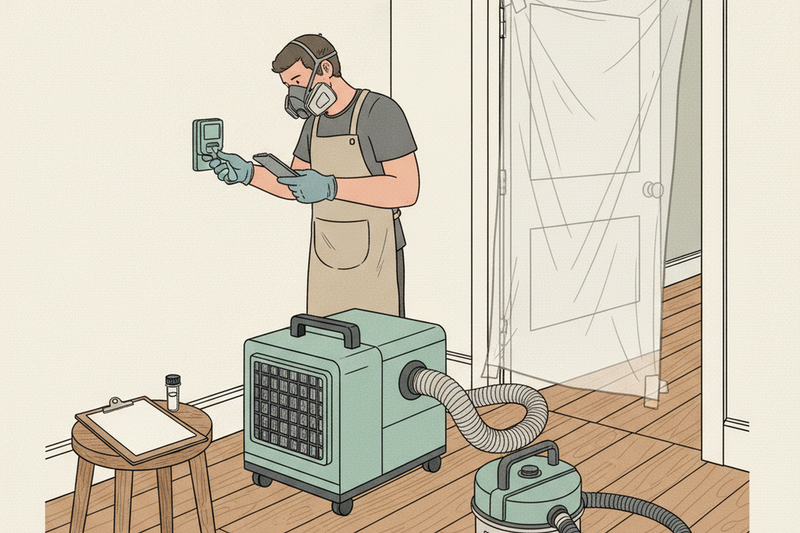
At 7:15 a.m. a homeowner spots a dark patch behind the basement wall, calls their insurance, then opens Google before breakfast. If your company doesn't show up, the job goes to somebody else.
This guide covers mold remediation local SEO — mold inspection, air quality testing, containment, and the insurance-referral work that follows. That's different from emergency water damage restoration: extractions, drying, and pumping out a flooded basement at 2 a.m. If you do both, run both plays.
For post-flood extraction and drying work — the search intent that hits at 2 a.m. — see our companion piece on water damage SEO for restoration companies.
Insurance-referral work starts with visibility and trust, then turns into booked inspections when your company is easy to verify.
Key Takeaways
- Keep one accurate Google Business Profile with the right categories, real service areas, current hours, a local phone number, and regular job photos.
- Build useful mold remediation and service area pages that explain your process, address health concerns responsibly, and include real local proof.
- Collect detailed Google reviews that mention the work performed, communication, and documentation — without exposing private claim or health information.
- Make insurance-referral proof easy to verify — IICRC certifications, state licenses, documentation practices, response areas, and communication processes.
Track calls, form submissions, referral sources, and booked inspections over 60 to 90 days so decisions are tied to revenue, not rankings alone.
Why mold remediation local SEO starts with your Google Business Profile
Most restoration companies treat their GBP like a business card. Name, phone number, a few old truck photos, done.
That won't hold up in Google's local Map Pack. Your Google Business Profile is the decision screen for homeowners, property managers, plumbers, and insurance agents looking for a local crew. It needs to show that you're real, local, and equipped for the job.
Pick the category that matches your main work. If mold is your primary line, use "Mold removal service" as the primary category. Add "water damage restoration" as a secondary category only if you provide it. Add "waterproofing service" or "asbestos testing service" only when they apply.
Then fix the basics:
- Use your real business name — not a name stuffed with city names and services.
- Add a local phone number that someone answers during stated business hours.
- List the cities and ZIP codes you actually serve, without claiming half the state.
- Post real job photos every week — containment setups, air scrubbers, HEPA vacuums, moisture readings, finished spaces.
- Keep the services section detailed enough that a homeowner understands what happens next.
If you run as a service area business, don't create a separate GBP for every town you want to rank in. Google allows one profile per real business location. A virtual office, a borrowed address, or a mailbox is not a second branch. One real office can serve several towns. Five made-up offices can get five profiles suspended.
Clean up your citations too, and schedule another cleanup when business details change. Check name, address, and phone consistency across the web. You don't need hundreds of listings. A clean batch of high-value citations beats a pile of junk directories nobody uses.
Keep your Google Business Profile active. Post photos from completed work, answer common questions, and keep holiday or emergency hours current. Accurate hours matter when someone searches for emergency service.
The full profile checklist we run for restoration clients lives in our Google Business Profile optimization checklist.
Build service pages that reassure adjusters and homeowners
A homeowner wants to know whether you can handle mold behind drywall. An adjuster wants to know whether your crew documents the scope, communicates clearly, and avoids surprises.
One vague "Mold Removal" page won't do both jobs. Build a page architecture around your core mold remediation page, related services, and your priority service areas.
Start with a strong core mold remediation page. Explain the process in plain English — mold inspection and testing, moisture-source correction, containment, removal, cleaning, and post-work verification. Add practical mold prevention guidance and a subsection for black mold remediation.
If your company provides or coordinates air quality testing, explain where it fits. Address health concerns without promising guaranteed health outcomes. State clearly what you do and what you don't. Don't promise that insurance will cover the job — coverage depends on the policy, the cause of loss, and the carrier.
Then build a small number of service area pages for your real money areas. Match each page to search intent. An urgent inspection query needs a fast path to contact. An informational query needs clear education.
A page for "mold remediation in Columbus" needs more than a city name swapped into a heading. Give each page real local proof:
- Mention the neighborhoods, building types, or common moisture problems you see in that area.
- Include original photos from nearby jobs, when client privacy allows.
- Explain response times and the services you provide in that area.
- Add a short FAQ about inspections, containment, documentation, black mold, and homeowner next steps.
- Use a clear call to action that turns interest into a booked inspection.
- Link back to your main mold, water damage, and insurance information pages.
Add FAQ or Service schema to the page template. Keep the technical work simple. Original local proof and consistent internal links do more for rankings than any single schema tweak.
Don't make 30 thin service area pages for every suburb. Start with the five areas that produce your best jobs, then improve those pages over time.
Google reviews need job details, not just stars
A five-star rating looks good. Detailed customer reviews that say "They contained the mold after a plumbing leak, documented everything for our claim, and kept us updated" do more.
Specific job details help a worried homeowner understand what you do. They also give your Google Business Profile more context around mold removal, communication, and the towns you serve.
See our guide to getting more Google reviews for request templates that don't feel forced.
Ask for reviews after the customer sees the finished work and knows what was done. Keep the request simple. A text message with your review link works. So does a short follow-up email after the invoice.
Don't offer gift cards for reviews. Don't ask only happy customers. Don't hand your office manager a script that turns every review into the same clunky paragraph. People can smell that a mile away.
Reply to every review, good or bad. Thank the customer, mention the service when it fits, and never post claim details or health information in public. A calm response to a fair complaint can build more trust than a string of generic thank-yous.
Make insurance-referral proof easy to find
Insurance agents don't refer contractors because of adjectives. They refer crews that make them look prepared.
Build a practical page for insurance professionals, property managers, and referral partners. Make it a useful referral resource, not a promotional page. It should answer the questions they have before they call you:
- Which certifications, state licenses, and credentials do you hold? IICRC? State mold-remediation license?
- What documentation do you provide for mold inspection and testing, for water damage records, and for scopes like black mold remediation?
- Do you offer or coordinate air quality testing, and how do you talk about health concerns without making medical promises?
- Which service areas can you reach without a three-hour drive?
- How do you handle estimates, photos, moisture readings, invoices, job records, and communication logs?
If you hold those credentials, show them. If your state requires a license for mold work, show that too. These details won't magically win every referral. They can move a hesitant source from "maybe" to "call them."
A short lunch-and-learn for local agents and property managers can help. Teach them what causes secondary mold damage, where mold prevention fits, what documentation helps a claim move faster, and when a homeowner needs a remediation company instead of a handyman. That's useful. A sales pitch with sandwiches is still a sales pitch.
Track referral sources in your CRM. Add fields for Google Maps, organic search, direct referral, agent name, adjuster, carrier, plumber, and property manager. Then report booked inspections by source, what each billed, and whether the job led to repeat referral work.
Calls are nice. Booked inspections tied to revenue are better.
Keep mold remediation local SEO moving for 90 days
Don't expect a new profile photo on Tuesday to put you in the Map Pack by Friday. Local rankings move when Google sees steady proof over time.
You can improve the basics in the first month — Google Business Profile cleanup, categories, photos, service area pages, citations, and a review-request flow. Add a technical crawlability check and validate your schema. Most businesses see meaningful movement over 60 to 90 days.
Use a simple dashboard to track Google Business Profile insights, tracked calls, form submissions, direction requests, and Map Pack visibility. Compare organic rankings, lead generation, and booked inspections. Pair that with a water damage restoration plan so urgent leads don't disappear before they become mold jobs.
Frequently Asked Questions
How does mold remediation local SEO help generate insurance-referral work?
It helps your company appear when homeowners, agents, and property managers search for a local remediation provider. A complete profile, useful service pages, detailed reviews, and clear documentation turn that visibility into booked inspections.
What should a mold remediation company include in its Google Business Profile?
The category that best matches your main service, accurate service areas, real job photos, and a current phone number and hours. Avoid creating duplicate profiles for towns where you don't have a real business location.
Should I create a service area page for every city or suburb?
No. Start with the locations that produce your best jobs and build pages with specific local information, original photos, response details, and relevant services.
What kind of reviews are most useful for mold remediation SEO?
Detailed reviews that describe the type of damage, containment or remediation work, communication, and documentation. Ask for honest feedback after the work's complete, and respond without sharing private claim details or making health promises.
How long does mold remediation local SEO take to show results?
You can make basic improvements in the first month, but meaningful movement takes 60 to 90 days. Measure progress with local visibility, calls, forms, referral sources, and booked inspections — not rankings alone.
The referral work goes to the company people can verify
The best mold remediation local SEO isn't every keyword in every city. It's making your company the safe, visible choice for the service lines you can actually handle.
Keep an accurate profile, build useful pages, and collect detailed reviews. Maintain clean citations, show that your technicians are IICRC certified, and explain your documentation process. Then track which agents, searches, and partners bring in work.
Curve handles this ongoing work for local service businesses at $500 per location, month to month, without contracts or status theater.