Local SEO for Wedding Venues: Book Across the Calendar
One booked Saturday in October doesn't fill the Thursday next to it. Local SEO for wedding venues works on a longer clock — here's how to keep the calendar filling all year.

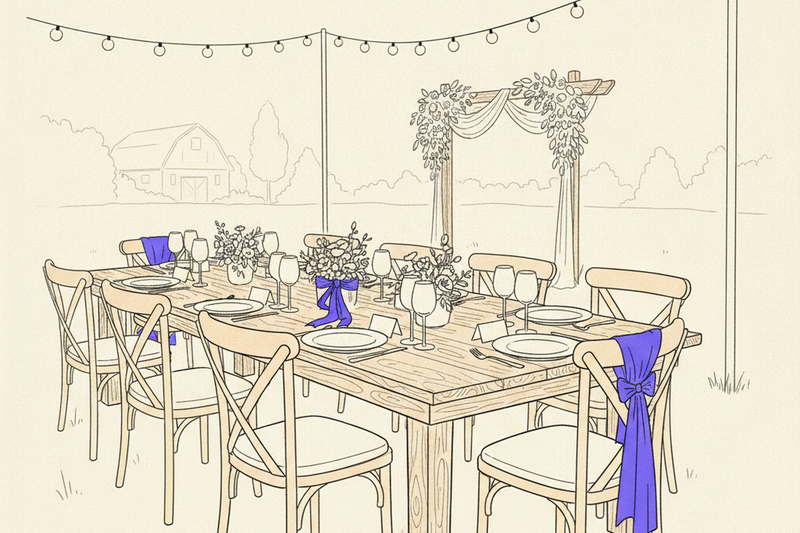
A couple books one Saturday in October. The Thursday next to it sits empty.
That's the reality of a wedding venue business. Demand comes in bursts, but the calendar has to keep filling all year. Local SEO for wedding venues works best when you treat it as a multi-quarter booking system, not a last-minute rescue plan.
The goal isn't more traffic for its own sake. It's more qualified tours, more signed dates, and fewer ugly gaps on next year's calendar.
Key takeaways
- Couples research for months before they inquire. Your local presence needs steady work all year.
- Your Google Business Profile and the Map Pack carry more weight than another vague blog post.
- Pages built around capacity, setting, pricing approach, lodging, and nearby cities help couples rule you in.
- Fresh photos and thoughtful citations do double duty: they build trust and support local rankings.
- Track calls, tour bookings, and signed contracts. Rankings alone don't book a Saturday in June.
Wedding venues run on a longer clock
Most local SEO advice is written for emergency businesses. A pipe bursts, someone searches, a plumber gets the call. Wedding venues run on a different clock.
A couple may search "wedding venues near me" right after an engagement. They spend months scrolling galleries, saving ideas, asking friends, comparing packages, and checking calendars. They may search five different phrases across four platforms before they ever tap your inquiry form.
That means local SEO for a wedding venue can't be a seasonal scramble. If you only touch the site and Google Business Profile when bookings slow down, you're trying to plant a garden during harvest.
Think in three stages:
- Discovery. Couples search by city, style, guest count, or feature. An "outdoor wedding venue in Asheville" is a different search than "wedding venues in Asheville."
- Comparison. They study galleries, reviews, capacity, price signals, parking, rain plans, catering rules, and lodging.
- Decision. They search your name, ask about a date, request a tour, and compare you against two or three finalists.
Your work should meet each stage. A full Saturday next fall can be won by the photos, reviews, and page updates you put live this week.
Start with the dates that pay the bills. Maybe it's Saturday evenings from May through October. Maybe it's winter weddings, smaller weekday events, or full-property weekends. Your local SEO should aim at the couples who book those slots first.
Build pages around how couples actually choose
Your homepage can't answer every question. It shouldn't try.
Couples don't only search for a venue by name. They search for a place that fits their guest list, style, logistics, and budget. If you have a restored barn with 180-person capacity, an outdoor ceremony option, and on-site lodging for the bridal party, those aren't decorative details. They're the reasons a couple picks you over the next listing.
Build core pages around facts you can stand behind:
- Your venue's city and surrounding region.
- Indoor, outdoor, or all-weather options.
- Guest capacity and room layouts.
- Lodging, parking, accessibility, and vendor policies.
- Rehearsal dinners, elopements, small weddings, and weekday events.
- Your pricing approach, even if you don't publish a full rate sheet.
Don't make a separate page for every town within 100 miles. That's thin, repetitive, and obvious. Build pages for regions you truly serve, with directions, travel context, real photos, and a reason a couple in that area would pick you.
A page called "Wedding venue near Columbus" needs more than the phrase repeated six times. Include travel time, nearby hotels, airport access, ceremony options, capacity, and photos from real weddings you've hosted for guests coming from that area.
This is where a venue differs from a typical service business. A plumber needs to show up near the caller. A venue can attract couples from a wider radius, but its physical location still anchors the whole system. Use that to your advantage — describe the drive from the nearest airport, the walking paths on the property, the accommodations minutes away.
If you also travel for off-site ceremonies, treat that part like a service area business. Keep it separate from the on-property venue offering. Clear pages help Google and couples both.
Make your Google Business Profile earn the tour
Your Google Business Profile isn't a business card. It's a tour invitation sitting inside Google Maps and Google Search.
Pick the most accurate primary category. For most venues, that's "Wedding venue." Add secondary categories only when they describe what you really offer — event venue, banquet hall, historic landmark. Stretching into categories you don't fit sends the wrong signals.
Then fill in the details couples use to make a quick call:
- Accurate address, hours, website, phone number, and appointment process.
- Guest capacity, amenities, accessibility, parking, and lodging notes.
- A steady stream of recent photos: ceremony spaces, reception setups, exterior views, and different seasons.
- Posts about open dates, recent weddings, vendor spotlights, and practical venue details.
- Answers to common questions: rain plans, catering, alcohol policies, tour availability.
Your profile should show the venue as it looks now. A gallery full of six-year-old photos and one blurry exterior shot isn't helping. Add two or three real photos each week. A new floral setup, a fresh reception overhead, or a golden-hour arch shot all pull weight.
For a fast, hands-on pass through the profile, use our Google Business Profile optimization checklist. It covers the small details that get skipped when you're busy running tours.
Don't stuff your venue name with cities or wedding keywords. Use your real business name, keep the profile complete, and show proof that the place is still alive.
The Map Pack is where many local searches end. Improving your position depends on active signals, accurate data, and visual proof of recent events. A couple sees three listings, checks photos and reviews, and picks the venue that feels current and confident.
Reviews should answer the questions your pages can't
A five-star rating helps. Specific words help more.
A review that says, "Beautiful venue" is nice. A review that says, "We hosted 140 guests, used the garden for the ceremony, and the staff handled our rainy-day switch without missing a beat" does real work. It gives the next couple details they can plan around. It also gives Google better context about what happens at your venue.
Ask every couple for a review after the wedding, once the rush has settled. Send one link. Give them a gentle prompt: "If you enjoyed the weekend, would you share a few details about your event on Google? It helps the next couple picture their own."
Reply to every review. Thank couples by name when appropriate. Mention a real detail from their event. Keep it warm and short. A public reply is proof that a real person runs the place. Silent five-star pages read like a bot farm.
Reviews don't need to arrive in a giant one-week blast. A steady drip is better. Small gears turning every week beat one big push followed by silence.
Wedding directories still matter too. Couples compare venues across The Knot, WeddingWire, Zola, Facebook, Apple Maps, and regional wedding sites. Keep your name, address, and phone number consistent across those platforms. Inconsistencies cause friction that Google notices over time.
For scripts and timing that get replies, see our guide on how to get more Google reviews.
Measure the calendar, not the ranking chart
Ranking reports can look great while the calendar stays half-empty. That isn't success. It's just a screensaver.
Track the path from local search to booked date:
- GBP calls and website clicks — whether local searchers are taking action.
- Direction requests — whether people are considering an in-person visit.
- Wedding venue inquiries — which pages turn interest into requests.
- Tour bookings — how many inquiries make it to a walkthrough.
- Signed contracts — the number that actually pays the bills.
Use UTM tags on your Google Business Profile website link so your analytics can separate visitors coming from local search from other traffic. Ask every inquiry how they found you, then log it. It's boring and it works.
Respond fast. A polished venue page loses its value if inquiries wait two days for a reply. Set an internal rule for first response. Fifteen minutes during business hours is a strong target for competitive markets.
Review the numbers monthly and make small fixes. More direction requests but fewer tour bookings may mean your tour process is clumsy. Plenty of tours but few signed dates may mean your pricing, follow-up, or contract flow needs attention. The numbers point you at the real problem.
For a deeper look at what actually moves local placement, see our breakdown of Google Maps ranking factors. Categories, reviews, citations, profile quality, and real activity all work together — no single trick outranks the fundamentals.
Keep the work moving between wedding seasons
The good work is repetitive. That isn't exciting, but it's effective.
Each week, add photos, reply to reviews, check profile details, publish a useful update, and watch your main inquiries. Each quarter, review local rankings for the searches that bring your best-fit couples. Update pages that describe capacity, pricing approach, or seasonal setups if anything changed.
Don't wait for the slow season to fix everything. A venue's photos, reviews, profile activity, and pages need time to build. Meaningful movement usually takes 30 to 90 days, not a weekend.
If your slow months are steep, the same principles that fill peak Saturdays also help fill the off-season — we cover the pattern in keeping calls coming during your off-season.
Frequently asked questions
How early should a wedding venue start local SEO?
Couples research for months before they inquire. Local SEO has to be a year-round effort, not a last-minute scramble. Steady visibility means your venue is on their shortlist when they're actually ready to book.
Why are specific reviews better than general ones?
Reviews that mention guest counts, ceremony locations, or rain-plan switches give the next couple planning context. They also give Google better information about what your venue actually offers.
Should I make a page for every nearby town?
No. Thin repetitive pages for dozens of surrounding towns read badly to search engines and to couples. Build fuller pages for the regions you truly serve — with travel details, real photos, and specific event stories.
What metrics matter most for a wedding venue?
Rankings alone don't pay the bills. Track calls from Google Business Profile, direction requests, tour bookings, and signed contracts. Those are the numbers that show whether local SEO is turning searches into revenue.
A steadier booking calendar starts before the inquiry
The couples you need next season are searching right now, saving venues, and building shortlists. Show them a current, useful, trustworthy picture of what you offer before they find the competitor down the road.
Keep your Google Business Profile active. Build pages around the decisions couples actually make. Ask for detailed reviews. Track tours and signed dates, not pretty charts.
Local SEO for a wedding venue works when it follows the way couples choose — one search, one tour, and one booked date at a time.