
Local SEO vs Google Ads: Where $500/mo Actually Goes Further
Last week you had a full schedule. This week your phone feels quiet. So you do what most service business owners do, you turn on Google Ads, watch a few calls come in, then flinch when the spend climbs. Now you’re stuck with the question you actually care about: local SEO vs Google Ads, which [ ]

Last week you had a full schedule. This week your phone feels quiet. So you do what most service business owners do, you turn on Google Ads, watch a few calls come in, then flinch when the spend climbs.
Now you’re stuck with the question you actually care about: local SEO vs Google Ads, which one brings better leads for a service business like yours?
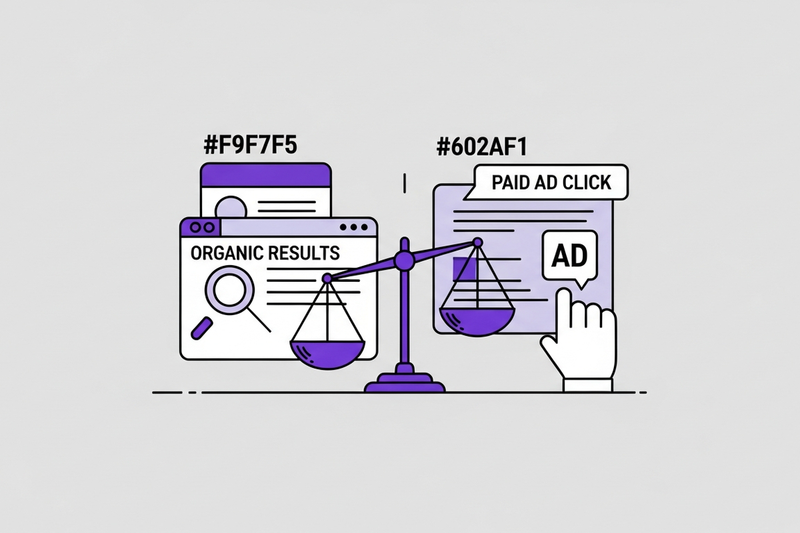
Both can work, but they behave very differently. One is a faucet. One is a well. If you understand cost, speed, and lead quality, you can run both without lighting money on fire.
Speed and control: when you need leads this week
Google Ads wins on speed. If your tracking is set up and your landing page isn’t a mess, you can get calls the same day you launch. You also get tight control over what shows up: keywords, service areas, hours, budgets, and ad copy.
That control matters when you have real-world constraints, like:
- You only want emergency calls after 5 pm.
- You’re short-staffed and need to slow intake for two weeks.
- You’re testing a new service (epoxy floors, Invisalign, water heater installs).
Local SEO is slower, because you’re earning placement instead of renting it. In practice, you’re building strength in the Map Pack and local organic results through your Google Business Profile (GBP), reviews, on-page service pages, and local signals like citations. That work stacks over time.
For most service businesses, the first meaningful lift from local SEO shows up in the 60 to 90 day range, sometimes faster if your market is weak or your GBP is under-optimized. What you get in exchange for patience is stability. You stop living in fear of one bad week of ad performance.
Here’s the simple way to think about it:
If you need jobs right now, ads are the fastest switch you can flip. If you need a steadier pipeline, local SEO is the base you build under everything else.
Cost and lead quality: what you pay for, and what you keep
With Google Ads, you pay for attention every time. That’s not “bad,” it’s just the deal. Your cost per click and cost per lead can be reasonable in some markets, then jump when competitors bid harder, seasonality changes, or Google matches you to broader searches than you expected.
Local SEO has costs too, but they’re different. You’re paying for consistent execution: GBP hygiene, review generation, photos, posts, service area pages, citation consistency, and tracking. Over time, your cost per lead often drops because you’re not buying each click. You’re building a local presence that keeps producing.
This table helps you compare the trade-offs without the fluff:
Now, lead quality. Both channels can bring great leads, and both can bring junk. The difference is why.
Ads tend to catch people in “fix-it-now” mode. That’s great for emergencies and high-ticket jobs, but it can also pull in price shoppers if your ads and landing page are generic.
Local SEO tends to filter better because buyers see your star rating, review text, photos, and proximity in one screen. That’s why reviews are not just social proof. Review volume, review pace, and the words customers use all affect conversions, and they can support rankings too.
In real accounts, we’ve seen this play out in measurable ways. For example, a home services company moved from Map Pack #9 to #3 in about 60 days and saw calls climb around 38 percent after tightening GBP work, reviews, and local signals. In another case, a med spa improved its rating by about 1.1 stars over 90 days and saw bookings jump sharply after putting a simple review request flow in place and replying consistently.
If you’re also weighing Google Local Services Ads (LSAs) alongside traditional search ads, Google’s overview of Google Ads vs Local Services Ads is worth a quick read, since LSAs behave more like pay-per-lead and show in a different placement.
A simple plan to use both without wasting money
If you try to “do everything” at once, you usually end up doing nothing well. A cleaner plan is to build a local baseline first, then use ads like a booster.
Think in two tracks:
Track 1 (Local SEO): build the asset that compounds.This is your Local SEO OS. The weekly basics beat occasional stunts because Google rewards consistency. In the first 30 to 90 days, the practical priorities look like this:
- Fix GBP fundamentals (categories, services, attributes, hours, service areas).
- Install tracking that shows outcomes, not vibes (calls, forms, direction requests).
- Start a review flywheel (simple asks, follow-ups, clear reply templates).
- Add fresh media on a cadence (real photos, short clips, job-site proof).
- Build citations the right way (around 35 high-value listings in the first 60 to 90 days, then only use aggregators if they’re truly worth it).
Track 2 (Google Ads): buy speed, but limit the chaos.Use ads for the narrow set of searches that are closest to revenue. You don’t need 40 keywords. You need the money terms that match booked jobs. Then you measure like an operator, not a poet.
A good “don’t waste money” setup usually includes:
- Separate campaigns for core services (so you can cut losers fast).
- Tight location targeting (no paying for calls you can’t service).
- Call tracking and form tracking (otherwise you’re guessing).
- A landing page that answers price, timing, and trust in plain language.
The handoff that saves you the most money is simple: use ads to learn what converts, then push those learnings into your local SEO. If “emergency furnace repair” is your best closer, your GBP services, photos, posts, and service page should reflect that reality.
One more thing that helps busy owners: keep communication low drama. Async updates beat weekly status calls. You want work shipped, not meetings booked.
Conclusion: pick the channel that matches your timeline
If you need leads this week, Google Ads can turn on fast. If you want a calmer, steadier pipeline, local SEO is the foundation you can build and defend. Most service businesses end up using both, ads for short-term demand and local SEO for a baseline that doesn’t disappear when you pause spend.
If you want the predictable version of this, where you measure calls, forms, and directions instead of staring at charts, you can start with a simple operating system and a 90-day runway. Learn more about the team behind that approach in the Curve SEO studio overview, then decide if you want to Start for $500/mo, your Local SEO OS.