
Local SEO for Optometrists: Beat Big Optical Chains
National optical chains have brand recognition. You have a local practice a patient can trust. Here's how local SEO puts your name in the Map Pack when someone needs an eye exam this week.

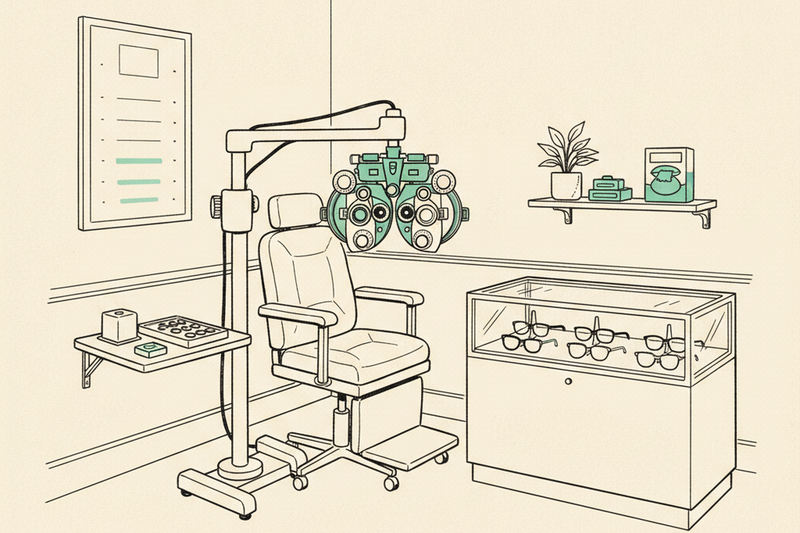
Someone needs an eye exam, grabs a phone, and searches Google Maps. A few national chains show up nearby. So do you.
Local SEO for optometrists isn't about outspending big optical brands on ads. It's about giving Google and nearby patients a clearer reason to pick your practice for vision care.
The goal isn't to rank everywhere. It's to be the obvious choice in the neighborhoods you actually serve.
Key takeaways
- Google Maps rewards relevance, distance, and prominence — not the biggest ad budget.
- Your Google Business Profile should answer the patient's first questions in seconds.
- A steady flow of honest patient reviews beats one giant review push.
- Your website, citations, and office details need to agree everywhere.
- Track calls, appointment bookings, and direction requests, not rank charts.
Big chains have reach. You have a better local story.
A national chain has brand recognition. A big online retailer has a polished brand, a strong retail presence, and a lot of people searching for it by name. You don't need to pretend that doesn't matter.
But a nearby patient isn't always searching for a brand. They're searching for an eye exam, a contact lens fitting, dry eye treatment, or an eye doctor open Saturday. That's a different fight, and it's a fight independent practices can win.
Google says local results depend mainly on relevance, distance, and prominence — see the official local ranking guidance. Distance is distance. You can't move your office closer to every searcher, and you shouldn't try to fake it with virtual addresses or spammy service areas.
Relevance and prominence are where you can do real work.
Your optometry practice may offer longer appointments, specialty contact lens fittings, myopia management, pediatric exams, dry eye care, same-week appointments, or a real person who answers the phone. National chains bring name recognition and broad retail marketing. You can show:
- Local doctors and familiar staff patients can actually meet.
- Clear specialty services — myopia management, dry eye care, pediatric exams.
- Real photos of your office, chairs, exam rooms, and frame selection.
- Reviews that mention the doctor by name and the specific care they received.
- A booking flow that doesn't push patients through a national call center.
Don't try to beat a chain by acting like a smaller version of one. Make your practice easy to understand, easy to trust, and easy to book.
A Maps result has one job: get a patient to call, book, or request directions before they tap the next listing.
Win the Map Pack first
The Map Pack is the group of local listings that appears near the top of a Google search. For appointment-ready searches, it's the decision screen. People compare stars, hours, distance, photos, and reviews. Then they tap.
That makes your Google Business Profile more than a directory listing. It's a front window that stays open after your office closes.
Start with the basics that are easy to neglect:
- Use your real practice name, not "Best Optometrist in [City]."
- Pick the most accurate primary category so your listing shows up for the right searches.
- Add secondary categories only when they describe services you truly provide.
- Set correct hours, including holiday hours and lunch closures.
- Add a direct appointment link, a phone number that reaches a real person, your website, and the accurate address.
- Fill out the services patients actually search for: comprehensive eye exams, contact lens fittings, dry eye treatment, pediatric eye exams, myopia management.
A complete profile gives Google more context. It also saves your front desk from answering questions your listing should have answered already.
For a walkthrough of the profile fields that most affect ranking, use our Google Business Profile optimization checklist. Thirty focused minutes catches most of the common misses.
Add real photos every month. Show the entrance, reception area, exam rooms, optical displays, doctors, staff, and parking. Don't use stock photos of a person in a white coat holding a giant blue lens. Patients notice.
Build Google reviews into the patient experience
Google reviews do two jobs. They help your local rankings, and they help a nervous patient decide whether to trust you with their eyes.
A five-star rating with 19 reviews from three years ago doesn't carry the weight of a strong rating with fresh reviews every month. You don't need hundreds overnight. You need a system for a few new ones each week.
Ask after a good appointment, when the patient has their glasses, contacts, or care plan handled. A short text or email works well. Put the link in your follow-up message. Make it easy. Don't hand the patient a script.
Don't offer a discount, gift card, or raffle entry for a review. It creates a mess with Google's guidelines, and it makes the review itself look suspicious.
A simple request can sound like this:
"Thanks for visiting us today. If your appointment went well, would you share a quick Google review? It helps nearby patients find a local eye doctor they can trust."
Patients will mention the things they noticed: the doctor explained their prescription, the staff helped with frames, the exam was thorough, the office was clean, their child felt comfortable. Those details help future patients understand what to expect, and they add real service language to your profile.
Reply to every review, good and bad. Keep positive replies warm and short. For negative reviews, don't argue in public and never reveal medical information. Acknowledge the concern, invite the person to call the office, and follow through offline.
A bad review isn't fun. It isn't the end of the world either. A calm, professional reply can make your practice look more trustworthy than a page full of untouched five-star reviews.
For the scripts, timing, and small tweaks that push reply rates up, see our guide on how to get more Google reviews.
Make your website confirm what Google Maps says
Your Google Business Profile gets attention. Your website closes the case.
When a patient taps through from Google Maps, your site should confirm they found the right practice. It should load quickly on a phone, show your location and hours, explain your services, and make booking obvious.
Put your exact name, address, and phone number in the footer and contact page. Use the same version everywhere. If Google says "Suite 210" and your website says "Ste. 210," clean it up. Small mismatches chip away at ranking over time.
An optometry practice is a local business with a public office. It isn't a service area business like a mobile locksmith or a plumber who travels to the customer. Keep your office address visible, correct, and consistent across the web.
Build useful pages for the services that bring in the right patients. A good dry eye page explains what you evaluate, who might need care, and how to book. A contact lens page can cover fittings, specialty options, and follow-ups. A pediatric eye exam page can address common parent questions.
Don't build 40 thin city pages for places where you don't have an office. "Eye exams in every suburb within 90 miles" isn't a strategy. It's a pile of weak pages waiting to disappoint people.
Your site can also support local search with:
- A clear doctor or provider page with credentials and real photos.
- A contact page with a map, parking details, and appointment options.
- Local details like nearby landmarks or transit access.
- Insurance and payment information, when it's accurate and current.
- Simple answers to common questions about exams, contacts, and glasses.
Then clean up your citations. These are listings that repeat your practice name, address, phone number, and website across reputable places online. Start with the majors and any medical or eye-care directories that matter in your area. Around 35 high-value listings built and checked over 60 to 90 days can do more than 500 junk directory entries created by a machine.
Give patients proof chains can't manufacture
A national chain can open a store. It can't copy years of local relationships.
Your practice may sponsor a school team, support a youth sports program, work with nearby pediatricians, attend local health events, or have a doctor who grew up in town. Those aren't decorations. They're proof no big brand can print into their marketing playbook.
Put the useful parts on your site. Share a photo from a community event on your profile. Ask a local organization to link to your practice when it lists sponsors or partners. Those local links help ranking more than a stack of directory links from other side of the country.
You don't need to turn every community activity into a press release. A handful of real local mentions beats a made-up campaign with stock photos and vague copy.
Photos matter here too. A patient looking for comprehensive eye care wants to see where they'll park, where their child will sit, and whether the frame selection fits their taste. They don't want to see another generic hero image of a smiling woman holding a lens.
Keep your patient experience aligned with your search result. If your profile says you open at 8:00 a.m., answer the phone at 8:00 a.m. If the profile promotes same-week appointments, make sure staff can actually book them.
This is where independent practices have an edge. You can adjust faster. You can make a small improvement this week without passing it through three corporate departments and a committee that meets next quarter.
Track appointments, not vanity rankings
A number-one position sounds nice. It doesn't pay rent by itself.
Track what happens after someone finds you. Google Business Profile Performance shows calls, website traffic, direction requests, and other actions. Your scheduling software and call records show which of those actually became appointments.
Watch these numbers month over month:
- Calls and appointment requests from your Google Business Profile
- Direction requests from Google Maps
- Website bookings and contact form submissions
- New Google reviews, rating, and response time
- Visibility for the services and neighborhoods that bring profitable patients
Local rankings move by neighborhood. A practice may show high near its office and lower five miles away. That's normal. Don't let an agency sell you a single screenshot as proof that everything is fixed. Look at rank across a grid of your service area, then compare it to actual bookings.
For a closer look at the ranking signals that matter, see our breakdown of Google Maps ranking factors. Categories, reviews, citations, profile quality, and patient actions all work together. No single trick outranks the fundamentals.
Give the work 60 to 90 days. Week one can fix obvious errors. Reviews, photos, citations, and stronger service pages take longer to stack up. Local rankings don't need drama. They need consistent maintenance.
A 90-day plan that won't swallow your week
You don't need to spend every Friday afternoon staring at Google Maps. Put the basics in order, then keep the routine moving.
Days 1–30: Clean up your Google Business Profile. Check categories, hours, services, links, photos, office details, and duplicate listings. Set up a simple review request after appointments. Add real photos of the office.
Days 31–60: Clean up citations and build the service pages your patients need. Add fresh office photos. Reply to every review. Make sure the booking path works on a phone from the parking lot.
Days 61–90: Review calls, direction requests, bookings, and local rankings by neighborhood. Keep adding reviews and photos. Fix gaps instead of chasing new tactics.
That cadence beats big one-time projects. The same small actions, handled every week, make your practice easier to find and easier to choose.
Frequently asked questions
Why does local SEO matter for optometrists?
Local SEO helps your practice show up when nearby patients search for eye exams or optical care on Google Maps. Instead of competing with national chains for broad brand terms, it connects you with people in your neighborhood who are ready to book.
How many Google reviews do I need to rank better?
Quality and consistency matter far more than a one-time flood. A steady system that adds fresh patient reviews every month builds trust and supports rankings over time.
Should I build thin city pages for suburbs where I don't have an office?
No. Focus on your main office address, a complete Google Business Profile, real reviews, and pages for services you actually offer. Ten thin city pages will drag down the whole site.
How long does local SEO take for an optometry practice?
Profile fixes can show quick results. Meaningful Map Pack traction usually takes 60 to 90 days of steady work. Momentum keeps building as reviews and photos accumulate.
Win the search that happens down the street
National chains will keep showing up in search results. That doesn't mean they own your neighborhood.
Independent optometrists compete by making their office more relevant, more trusted, and easier to book than the listing beside them. Keep the profile accurate, collect honest reviews, show real photos, and give patients a clean path to book.
When someone searches for an eye doctor nearby, your practice should look like the clear local answer.