
Local SEO for Gutter Services That Fill Your Fall Schedule
Most gutter companies don't need more traffic. They need more of the right calls. Here's the local SEO playbook for fall cleanouts, seamless installations, and the storm-follow calls that fill a schedule.

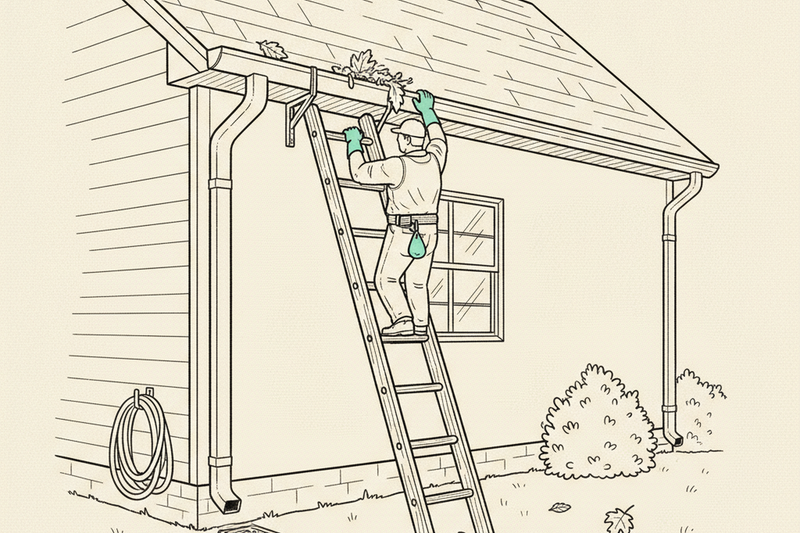
Most gutter companies don't need more traffic. They need more of the right calls.
A homeowner searching gutter cleaning near me after a storm isn't browsing for fun. They want a crew that looks legitimate, works nearby, and can show up before the next rain. If you're buried below two or three better-presented competitors in Google Maps, the phone rings for them.
Local SEO for a gutter service is about being the obvious local choice when that search happens. Start with the Map Pack. Back it up with service pages, reviews, real job photos, and tracking that shows whether the work is paying off.
Key Takeaways
- Improving your Google Business Profile is a higher priority for most gutter contractors than publishing a large volume of blog posts.
- Creating separate pages for installation, cleaning, repair, and guards helps you better align your website content with actual search intent.
- Reviews require a repeatable request process rather than just an occasional text message sent after a successful job.
- Your service area pages should demonstrate specific local experience, rather than simply swapping city names within a generic template.
- Focus your tracking on calls, forms, directions, and booked estimates to improve your overall lead generation, rather than relying solely on vanity map rankings.
Start Where Homeowners Start: Google Maps
Most local SEO advice starts with keywords, but that approach is often backwards for gutter companies.
When you search for gutter installation in your city or gutter cleaning near me, you'll notice that the Map Pack often takes over the screen on a mobile device before a homeowner even reaches standard website results. They see a short list of businesses, star ratings, photos, hours, distance, and a call button. That screen is where the real local SEO decisions are made.
Google's local results are shaped by relevance, distance, and prominence. You can't move your shop closer to every house on the map. You can make it easier for Google to understand what you do — and easier for a homeowner to trust that your crew will actually show up.
For a gutter contractor, relevance starts with accurately showing what you do. A company that installs seamless aluminum gutters, repairs damaged downspouts, cleans gutters, and installs guards should make those services clear across its Google Business Profile and website.
Don't try to be everything.
If gutter cleaning is your main revenue driver, lead with it. If installations and replacement jobs are higher-ticket and keep the crew booked, put those front and center. The goal isn't to rank for every service phrase ever typed into Google. The goal is to own the money terms in the neighborhoods you can serve well.
A Map Pack placement means little if the profile looks abandoned, has old hours, and shows no proof of recent work.
Search your own business name and your main service searches. Then search the top three competitors. Compare what a homeowner can see in 20 seconds:
- Which company has more recent job photos?
- Which one has clear service details and current hours?
- Which profiles show steady, specific reviews?
- Which business looks like it will answer the phone?
That gap is usually more useful than another generic keyword report.
Build a Google Business Profile That Looks Active
Your Google Business Profile isn't just a business card. It's a working sales page inside Google Maps.
Start with the basics. Verify ownership, use your real business name, set the correct phone number, and keep holiday hours current. Google requires businesses to follow its profile representation guidelines, which means no stuffing your name with services or cities.
"Smith Gutter Co." is fine.
"Smith Gutter Co. Best Gutter Cleaning Toledo Gutter Guards" isn't. It looks spammy because it's spammy.
Choose the category that best matches your core work. Then add related services in the Services area. A gutter company might list seamless gutters, gutter replacement, gutter repair, gutter cleaning, downspout installation, downspout repair, and gutter guard installation. Write each service in plain language. Mention practical details customers care about, such as five-inch and six-inch gutters, leaf guard types, or whether you handle debris removal.
If you visit homeowners rather than receive them at an office, set up the profile as a service-area business. Don't use a rented mailbox, a friend's address, or a virtual office to appear in another city. Google has specific rules for setting service areas. Pick the towns and neighborhoods your crews actually cover.
Use photos that show real work
Stock photos of clean roofs don't build much trust. Real job photos do.
Add two or three photos most weeks during busy months. Keep the mix practical:
- A crew member cleaning packed gutters safely from a ladder
- A before-and-after view of a gutter replacement
- A close photo of a new downspout outlet and extension
- Your truck outside a completed job, with no homeowner address visible
- Gutter guards installation in progress
- A wide shot that shows clean rooflines and finished work
Photos should look like your business, not a catalog. A homeowner with overflowing gutters wants proof that your crew has solved that exact problem before.
Use Google Posts for time-sensitive offers or seasonal reminders, but don't expect posts alone to carry your visibility. A post about spring cleanouts, storm-damage inspections, or fall leaf buildup can help a prospect take the next step. It's one small local signal, not a magic button.
Add a UTM-tagged website link to your Google Business Profile so Google Analytics can separate profile visits from other traffic. Ensure you link to a mobile-friendly website, as your contact page must be simple on mobile. A homeowner standing in a driveway isn't going to fill out a 14-field form.
Create Service Pages That Match How People Search
A single page titled "Gutter Services" makes your website menu look tidy, but it creates a challenge for your local SEO efforts. It doesn't make life easier for a homeowner searching for specific solutions, and it limits your ability to rank for high-intent queries. By building dedicated landing pages for each of your primary offers, you can better target search intent.
Installation, replacement, cleaning, repair, and gutter guards are different jobs. They have different price concerns, different levels of urgency, and different search terms. Give them separate pages when you genuinely offer them.
A strong service page explains the work before it asks for the call. It answers the questions your office hears every week. What materials do you install? Do you repair a sagging gutter or replace it? What happens to the debris after cleaning? Can guards be fitted to existing gutters? How soon can an estimate happen?
Here's a clean structure for a gutter service page.
A clean structure for a gutter service page:
- Main heading — the service and the primary service area (e.g., "Seamless Gutter Installation in Akron").
- Opening copy — the homeowner problem, the service you offer, and the clear next step.
- Service details — materials, sizes, common repair issues, process, warranty terms.
- Local proof — recent job photos, service-area notes, review excerpts, local project context.
- FAQ section — real questions about timing, debris, guards, drainage, permits, estimates.
- Contact block — phone number, short form, service area, hours.
The page doesn't need 2,000 words of roofline poetry. It needs useful details, original photos, and a quick way to request an estimate.
For example, a gutter repair page can cover loose hangers, leaking seams, sagging runs, damaged downspouts, and poor drainage around the foundation. An installation page can explain seamless versus sectional gutters, aluminum versus copper, five-inch versus six-inch options, and why gutter installation and downspout placement matter for long-term protection.
Google's SEO starter guide still gets the basics right: use descriptive page titles, clear headings, helpful content, and links that make site navigation easy. While you should keep it simple, adding technical SEO elements like schema markup for your services can help search engines better understand your content. Fancy tricks are optional, but clear pages aren't.
Don't build 40 thin city pages
Gutter companies often work across several towns. That creates a temptation to clone one page 40 times, change "Cleveland" to "Parma," and call it local.
Google can spot thin copy. Homeowners can too.
Build service area pages only where you have enough real material to make them useful. Include neighborhoods you serve, common local housing types, recent projects, seasonal conditions, local drainage issues, and honest travel expectations. A page for lake-effect snow areas can discuss ice, freeze-thaw cycles, and clogged downspouts. A page for heavily wooded suburbs can cover leaf buildup and guard options.
When using service area pages, focus on quality over quantity. Don't invent job stories or claim you have an office in every town. That isn't local proof. It's just paperwork wearing a hard hat.
Turn Completed Jobs Into a Review Flywheel
A happy homeowner means to leave a review, but life gets in the way. Since reputation stacks up one review at a time, your process has to catch them while the job is still fresh.
Ask after the crew has finished cleanup, the homeowner has seen the work, and payment is settled. For gutter cleaning jobs, that may be the same afternoon. For a full gutter replacement, it may be the day after the final walkthrough.
The best request is short and personal:
"Thanks again for having us out today. If the work looks good, would you mind leaving an honest Google review? It helps local homeowners find us when they need gutter help."
Send the direct Google review link by text or email. Don't send people to a page with five choices. Don't make them hunt for your business name. One link. One simple ask.
Follow up once after three to five days if they haven't responded. Then stop. Nobody wants a gutter company turning into a collection agency.
Train the office to reply to every review. Keep the response human. Mention the service when it fits naturally, such as gutter cleaning, downspout repair, or seamless gutters. Never paste the same reply 30 times.
Avoid discounts, gift cards, or prizes in exchange for reviews. Also avoid review gating, where only happy customers get the review link. Google's policies prohibit fake engagement and manipulated reviews. Honest feedback is the whole point.
A steady review flow and high review velocity do two jobs. They help build prominence in local search, and they make a homeowner more likely to call once they find you. Five recent reviews that mention punctual crews, clean cleanup, and fixed drainage issues can beat 100 old stars with no detail.
Publish Local Content Homeowners Can Use
Blog content is only useful for a gutter company when it answers a specific, local question. Effective content marketing avoids generic filler and instead focuses on the genuine concerns of nearby homeowners.
Start with your field notes. What do customers ask when they call? What problems show up after heavy rain? Which gutter issues are common in older homes around your town?
Good local content ideas include:
- "When should homeowners clean gutters before fall leaves arrive in [City]?"
- "Why gutters overflow during heavy rain, even after cleaning"
- "How to spot a failing downspout before water reaches the foundation"
- "Do gutter guards work with maple leaves, pine needles, and roof grit?"
- "What ice and freeze-thaw weather can do to gutters and fascia"
- "Gutter cleaning versus gutter repair services: how to tell which one you need"
The city name isn't the story. The local condition is the story. By aligning your articles with seasonal search behavior, you can capture traffic from homeowners looking for timely advice on cleanouts and storm prep.
A contractor in a wooded suburb can publish practical guidance about leaf-heavy properties. A company in an area with frequent summer storms can explain when an overflow is a simple clog and when it points to undersized gutters. A team serving older neighborhoods can cover hidden fascia damage and aging hanger systems.
Use original photos from your own jobs whenever possible. As AI search visibility continues to evolve, search engines increasingly prioritize unique, firsthand experience over generic stock art. A real image of a clogged valley, a separated downspout, or a clean gutter run provides the credibility that homeowners trust.
Link each article to the matching service page. A post about overflowing gutters should link to your specific cleaning and repair pages. Keep the connection useful. Don't glue ten internal links into every paragraph and hope nobody notices. Ultimately, thoughtful content marketing builds the authority necessary to rank higher and earn the trust of your local community.
Clean Up Listings and Build Local Proof
Google is the main event, but it doesn't work alone.
Your business name, address, and phone number should match everywhere it appears online. That includes your website, Facebook page, Apple Maps listing, Bing Places profile, local chamber profile, and major contractor directories you choose to use. A missing suite number or old tracking line may not ruin visibility by itself, but messy information creates doubt. Improving these local directory listings is a foundational step in any professional local SEO strategy.
Start with a simple audit. Search your company name, old business names, phone numbers, and former addresses. Look for duplicate listings, old locations, wrong categories, and disconnected phone numbers. Fix the major ones first to ensure your local citations are consistent across the web.
For most gutter companies, about 35 well-chosen manual local citations are more useful than paying forever for hundreds of low-value listings. Focus your efforts on the local directory listings people actually use. Add accurate hours, service areas, website links, and a few real photos where allowed.
Local links matter too, but they should be earned in places that make sense. Sponsor a youth sports team, help with a neighborhood cleanup, join a builders association, or contribute practical storm-prep advice to a local organization. When you secure these high-quality local backlinks, you build trust with both your community and search engines. If there's a legitimate local page that can mention and link to your company, great.
Don't buy a bundle of 500 mystery links. That's the online version of nailing a business card to every utility pole.
Measure Calls, Not Just Map Positions
Rank tracking is useful because it tells you where you appear for searches in specific locations. However, it doesn't reveal whether the resulting leads are worth taking. While organic rankings for your website are important, they aren't the only metric that matters.
A gutter cleaner may have strong organic rankings across town but receive calls from outside their service radius. Similarly, an installation company might move from position eight to position four in the local map pack and still gain fewer calls if their photos, reviews, or phone response times are weak. Rankings are a diagnostic tool, not the finish line. To truly understand your growth, you must move beyond vanity metrics and implement conversion tracking to see which searches actually lead to booked work.
Track these numbers each month:
- Calls from your Google Business Profile
- Website contact forms and estimate requests
- Direction requests, if customers visit your location
- Booked estimates and completed jobs
- New reviews, average rating, and response rate
- Map visibility for core services in core neighborhoods
Google Business Profile Performance can show customer actions such as calls, website clicks, and direction requests. Review Google's profile performance documentation so your reporting uses the same definitions Google uses.
Connect your website forms to GA4. Use UTM tags on the profile website link. If you use a call-tracking number, make sure your main business number still appears consistently on the site and listings. Then, ask one simple intake question on every call: "How did you find us?"
The answer won't be perfect. People often forget. They might see you in Maps, visit the site later, ask a neighbor, and then call from a saved number. Still, a mix of call data, forms, booked estimates, and map visibility gives you a far clearer picture than a simple chart of keyword positions.
Build Local Visibility Week by Week
Local SEO for gutter contractors isn't a one-time project. It's routine maintenance — including moves that keep you visible in the slower months so the phone keeps ringing when leaves start dropping and the next storm rolls through.
Keep your Google Business Profile accurate and up to date. Add new photos from real jobs, request reviews after every completed project, and reply to those reviews promptly. Fix your online listings whenever business information changes and publish new pages that answer actual homeowner questions. When you perform these tasks regularly, you generate strong authority signals that tell Google your business is active and reliable. Watch your incoming calls and estimates, then adjust your strategy based on what brings in the most qualified work.
That cadence beats big one-off stunts every time. A profile that looks cared for in July, October, and March earns more trust than one that received a burst of activity two years ago.
Frequently Asked Questions
How often should I update my Google Business Profile with new photos?
You should aim to add two or three photos most weeks during your busy season. These images should feature actual work, such as completed repairs or your team on a ladder, to prove your business is active and reliable.
Is it better to have one service page or separate pages for each gutter service?
It's much more effective to create dedicated landing pages for each service, such as installation, cleaning, and repairs. This strategy aligns your website content with specific customer search intent and helps you rank better for high-intent queries.
Can I use a virtual office address to rank in a nearby city where I work?
No, you should only use a location that your crews physically operate from or visit to meet customers. Google has strict guidelines regarding service-area businesses, and using fake addresses can lead to your profile being suspended or removed from search results.
What's the best way to get more Google reviews?
Implement a consistent process where you request a review via a direct link immediately after completing a job. Keep the request personal and brief, and ensure you respond to every review you receive to show prospective customers that you value client feedback.
Fill the Fall Schedule
A clean local SEO setup makes your gutter service easy to find and easy to choose. It puts your work, reviews, service details, and phone number in front of homeowners the moment an overflowing gutter becomes an urgent problem.
Focus on the Map Pack. Publish useful service pages. Ask for reviews after every job. Show real proof from real work. That's how a small gutter crew stays visible year after year.