Coffee Shop SEO: Own the Three Blocks Around Your Counter
A cafe doesn't need to win the city. It needs to win the few blocks around its counter, and most of that work happens on Google Maps, not on your website.

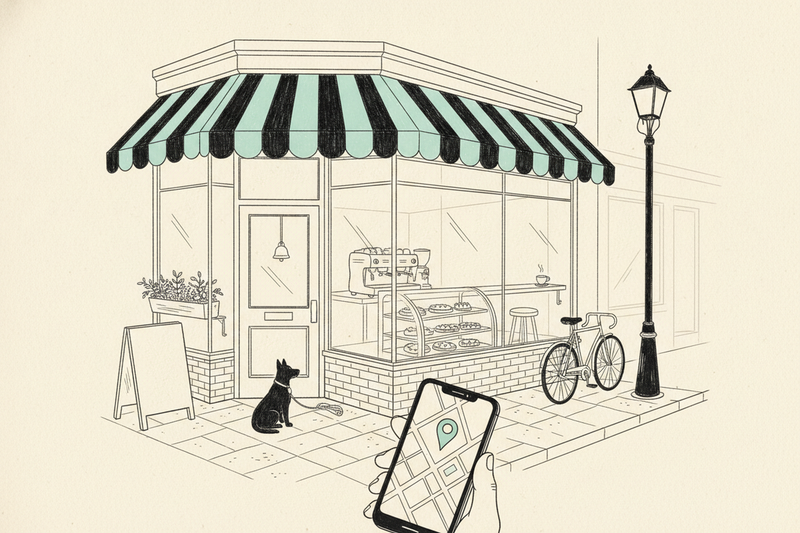
Nobody searches for the best coffee in the city. They search for coffee that's close, open right now, and doesn't look like a gamble.
That's the whole job of local SEO for a coffee shop: be the obvious nearby choice when someone wants coffee in the next ten minutes. Not the best-known cafe in town. The easiest yes on the block.
Local SEO for coffee shops starts with the neighborhood
Most local search advice starts with a giant keyword list. That's backwards for a storefront cafe.
Google says local rankings come down to relevance, distance, and prominence. You can't move your shop closer to every searcher. You can make it much clearer what you offer, where you are, and why locals pick you. Google's own guidance lays out the basics: keep your Google Business Profile complete, current, verified, reviewed, and full of useful photos.
Your goal isn't vague "visibility." It's more directions requests, calls, website taps, and people walking through the door.
A chain may have a bigger ad budget, but local competition isn't won by budget alone. It may not have better photos of your patio, fresher Google reviews, useful parking information, or a stronger relationship with the block around you.
A cafe doesn't need to win the whole city. It needs to win the few blocks, neighborhoods, and intent-heavy searches that put people at its counter.
Fix the Google Business Profile before touching the blog
Your Google Business Profile is the little decision screen people see before they ever visit your website. If your GBP is incomplete or stale, fancy content won't rescue it.
Get the basics boringly right
Check the business name, address, pin location, phone number, website, regular hours, holiday hours, and opening date. Use the name on your real sign and menus. Don't tack on "best latte downtown" or "coffee shop near me" to the name.
Match the business name, address, and phone number across your profile, website, and every other listing. One old phone number on Yelp is enough to confuse Google about which listing is real.
Google's business representation rules are clear on this. Your listing should represent a real business at a real-world location. Keyword-stuffing the name may look clever for a minute. Then it becomes a cleanup job, or worse.
A coffee shop isn't a service area business. Customers need to find your actual front door. That makes accurate map placement, entrance details, and hours non-negotiable. The same is true for any storefront, even if you also sell beans or gift cards online.
The GBP tune-up checklist covers every field in order if you'd rather work from a list.
Pick categories that describe the business you run
Choose the narrowest honest primary category for the core of the business. "Coffee shop" may fit. A bakery, restaurant, or cafe category may fit another shop better. Don't select every category that sounds profitable.
Google says categories affect local ranking and tells you to use the fewest you need. Pick the primary category from what customers come in to buy most. Add supporting categories only when they're real parts of the operation.
For a deeper look at how category, reviews, and distance stack up, see the Google Maps ranking factors.
Make your Google Business Profile answer the walk-in questions
A hungry or tired person on a phone isn't looking for a brand manifesto. They're trying to avoid a bad errand.
Fill out the details people need before leaving home
Add services and offerings that match your menu and experience: espresso drinks, pour-over coffee, breakfast, pastries, vegan options, outdoor seating, wheelchair access, Wi-Fi, or online ordering when those things are true.
If you're an organic coffee shop or sell certified organic beans, state that accurately in the profile and on the menu.
Don't claim free Wi-Fi if the password changes every day and staff hates giving it out. Don't list outdoor seating if there are two folding chairs beside a dumpster. Local search works better when the listing matches the visit.
Use your website for a clean location page: address, embedded map, menu, parking notes, hours, and one obvious action. If you offer online ordering, make it easy to find. A mobile visitor shouldn't need a scavenger hunt for a cold brew.
Use photos that remove doubt
Fresh photos do two jobs. They help people recognize your storefront, and they let people picture themselves inside.
Add real shots of the exterior in daylight, the counter, seating, pastries, drinks, menu boards, outdoor seating, and any detail people search for. If you have a sunny window table or serious latte art, show it. Don't fill the gallery with stock beans on a white background. Nobody walks into stock beans. The GBP photo checklist lists what to shoot and what to skip.
Keep the profile fresh when something changes. New seasonal drinks, expanded seating, a renovated counter, and holiday hours are all good reasons to update it. Google's Business Profile help center includes guidance for photos, reviews, and profile upkeep.
Google reviews need a routine, not a panic campaign
A cafe with 400 old reviews can look less alive than one with 90 reviews and a steady trickle of recent, detailed customer reviews. Total count matters, but recency tells customers the place is still good this month.
Ask when the good moment is still warm
Train the team to ask after a positive interaction. That could be when a regular compliments the drink, a catering customer says the box was a hit, or a new visitor mentions they'll be back.
A small QR code near the register is fine. A receipt link is fine. A short follow-up for catering and online orders is fine. Keep the ask simple: "If you had a good visit, would you mind leaving us a Google review?" How to get more Google reviews has the full routine if you're starting from zero.
Don't offer discounts, freebies, or contest entries for reviews. Don't review-gate by asking only friends or happy customers. And don't hand staff a script that sounds like a hostage note.
Reply like a real owner would
Reply to every review, good and bad. Thank people for details. Mention the drink, pastry, or visit when it feels natural. For a complaint, stay calm, own what you can, and invite them to continue the conversation offline.
There's no magic review number. Google doesn't publish a required count or a monthly target. Still, a steady flow beats a one-week scramble followed by silence. If the cafe two blocks over picks up four new reviews a month, aim to match that pace with real feedback.
Watch recency, rating, and total together. How many Google reviews you need to rank locally gives you context without treating any number as a promise.
Build local search signals beyond your profile
Your Google Business Profile leads the work, but it shouldn't stand alone. The website and local web should tell the same basic story.
Write for neighborhood intent, not robot phrases
Use local intent keywords where they help a visitor. A page can naturally mention "specialty coffee near Wicker Park," "breakfast in downtown Asheville," or "outdoor coffee seating in East Austin." Those are useful because people search that way.
Don't cram city names into every heading. Write pages around real reasons to visit: study-friendly seating, a rotating single-origin menu, brunch, event catering, or a dog-friendly patio.
For local search, "coffee shop near me" means the person is already standing up, and a lot of them add "open now." Your site needs to load fast on a phone and show hours, address, and directions without scrolling. How Google handles open-now searches is worth ten minutes if your hours ever drift.
Earn mentions where locals already look
Local citations are listings that repeat your name, address, phone number, and website. Start with Google, Apple Maps, Yelp, your social profiles, and the neighborhood directories real customers use. Keep the details identical everywhere.
Audit those listings a couple of times a year so old hours, a former address, or a dead phone number don't linger.
Then look for easy local links. Sponsor a school fundraiser, provide coffee for a nonprofit event, or partner with a nearby bookstore, florist, gym, or apartment building. Ask whether their event or partner page can link to yours.
This isn't outreach theater. It's being involved in places your customers already trust.
Run a 30-day Map Pack routine
GBP upkeep isn't a Saturday project you finish forever. Coffee shop marketing on Google works best as a steady routine. Treat it like cleaning the espresso machine. Small, regular work keeps the place running.
Spend 15 minutes each week
Set one repeating calendar block. Check the profile, answer reviews, confirm hours, and add a photo when there's something worth showing. Update seasonal menu details before customers start searching for them.
Post about changes that affect a visit, such as a holiday drink, live music, a new patio setup, or extended weekend hours. Posts can help customers see what's current. They are not a vending machine for Map Pack rankings.
For a practical cadence, see how often to update your Google Business Profile.
Review the numbers once a month
Look at calls, direction requests, website clicks, photo views, new reviews, and the searches that triggered the listing. These are directional signals, not proof that every visit came from search.
Then search your business name and a few money terms from different parts of town. Compare your listing with nearby cafes in Google Maps. Are their photos newer? Do they have clearer categories? Are they getting reviews every week? Is their website easier to use on a phone?
Local SEO isn't a one-time trick. Give the basics 30 to 90 days of steady attention before deciding what's working.
Key takeaways
- Put Google Maps and the Map Pack ahead of long blog posts and vanity traffic.
- Keep your Google Business Profile accurate, useful, and current.
- Ask for Google reviews as part of normal service, not in desperate bursts.
- Show real photos that answer, "What will this place feel like when I get there?"
- Build citations and local partnerships that connect your cafe to its neighborhood.
- Track directions, calls, clicks, and walk-in signals, not rankings alone.
Frequently asked questions
Should a coffee shop bother with a blog?
Only after the profile, photos, reviews, and location page are done, and only if there's something locals would search for: a page about your roaster's beans, a seasonal menu, or event catering. A weekly post about the history of espresso won't bring anyone through the door.
Can an independent cafe compete with national chains?
Yes, especially in the neighborhood around your shop. Chains may have brand recognition, but they can also have weak photos, generic listings, old reviews, and no local personality.
An independent shop can win attention with accurate hours, current photos, steady reviews, clear offerings, and genuine local mentions. Give people a reason to choose you, then make that reason easy to spot on Google.
Does mobile speed affect coffee shop SEO?
A fast mobile site won't erase a distance disadvantage. It does keep ready-to-visit customers from bouncing when they need hours, a menu, directions, or online ordering.
Fix the basics first: compress oversized images, avoid pop-ups that cover the screen, and put location details near the top. A service business may need a quote form. A coffee shop needs the next step to be even faster.
Keep the work steady
The cafe that wins foot traffic isn't always the one with the prettiest logo or the biggest following. It's the one that looks open, current, trusted, and easy to visit when a nearby person is ready for coffee.
Curve SEO handles this week by week for cafes and other storefronts that would rather make coffee than manage a listing.
Own the neighborhood first. The rest gets easier from there.