BBB accreditation for contractors: is it worth the dues?
A BBB badge can help a homeowner pick you over the next bid. It won't move you up in Google Maps. Here's how to test whether the dues earn their keep.

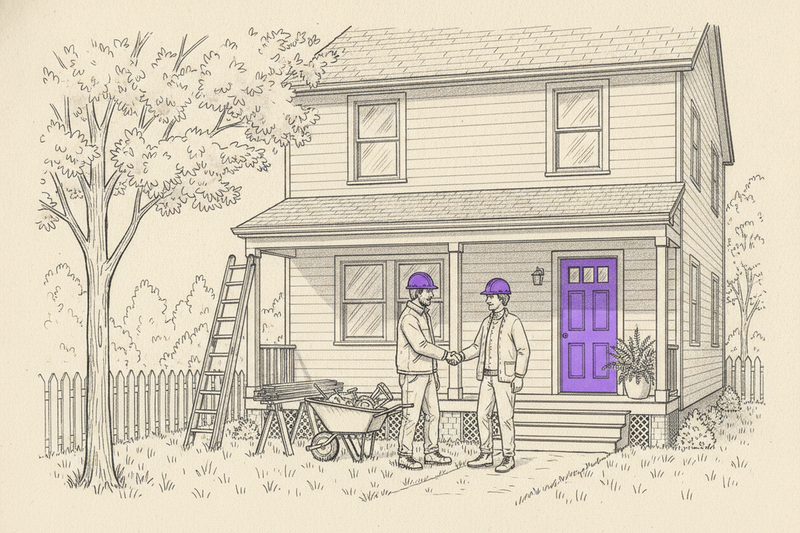
Does a BBB badge make the phone ring? Sometimes. Just not through Google Maps. Accreditation can help a homeowner feel comfortable hiring you, and BBB's own directory can send a few inquiries your way. It won't move you into the Map Pack, because Google doesn't list it as a ranking factor.
This piece covers one decision: whether to pay for accreditation, and how to tell if it's working. If you're weighing paid lead platforms instead, that's a different question, answered in Angi, HomeAdvisor or Google: which leads pay off. Yelp gets its own breakdown. And if you only care about your BBB listing as one more directory entry with your name, address, and phone, that's citation work, covered in our guide to local citations.
What BBB accreditation actually is
The Better Business Bureau is a private nonprofit founded in 1912. It is not a government licensing board. Local BBBs run independently, and dues from accredited businesses help fund them.
Accreditation is voluntary. You apply, agree to BBB's eight Standards for Trust, and pay annual dues. The standards cover things like honest advertising, keeping promises, and answering complaints. To stay accredited, a business has to keep a BBB rating of B or better.
What it costs
There's no national price list. Each local BBB sets its own dues, and they scale with the size of the business, so a two-person crew and a 40-employee remodeling firm won't pay the same. Ask your local office for a written quote and the renewal terms before you decide anything.
Rating, reviews, complaints, and accreditation are four different things
A BBB rating is a letter grade from A+ to F. It weighs complaint history, how the business responded, how transparent it is, and any licensing or government actions. A contractor can have a rating without being accredited. Paying dues does not buy a better grade.
Reviews and formal complaints are separate too. A review describes someone's experience. A complaint asks BBB to help settle a problem. BBB can forward a complaint and offer dispute resolution, but it can't force anyone to act.
None of it guarantees good work. An A+ contractor can still botch a job, and homeowners know that.
Where BBB fits in how homeowners pick a contractor
Separate getting found from getting chosen. BBB plays a small part in the first and a bigger part in the second.
Getting found: BBB runs its own directory. Homeowners can search it by trade and town, then see accreditation status, rating, reviews, and complaint history. For some customers, that's where the search starts. Your BBB profile can also show up in regular Google results for your business name, though dues don't reserve that spot.
Getting chosen: this is where BBB does more of its work. A homeowner who finds you on Google, gets your estimate, and then looks you up on BBB before signing is a Google lead. BBB just helped close it.
Keep those two jobs apart when you judge the dues later. Count them together and BBB looks like a lead source when it may really be working as a checkpoint.
If you're accredited, put the seal where people make decisions. Your estimate and your quote page beat a footer nobody scrolls to. Follow BBB's rules for seal use, and keep the phone number and website on your profile current. A directory profile with last year's phone number is a remarkably expensive way to miss a call.
What Google actually ranks
Google's own guidance names three things behind local results: relevance, distance, and prominence. BBB accreditation isn't on the list.
Prominence is the closest fit. Google looks at how well-known a business is across the web, including links and reviews. A BBB profile is one more place your business shows up, much like any other directory. That's a small contribution, and BBB keeps profiles on plenty of businesses that never paid for accreditation.
So don't buy accreditation for a Maps boost. If anyone pitches it that way, ask them to show you where Google says so.
The factors that do move Maps placement are laid out in how Google Maps ranks local businesses. The short version: a complete, accurate Google Business Profile and a steady stream of genuine reviews will do more for your call volume than any credential.
Fix the Google side first
If the budget only covers one thing this quarter, spend it where your calls start. For most local contractors, that's the Google Business Profile.
Run yours through a profile checklist and fix whatever's missing: primary category, services, hours, service area, and photos of real finished jobs. Then build a habit of asking every customer for a review. Our guide to getting more Google reviews walks through the ask.
Neither one costs dues. Both show up on the screen where a homeowner decides whether to call.
Proof that does more than the badge
For a roof replacement or a kitchen remodel, homeowners want things they can check, not just reassurance. Accreditation is one piece of evidence. These carry more weight:
- A license number they can look up with your state or local licensing authority. Requirements differ by trade and location, and accreditation isn't a substitute.
- Current insurance details they can confirm with your agent, including workers' comp where it applies.
- An estimate that spells out materials, quantities, prep, cleanup, and what's excluded.
- Who handles permits, inspections, and subcontractors.
- The payment schedule, timing, warranty terms, and change order process, in writing.
- References from similar jobs, and photos of work you've finished.
Those are good agreement topics, not a legal checklist. Check your state's contract rules before you use a standard form.
Detailed scopes help in another way. A roofer whose bid includes tear-off and disposal looks pricier than one that leaves it out. Spelling out the difference lets the homeowner compare fairly, and you never have to say a word against the other contractor.
How to decide whether the dues pay off
Accreditation earns its keep when your customers actually use BBB, either to find contractors or to check one before signing. Here's how to find out.
Check the directory first
Search BBB for your trade in the towns you serve. See how many competitors are accredited and whether your business already has a profile. If almost nobody in your trade shows up there, that tells you something about how your customers shop.
Ask every new customer two questions
Add "How did you first find us?" to your intake. Follow it with "Did you check anything else before calling?" Write the answers next to each booked job.
That splits the two jobs. A customer who found you on BBB is a BBB lead. A customer who found you on Google and then checked BBB is a Google lead that BBB helped close. Count them separately, or every mention of BBB will look like a new lead.
Compare the numbers to the dues
If your website reporting can show visits from your BBB profile, add those in. Then compare booked jobs and gross profit from both groups against the dues and the time you spend keeping the profile current.
Set a review date well before renewal comes up. A 90-day check shows early activity, but roofs and remodels have long sales cycles, so a full year may be the fairer test. Do not mistake a quiet first month for a verdict.
Frequently asked questions
Does a BBB listing count as a local citation?
Yes. Your BBB profile shows your business name, address, and phone number, so it works like any other directory listing. Keep those details matching your Google Business Profile. Paying for citation work is its own decision, and our look at local citation services covers what's worth the money.
Can I remove my business from BBB if I don't want accreditation?
Not usually. BBB keeps profiles on many businesses that never applied, and those profiles can carry a rating and complaints. Skipping accreditation doesn't make the profile go away, so claim it and keep the details accurate either way.
How should I handle an old complaint on my BBB profile?
Respond to the substance. Say what happened, how you tried to resolve it, and what you changed afterward. A calm, specific reply gives a homeowner something concrete to judge. Arguing in public doesn't.
Should the BBB seal on my website link anywhere?
If you're accredited, link the seal to your live BBB profile so a homeowner can check it in one tap. A static image anyone could copy proves less. BBB sets the rules for how accredited businesses use the seal, so read them before you add it.
Key takeaways
BBB accreditation can help a homeowner choose you. It won't help Google rank you.
- Google's local ranking guidance doesn't mention BBB accreditation. Don't pay dues expecting a Maps boost.
- Rating, reviews, complaints, and accreditation are separate. Dues don't buy a better grade.
- Ask new customers how they found you and what they checked before calling, then judge the dues against booked jobs.
Put the badge in its place
Accreditation is a reasonable credential for a contracting business that knows why it's buying it. Decide what success looks like before you write the check, then measure it against real jobs.
Local search gets you found. Reviews, project photos, paperwork, and credentials get you chosen. Curve handles the Google side of that every week, if you'd rather not.