
Auto Detailing Local SEO: Fill More High-Ticket Slots
The $1,500 correction customer and the $75 wash customer aren't the same lead. Here's how auto detailing local SEO fills more of the calendar with the work that actually pays.

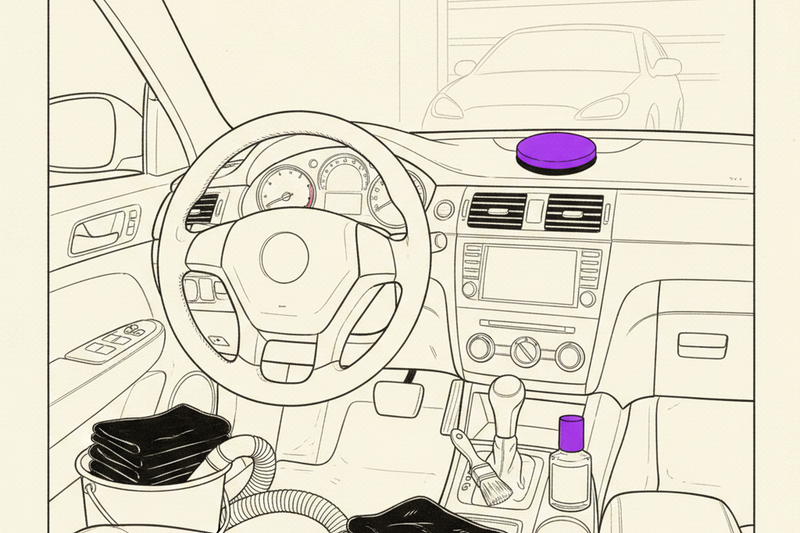
A customer searching "paint correction near me" isn't looking for a lesson in clear-coat defects. They want a shop they can trust with a car they care about, and they want a fast way to call or book.
Auto detailing local SEO puts your business in that decision screen. Done well, it turns searches for washes, ceramic coatings, interior details, and full correction work into calls from nearby buyers who actually know what they want.
The work isn't mysterious. It's a set of small, connected fixes that tell Google what you do, where you do it, and why customers pick you.
Key takeaways
- Your Google Business Profile is the front door for most Google Maps searches. Fill it out like a customer will judge it, because they will.
- Pick a category that matches the work you want more of, then list each profitable service separately.
- New photos and steady Google reviews beat a one-time burst of activity followed by six months of silence.
- Build service pages for jobs like ceramic coating, paint correction, and mobile detailing. Don't force every buyer through one generic "Services" page.
- Track calls, bookings, direction requests, and form leads. A pretty ranking report can't pay for a new polisher.
Start in the Map Pack, not the spreadsheet
Most local SEO advice starts with a long keyword spreadsheet. That's backwards for a detailing shop.
A buyer searches "ceramic coating in Mesa" or "interior detailing near me." Google shows the Map Pack before they read a 2,000-word article. They scan star ratings, photos, distance, hours, and whether the phone number looks like it belongs to a real business. That's the decision screen.
Google uses three broad ideas to decide who appears in local search: relevance, distance, and prominence. You can't move the shop closer to every customer. You can make your relevance obvious and stack up prominence with steady work.
Start by searching your own money terms from a phone in your service area:
- "car detailing near me"
- "ceramic coating [your city]"
- "paint correction [your city]"
- "mobile detailing [your city]"
- "interior car detailing [your city]"
Look at the first three listings. What category do they use? How many recent reviews do they have? Are their photos of polished cars in a real shop, or stock photos that could belong to anyone?
Don't copy a competitor's business name or stuff city names into yours. Google can suspend profiles for it, and it looks cheap to customers. Use the name on your sign, invoices, and website.
Your goal isn't to rank for every automotive phrase in the county. You want the searches that fit your best jobs. A $75 wash customer and a $1,500 correction-and-coating customer aren't the same lead. Aim your listing and site at the work you actually want more of.
The Map Pack isn't a trophy case. It's a short list of businesses a buyer can call before their coffee gets cold.
For a closer look at what Google actually weighs, see our breakdown of Google Maps ranking factors. The order of work matters. Fix your listing before you spend months publishing blog posts nobody searches for.
Make your Google Business Profile say what you actually do
Your Google Business Profile needs to answer basic questions without making someone hunt. What do you do? Where are you? When can they reach you? Can they book?
Start with your primary category. If detailing is the business, pick the closest detailing category available, such as "Car detailing service." Don't choose "Car wash" because you sell wash packages. Google reads the primary category as the main signal for what you are.
Add secondary categories only for real services you actively sell. Window tinting, car wash, auto body work, and paint protection film aren't interchangeable. A category isn't a wish list.
Then build out your services. "Auto detailing" is too vague. List the work people ask for by name:
- Interior detailing and odor removal
- Exterior wash and decontamination
- One-step polish and multi-stage paint correction
- Ceramic coating packages
- Paint protection film
- Headlight restoration
- Mobile detailing, if you offer it
Write short, plain descriptions. Mention the vehicle type or problem when it helps. "Paint correction for swirls, oxidation, and light scratches" tells a shopper more than "premium detailing solutions."
Your business description should explain what you do, where you work, and why your shop is a practical choice. Maybe you focus on daily drivers, Teslas, fleet vehicles, luxury cars, or same-week correction slots. Say it plainly.
This is GBP work in its useful form. It isn't sprinkling magic dust on a listing. It's removing uncertainty for Google and for the person holding the phone.
Set accurate hours, a phone number someone answers, a booking link, and the best page on your site for new leads. If you close early on Sundays, say so. A missed call is bad enough. A customer driving to a closed shop is worse.
For a walkthrough of the profile fields that most affect the Map Pack, use our Google Business Profile optimization checklist.
Match your website to the jobs you want
Your Google Business Profile gets the call started. Your website has to confirm the call is worth making.
One page titled "Services" with six blurry photos and a contact form isn't enough for a shop selling specialized work. Ceramic coating buyers have different questions than customers with a spilled milkshake in a back seat. Build a real page for each major service you want to sell:
- Ceramic coating: package options, prep work, cure time, maintenance, real vehicle photos.
- Paint correction: defect examples, inspection process, correction levels, before/after.
- Interior detailing: cleaning steps, materials handled (leather, fabric, alcantara), pet-hair specifics.
- Paint protection film: coverage options, warranty, installation timing.
- Mobile detailing: service radius, on-site requirements, water and power needs.
Each page should use the service and your city in natural places, including the page title and main heading. Add original photos from work you've completed. Answer the questions customers ask at the counter.
A page about ceramic coating in Tampa should be about ceramic coating in Tampa. It shouldn't turn into a paragraph that lists St. Petersburg, Clearwater, Brandon, Lakeland, Orlando, and Miami like a map key. Google filters copy-paste city sprawl fast.
If you run a physical shop, build pages around the services at that location. If you're a service area business that travels, make your travel boundaries clear. You may cover nearby suburbs. You probably don't cover three counties in one direction, and pretending you do costs you no-show fees.
Your website also needs the same name, address, and phone number shown on your profile. Small differences cause trouble. "Main Street," "Main St.," an old suite number, and a forwarding phone line can chip away at ranking over time.
Keep the site fast on a phone. Detailing sites need strong photos, but 40 full-size camera files on one page will spin a customer straight off the page. Compress images, use descriptive file names, and don't lock the booking flow behind a slow gallery.
Reviews should describe the work, not just praise it
Five stars are useful. Five stars with "Great place" are less useful than a review that says, "They removed dog hair, fixed the paint swirls, and applied ceramic coating to my Model Y."
That second review helps a nervous buyer understand what you do. It also adds real service language around your business. You don't need to script customers. You do need to make asking easy.
Send a review request right after the handoff, when the customer is looking at the finish in the sun. Text works well because their phone is already out. Keep the message short, personal, and honest.
"Thanks again for trusting us with your 4Runner. If you're happy with the detail, would you leave an honest Google review? It helps local customers find us."
That's enough. Don't offer discounts for reviews. Don't hand a customer a card that tells them what to write. Don't buy 40 reviews from people who've never seen your shop. Google has seen the trick, and so has the next buyer scrolling your page.
Reply to every review. Thank people by name when appropriate. Mention the service naturally when it fits. If someone praises an interior detail, your response can say you were glad to get the seats and carpets right for them.
Handle bad reviews with a calm response. Never argue about a swirl mark in public. Acknowledge the concern, offer a way to resolve it, and move the conversation offline. Future customers aren't looking for a shop that never got a complaint. They're looking for one that handles complaints without drama.
A steady review flow beats a frantic review drive. Ask every week. Follow up once if needed. Make it part of the delivery process, not a task you remember during a slow Tuesday.
For scripts, timing, and small tweaks that push reply rates up, see our guide on how to get more Google reviews.
Citations are boring, and that's fine
A citation is a listing that repeats your business name, address, phone number, and sometimes your website. Think Apple Maps, Bing Places, Yelp, Facebook, the Better Business Bureau, and local chamber pages.
Nobody opens a detailing shop because they dream of correcting directory listings. Citations are still part of the foundation. Wrong information spreads fast, especially after a move, rebrand, or new phone number.
Make one master record with your exact business details:
- Legal business name used publicly
- Street address or correct service area setup
- Main phone number
- Website URL
- Regular business hours
- Booking link
- Short business description
Then claim the major listings and correct duplicates. If your old shop address is still circulating, fix it before creating ten new profiles. More listings won't outrun conflicting ones.
A physical detailing studio should show its real address if customers visit during stated hours. A mobile operation that doesn't receive customers at home should hide the address and set accurate service areas.
Beyond directories, look for real local mentions. Sponsor a car show. Partner with a reputable tint shop. Join the local chamber. Work with a dealership's used-car manager. If the relationship is real, ask for a mention with a link. Those local links outperform a stack of directory backlinks from other side of the country.
The point is consistency, not collecting logos. Your name, address, and phone should agree wherever customers and search engines find you.
Win with a weekly rhythm, not a weekend project
Auto detailing local SEO isn't one-and-done. Your competitor can post fresh work, collect reviews, and improve their profile next week. So can you.
Set a simple weekly rhythm. Upload two or three real photos from completed jobs. A clean engine bay, a corrected hood under proper lighting, a finished interior, or a shot of your workspace all work.
Add a short Google Business Profile post when you have something worth saying. A seasonal interior-cleaning offer, a new coating package, a paint correction before-and-after, or an answer to a common question all fit. Don't post filler.
Review your profile monthly for:
- New reviews and unanswered questions
- Incorrect hours or holiday closures
- Service list gaps
- Booking link problems
- New competitor activity
- Calls, direction requests, website clicks, and booked jobs
Give the work time. You'll make meaningful fixes in week one. Stronger local rankings take 30 to 90 days of steady activity, depending on competition, proximity, and your starting point.
Track outcomes, not vanity numbers. A report saying you appeared 20,000 times means little if no one called. Use call tracking when it makes sense, tag website links, and ask new customers how they found you. Simple habits like that turn ranking into revenue.
Keep your shop easy to choose
The best auto detailing local SEO plan makes your business obvious to the right local customer. Your profile says what you do. Your site proves you can do it. Your reviews back it up.
Start with the Map Pack, then keep the basics moving every week. A full-correction customer doesn't need more marketing jargon. They need to find a trusted shop, see proof, and make the call.