Auto Body Shop Local SEO: Beat DRP Referrals
DRP referrals fill some bays. Local search fills the rest. Here's how an independent body shop wins direct estimates from drivers who Google before they call anyone else.

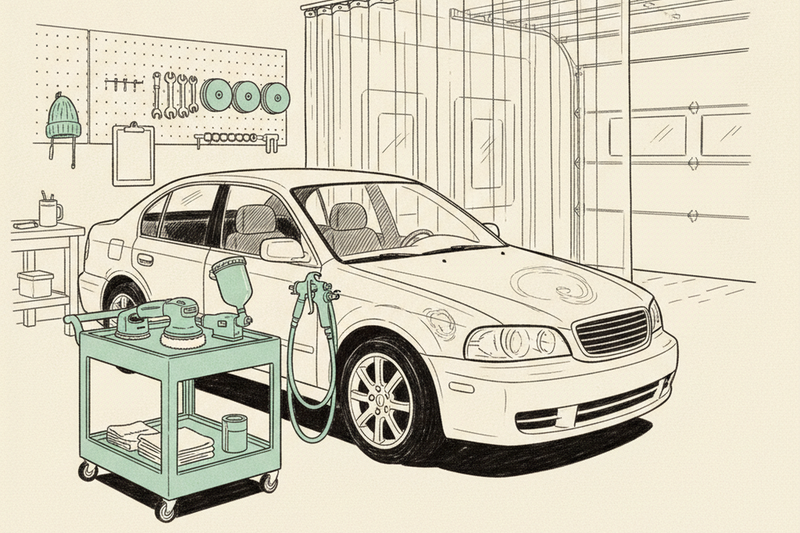
A driver gets hit, pulls into a parking lot, and searches "collision repair near me" before the insurance call is even over.
That moment is your opening. While DRP shops wait on insurer referrals, an independent shop can be the obvious local choice for drivers who'd rather pick their own. Auto body shop local SEO makes that possible.
You don't need to outspend a national chain to compete. You need to show up in Google, answer the questions drivers actually have, and make choosing your shop feel like the safe move.
Key takeaways
- DRP referrals are useful, but most drivers still check Google before committing.
- Your Google Business Profile is the first place to win, not your blog.
- Google reviews, repair photos, accurate listings, and clear service pages build trust before a driver calls.
- Don't compete on "we work with all insurance." Show why your process, warranty, and repair quality deserve the job.
- Track estimate requests, calls, and direction requests. Rankings alone don't pay for a paint booth.
DRP shops have referrals, not automatic loyalty
A Direct Repair Program, or DRP, gives insurance carriers a group of preferred collision shops to recommend. That creates a steady stream of work. It also creates a false idea that an insurer's list is the same as a customer's decision.
It isn't.
Drivers still want to know:
- Is this shop close to home or work?
- Can they repair my vehicle properly?
- Do they handle the insurance paperwork?
- Do the reviews sound real?
- Can I get an estimate without taking half a day off?
That check starts on Google Maps. A driver may get a referral from an adjuster, then search the shop name, compare ratings, and look at another nearby option. If your shop shows up strong at that step, you have a real shot at the job — even without the DRP badge.
Your job isn't to beat an insurance company. It's to become the shop a driver feels good about choosing.
A DRP shop has a referral pipeline. It can also become dependent on it. An independent shop has more reason to show its work, earn reviews, and build a direct relationship with the driver. Those are the same habits that win local search.
Local SEO for collision work should stay tight on collision intent, not broad vanity traffic. Ranking for generic tips won't fill an estimate calendar. Ranking for "collision repair," "paintless dent repair," "bumper repair," and "hail damage repair" in your city will.
Win Google Maps before the phone rings
Your website matters. Your Google Business Profile matters first.
When someone searches for a body shop nearby, Google usually shows the Map Pack above the regular website results. That small group of listings captures most of the calls, direction requests, and estimate forms in your service area.
Google says local rankings come down to relevance, distance, and prominence. You can't move your building closer to every driver. You can make your listing more relevant and more trusted.
Start with the basics of Google Business Profile setup:
- Use "Auto Body Shop" as your primary category if that describes your core work.
- Add relevant secondary categories: Collision Repair Service, Auto Dent Removal Service, Auto Painting.
- Confirm your hours, phone number, website, appointment link, and address are correct.
- Add every real service you offer: frame repair, paintless dent repair, bumper repair, fleet repair, hail damage repair.
- Fill in accessibility and amenities when they apply: waiting area details, wheelchair access, loaner cars if available.
- Add real photos of your exterior, reception, paint booth, equipment, technicians, and completed repairs.
Don't upload 30 versions of your logo and call it a day. Drivers want proof that your shop is real, clean, staffed, and equipped. Before-and-after photos work hard. So do photos that show the paint booth in use, a technician on a frame machine, or a finished vehicle in the pickup bay.
Post one update each week. Keep it simple. Show a repaired quarter panel, mention hail damage season, share an updated estimate policy, or congratulate a technician on a certification.
For a plain-English breakdown of what actually moves the Map Pack, see our guide to Google Maps ranking factors. The short version: complete information, strong reviews, real activity, and local trust signals — no magic buttons.
Make your shop the safer choice
"Insurance work welcome" is fine. It isn't enough.
Every body shop says some version of it. Drivers aren't looking for a bumper sticker. They want to know what happens after the tow truck leaves, when the rental clock is running and their car is torn apart in a bay.
Your website and Google Business Profile should answer the practical questions before someone has to call:
- Do you help with the claim process?
- Can they request an estimate online?
- Do you repair the makes and materials you advertise?
- What warranty do you offer on your work?
- Will you communicate if repairs uncover more damage?
- Can they upload photos after hours?
Build separate service pages for the work that brings real revenue. A collision repair page shouldn't be a copy of your homepage with a new headline. A hail damage page needs different information than a frame repair page.
Then add location pages where they make sense. A single shop may serve nearby towns, neighborhoods, and ZIP codes. Write pages for places where you actually take work and can describe the local connection honestly. Don't create 40 thin pages that say "collision repair in [city]" and little else. Google has seen that move. So have drivers.
A better page might include:
- The repair service and who it's for.
- A clear explanation of how estimates and insurance paperwork work.
- Real repair photos from your shop.
- A map, driving details, and the nearby service area.
- A simple form with photo upload and preferred contact time.
A good page makes the next step obvious. A panicked driver shouldn't need a scavenger hunt to request an estimate.
Reviews turn repair quality into proof
Most independent shops lose momentum with reviews for a simple reason. Nobody asks.
The repair's finished. The customer's relieved. They pick up a clean vehicle, say "looks great," and drive away. Then the shop waits for them to leave feedback on their own. That rarely happens.
Steady reviews help you two ways. They build confidence for drivers comparing shops, and they hold up your local rankings over time. A strong rating with recent, detailed feedback beats a five-star average that stopped growing two years ago.
Set up a simple request process. Send a text or email after delivery, when the customer has seen the result and the stress has dropped. Keep the request short. Use one direct link. Don't offer discounts or gifts.
Make the request part of the delivery process. The message can be as plain as this:
"Thanks for trusting us with your repair. If the work and communication were good, would you leave an honest Google review? It helps local drivers find us."
Don't script the feedback itself. You want customers to use their own words. Those details tell future customers whether you handled the insurance claim well, communicated during the repair, or matched a tricky paint color.
Reply to every review. Thank people by name when appropriate. Mention the service without sharing private claim details. For a negative review, stay calm. A public fight with a frustrated customer is a bad look for any shop.
Recent feedback also tells a driver the shop is open, active, and still doing good work. That's more persuasive than a badge from 2018.
For scripts and timing that work in a repair business, see our guide on how to get more Google reviews.
Fix your citations and build local proof
Google checks whether your business details agree across the web. Your name, address, phone number, hours, and website should match wherever your shop appears.
These business mentions are called citations. They're not glamorous. They're not optional either.
Claim and fix the profiles drivers and search engines recognize: Google, Apple Maps, Bing Places, Facebook, Yelp, Better Business Bureau, RepairPal, Yellow Pages, your local Chamber, and any industry association you belong to.
Small mismatches add friction. A wrong phone number sends a lead into a void. A closed listing tells a driver to keep searching. A bad map pin puts them in a strip mall behind your building, which is worse than not showing at all.
You don't need an expensive listing subscription forever. Most high-value listings can be claimed and corrected once, then checked quarterly. Put your money into work that stays useful.
Build local proof through real connections, not shady link bundles. Sponsor a youth sports team, support a local charity car show, join the Chamber, or partner with a towing company. When an organization has a website, ask for a mention. Those local links do more good than a stack of directory links from other side of the world.
You can also publish useful local resources: a post-accident checklist, a guide to documenting hail damage, or a page explaining what to bring to a collision estimate. That kind of page earns real links because it earns real reads.
Track estimates, not ego metrics
Ranking first for a search feels good. It doesn't pay payroll.
Track the actions that lead to work: calls from your Google Business Profile, website estimate forms, photo uploads, direction requests, and booked inspections. Use a call-tracking number carefully if you want to attribute the phone volume — some setups can confuse Google if not done right.
Google Business Profile Performance shows calls, website clicks, and direction requests. Google Search Console shows the queries that bring people to your site. A simple monthly report should tie those numbers to booked estimates and completed jobs.
Keep an eye on three things:
- Map Pack visibility for your key repair terms. If you slip, review competitors, categories, reviews, and profile activity.
- Estimate calls and forms. If they drop, look at your GBP performance, response speed, and top landing pages.
- Review pace and rating. If reviews stall, tighten the request process at delivery.
A ranking report without calls is just a prettier spreadsheet. Watch conversions, not vanity.
Check performance every month. Review your top competitors in Google Maps. Look at their photos, categories, review pace, services, and recent posts. Borrow the good habits. Don't copy their wording word for word.
Auto body shop local SEO isn't a one-time project. It's a weekly rhythm of updates, reviews, photos, listing fixes, and practical pages. That boring-looking work stacks up.
For a wider look at the ranking system behind all this, our guide to local SEO for small business covers the fundamentals without the fluff.
Frequently asked questions
Why should a shop invest in SEO if they already get DRP referrals?
DRP referrals give you a steady baseline. Relying only on them makes the business dependent on insurance companies. Local SEO adds a second lane — direct estimates from drivers who searched Google themselves — and stabilizes revenue when a carrier changes its list or shifts volume to another shop.
How long does local SEO take for a body shop?
You can fix a Google Business Profile and start asking for reviews this week. Ranking improvements usually show up within 60 to 90 days of steady work. The compounding starts once you're getting fresh reviews, new photos, and a steady flow of estimate forms every month.
What matters most for Map Pack ranking?
Relevance, distance, and prominence. In practical terms: an accurate profile with the right categories and services, real activity from real customers, and a steady stream of specific reviews. There's no single button; it's the combination that moves the needle.
Do I need a professional website, or is a Google Business Profile enough?
The profile gets you found. A real website closes the deal. Dedicated service pages, real photos, and a fast mobile experience turn a curious click into a booked estimate. Skip the site and you leak leads at the last mile.
Build direct demand next to your referrals
DRP work can keep bays full. Leaning only on insurer lists leaves your revenue vulnerable to a policy change or a new preferred shop across town.
Building direct search demand creates another lane, and it's one you actually control. Get your shop in the Map Pack. Show real collision work on your profile. Ask every satisfied customer for a review. Make the estimate process easy at every step.
The shop that looks ready, trusted, and close by has a real shot at winning the job — with or without a referral card in the driver's glovebox.