
Air Duct Cleaning SEO: Be the Trusted Call
Air duct cleaning has a reputation problem. Your listing and website are guilty until proven otherwise. Here's how a legit company ranks in a category full of bad actors.

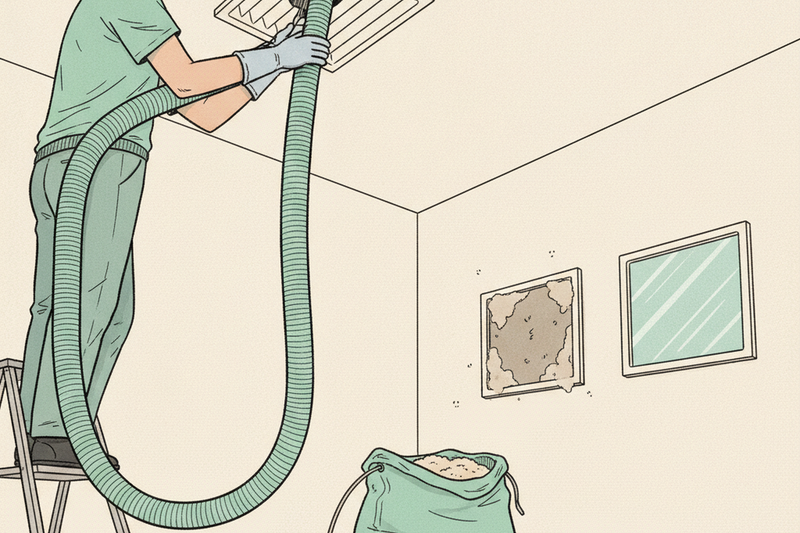
Air duct cleaning has a reputation problem. Cheap mailers, vague coupons, surprise upsells in the driveway — homeowners have seen the playbook. That means your listing and your website are guilty until proven otherwise.
A $99 residential air duct cleaning offer can get attention, sure. It can also raise suspicion, because that's exactly what scam operators use to hide limited scope and later upsells. The right strategy doesn't start with a pile of keywords. It starts with proof that you're a real company, doing real work, at a real price. Your Google listing and website have to answer the question nobody says out loud: "Is this company going to clean my ducts, or clean out my wallet?"
Get that right first. Then use local SEO to reach the homeowners who are ready to book.
Key Takeaways
- Trust is the foundation of air duct cleaning SEO — show your real process, equipment, credentials, pricing factors, service area, and customer proof.
- Fix your Google Business Profile first with accurate categories, service areas, hours, photos, reviews, and consistent business details across listings.
- Build focused service, city, and educational pages that match search intent and lead toward a call, quote, or booking.
- Use real reviews, before-and-after photos, legitimate local links, and clean citations as proof — not decoration or shortcuts.
Measure calls, quote requests, and booked jobs. Not just rankings or traffic.
Trust is the job before the job
Some scam operators use cheap mailers, vague coupons, and surprise upsells to get in the door. Homeowners know this. A clean logo and a five-star average aren't enough.
Your site needs to show what the work looks like. Explain your process in plain English. Describe what a typical residential air duct cleaning visit actually includes. Be careful about what the service can claim regarding indoor air quality — most claims are overstated. Explain what changes the price, how long the work takes, and what equipment your crew uses. If you also do dryer vent cleaning, list it clearly. Don't make people guess whether it's a separate service or a hidden add-on.
Real photos do more than stock images ever will. Show the truck, the vacuum equipment, the crew, access covers, and finished vents. Skip the fake smiling family in a spotless living room. Nobody believes that photo came from a Tuesday job in July.
A customer should be able to find these things in under a minute:
- Your legal business name, local phone number, and real service area.
- A clear explanation of what duct cleaning includes and excludes.
- Real reviews, recent job photos, and credentials you actually hold — including any NADCA certification.
- A simple way to request a quote or call your office.
If someone on your team has NADCA certification, explain what the credential means and what it requires. If a technician holds the Air Systems Cleaning Specialist credential, name it accurately. Don't throw a badge in the footer and call it a day. Put each credential on your About page, your service pages, and your Google Business Profile. Explain it beside the badge, not just in the footer.
The price doesn't make you look like a scam. Clear scope and evidence are what separate a legitimate company from the scam operators the industry's known for.
Your name, phone number, address, and website should match across every place you appear online. A mismatched phone number on Yelp, an old address on Facebook, or a dead website link makes a legitimate service business look careless. Careless isn't what homeowners want near their HVAC system.
Air duct cleaning SEO begins in the Map Pack
Most owners start with a website redesign or a monthly blog calendar. For a local service business, that's backwards.
When someone searches "duct cleaning near me" or "dryer vent cleaning in Phoenix," Google Maps usually appears first. It typically comes before any 1,500-word article. Local Service Ads may appear alongside or above the Map Pack, but those are paid placements. The Map Pack is the decision screen — your rating, hours, photos, location, and competitors in one small space.
The full breakdown of what actually moves those Map Pack rankings lives in our guide to Google Maps ranking factors.
Your Google Business Profile is where this work starts. For a service area business, hide your home address if customers don't visit it. Set the service areas you truly cover. Audit your business listings so your name, phone number, and service areas stay consistent. Don't rent a virtual office across town to chase a pin on Google Maps. Fabricated locations are a shortcut scam operators use. Google can suspend a profile for that mistake, and that's a long way to fall.
Start with the basics in this order:
- Pick the closest valid primary category — "Air duct cleaning service" — then add relevant secondary categories only for services you truly provide.
- Complete the service list with air duct cleaning, dryer vent cleaning, HVAC cleaning, or whatever you actually perform.
- Keep business hours, holiday hours, phone number, and website links current.
- Add fresh photos every week or two — not one big photo dump every January.
- Answer common questions in the Q&A section: service area, pricing factors, dryer vents, appointment timing.
GBP posts aren't magic beans. One post won't move you from page four to first place. A steady mix of job photos, seasonal reminders, and useful updates gives customers another reason to choose you when they land on the profile.
Google's local rankings come down to relevance, distance, and prominence. Reviews and third-party proof strengthen prominence. You can't move your shop closer to every searcher, but you can make your business easier to understand and easier to trust. Stay more visibly active than the company with six old photos and no recent reviews.
The step-by-step version of that setup lives in our Google Business Profile optimization checklist.
Build pages for booked jobs, not keyword confetti
Your homepage can't rank well for every service in every suburb. Nor should it try.
Separate booking searches from research searches. A homeowner ready to book needs a phone number and a scope of work. A homeowner still figuring out what duct cleaning even is needs education. Both matter. They need different pages.
Booking-focused service pages should make the next step easy. For residential air duct cleaning, put your phone number near the top. Explain the scope of work. Use real photos from the field. Add reviews that mention the service when customers wrote those words on their own.
Research pages earn traffic earlier in the buying journey. A useful educational page can answer questions about dust, pet hair, renovation debris, dryer fire risk, filter changes, and air quality. Don't promise medical outcomes. You're there to explain the service, not diagnose a child's allergies through a blog post.
For every city you actively serve, build a location page only when you can make it real. A page for "Air Duct Cleaning in Naperville" needs more than swapping "Aurora" out of another page. A template that swaps place names and fabricates local proof looks like something a scam operator would run.
Include the services you offer there and the HVAC systems you work on. Add actual local photos when you have permission, useful FAQs, and clear contact details. Link the page to matching service pages. Don't invent neighborhood stories, fake local testimonials, or addresses where you don't operate.
This is how a mobile company competes across nearby towns without pretending to have ten storefronts.
Schema tells Google what your pages are
Schema markup is housekeeping for search engines. It won't rescue a thin site or create rankings by itself. It supports clear page structure. It can't replace reputation or genuine links.
Use LocalBusiness markup sitewide, or HVACBusiness if that category truly fits your company. Include your real business name, phone number, website, logo, business address if shown publicly, opening hours, and service area. If you hold NADCA certification, show it in visible page content — don't add unsupported properties.
On each core service page, add Service markup. Identify the service, your company as the provider, and the cities or counties you serve. Use BreadcrumbList markup so the page structure is clear.
FAQ markup belongs on pages with visible, helpful FAQs. Don't hide keyword-stuffed questions in the code. Don't add review stars you wrote yourself and expect a rich-result badge.
Pages should load fast on a phone, have one clear page title, and work without pinching, zooming, or hunting for the call button. A homeowner with a dusty return vent isn't looking for a web design adventure.
Use reviews and photos as proof, not decoration
Reviews influence two things at once. They help people choose you, and they give Google proof that your business is active and trusted. A steady flow of genuine feedback also builds reputation signals that support your local visibility.
For request templates that actually get a response, see our guide on getting more Google reviews.
The best time to ask is after a completed job, when the customer has seen the work and paid the invoice. Send a short text or email with one direct review link. Follow up once if they don't respond. Then leave it alone.
Don't offer gift cards for five stars. Don't ask only happy customers. Don't hand customers a script stuffed with city names and service terms. Those moves look fake because they are fake.
Make asking part of your closeout routine. Your office can send the request after every completed job. Your technician can mention that a review helps a small local company. Then reply to each review like a human being.
Thank the customer, mention the service naturally, and don't share private details about their home. A steady flow of honest reviews beats 40 reviews from three years ago.
Before-and-after photos matter for the same reason. They show the work. Photograph the dirty return, the equipment setup, and the cleaned result when conditions allow. For dryer vent cleaning, capture the real setup and finished vent work too. Fabricated before-and-after images are a scam-operator tactic. Customers can spot nonsense from across a screen.
That proof helps most on mobile, where people compare three businesses in a hurry. It gives shoppers clear evidence when they're ready to call.
Local links help too, but focus on legitimate relationships. Earn real mentions through HVAC partners, home inspectors, property managers, local chambers, and neighborhood sponsorships. One legitimate local connection is worth more than a pile of junk from sites nobody reads.
Keep the work moving every week
Local SEO rewards cadence, not stunts. A one-time citation blast, ten blog posts, or a new logo won't carry the business for a year.
Set a weekly rhythm. Add a few real photos. Respond to reviews. Check that your Google Business Profile phone number and hours are right. Publish a useful update when you have something worth saying. Watch for GBP edits you didn't make, duplicate listings, and wrong pins.
Once a month, audit for indexing, page speed, and mobile usability. Check titles and clear conversion paths.
Citations still have a job. Your name, address, and phone should match across major business listings. That includes Google, Apple Maps, Bing, Facebook, Yelp, the Better Business Bureau, trade directories, and local chamber listings. A practical cleanup usually means 30 to 35 high-value listings over the first 60 to 90 days — not a permanent subscription to thousands of empty directories.
You can also wake up your past customer list. Send a useful seasonal email about dryer vent cleaning, filter replacement, or HVAC maintenance. Invite past customers to book if the work's due. Ask for an honest review after a completed job.
Measure calls, not applause
Rank trackers are useful. Traffic charts are useful. Neither pays a technician.
Track the five service and city searches that bring in money. Check your Map Pack position in the neighborhoods that matter. Use Google Search Console to see which queries and pages earn clicks. Use Google Analytics for engagement context. Then connect organic traffic to calls, quote forms, and booked jobs. Treat Local Service Ads as a separate paid channel.
Expect early signs in the first month — profile views, calls, new reviews, better indexing, fewer listing errors. Meaningful movement takes 30 to 90 days. A new domain, a new GBP, or a competitive metro can take longer. Anyone promising the first spot next Tuesday is selling something, and it isn't search engine optimization.
A ranking is a leading indicator. A booked duct cleaning job is the score.
AI answers still need real-world proof
ChatGPT, Perplexity, and Google's AI answers need clear facts to pull from. That means accurate service pages, real reviews, consistent citations, credentials, useful FAQs, and third-party mentions.
Don't chase AI mentions while your GBP has the wrong phone number. Fix the storefront before you worry about the billboard.
Frequently Asked Questions
How important is Google Business Profile for air duct cleaning SEO?
It's often the first place homeowners compare local air duct cleaning companies. Accurate categories, service areas, hours, photos, reviews, and contact details make your business easier to trust and easier to find.
Should an air duct cleaning company create a page for every city it serves?
Only for areas you genuinely serve and can describe with useful local information. Avoid thin pages that swap city names or invent testimonials, photos, addresses, or neighborhood details.
How can air duct cleaning companies earn better reviews?
Ask for an honest review after each completed job with a short text or email and a direct link. Don't buy reviews, pressure only happy customers, or hand out scripts stuffed with keywords.
What should an air duct cleaning service track from SEO?
Calls, quote requests, booked jobs, and the searches and locations that produce them. Rankings and traffic provide context, but a booked job is a more meaningful measure.
How long does air duct cleaning SEO take to work?
Early improvements — profile views, calls, reviews, better indexing, fewer listing errors — can show up during the first month. Meaningful local ranking and lead growth usually take 30 to 90 days, longer in competitive metros.
Win the call by looking like the safe choice
The companies that rank and convert aren't always the cheapest. They're the ones that look prepared, active, and trustworthy when homeowners compare their options.
Build the profile. Show the work. Keep your listings accurate and clean. Create pages for real services in real places. Then repeat those small improvements every week.
Air duct cleaning SEO works when your online presence feels like your best technician showed up first — clear, professional, and ready to do the job right.
Curve handles this ongoing work for local service businesses at $500 per location, month to month, without contracts or status theater.